Debate and drama are never far from Scottish football, and the latest flashpoint involving Rangers FC has once again sparked heated discussion among fans and pundits alike. However, former referee Dermot Gallagher has now stepped in to deliver a clear verdict — and it firmly backs the officials’ decision.
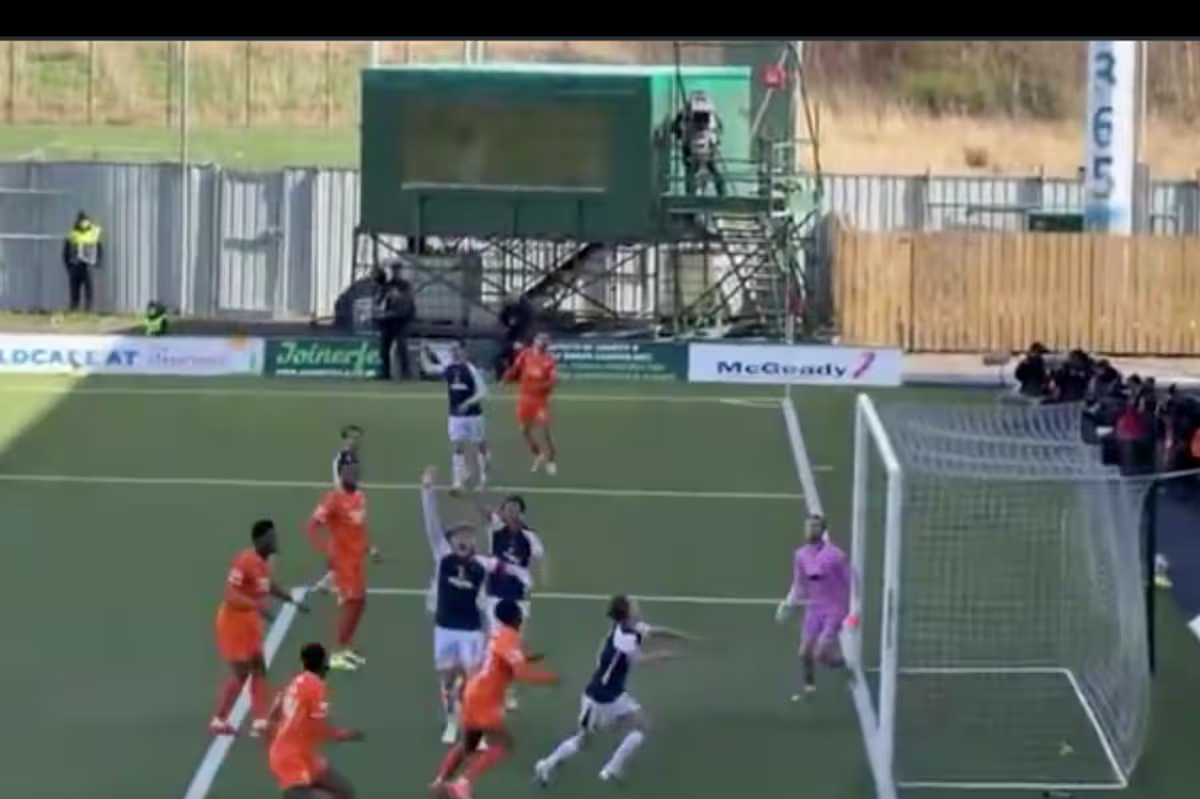
The incident in question came during Rangers’ emphatic 6-3 victory over Falkirk FC, a game filled with attacking football but overshadowed by controversy surrounding the visitors’ first goal. Midfielder Tochi Chukwuani found the net after reacting quickest inside the box, smashing home following a looping cross that had been headed back into danger.
But the build-up to the goal immediately drew protests from Falkirk players. Their argument was simple: they believed the ball had already crossed the byline before being returned into play, which should have resulted in a goal kick rather than a Rangers equaliser. Appeals were made instantly, with players gesturing toward the assistant referee and demanding a review of the decision.
Despite the protests, play had continued uninterrupted. The assistant referee, positioned perfectly along the line, signalled that the ball had remained in play. With no intervention from officials, the goal stood — a decision that ultimately proved pivotal as Rangers went on to dominate the match.
The controversy quickly made its way to Sky Sports’ Ref Watch segment, where Gallagher was asked to assess whether the officials had made the correct call and whether technology could have played a role.
Gallagher was unequivocal in his response. He dismissed the need for extending goal-line technology to situations like this, pointing instead to the positioning and responsibility of the assistant referee.
“You’ve got the assistant at the top of the pitch, right by the corner flag,” he explained. “He is looking right along the line and has the best possible view. That’s exactly what he’s there for.”
The former Premier League official emphasized that while no decision-making system is completely foolproof, the human element — particularly when well-positioned — remains highly reliable. He also highlighted the lack of conclusive video evidence to overturn the on-field call.
“You can show multiple angles,” Gallagher added, “but if none of them clearly prove the assistant wrong, then you have to go with the original decision.”
His comments effectively shut down calls for retrospective controversy, reinforcing confidence in the officiating team’s judgment on the night.
The discussion also reignited broader conversations around the use of technology in football. While goal-line technology is widely accepted for determining whether the ball has crossed into the goal, extending it to the full boundary lines would represent a significant expansion — one Gallagher believes is unnecessary given the role of match officials.
For Rangers, the decision ultimately fades into the background of what was a commanding performance. Scoring six goals away from home, they showcased attacking quality and resilience, brushing aside any early doubts to secure a convincing win.
For Falkirk, however, the moment remains a point of frustration. In tightly contested matches, such decisions can feel decisive, especially when momentum swings as a result.
In the end, Gallagher’s verdict provides clarity, even if it doesn’t bring universal agreement. In a sport where margins are razor-thin and perspectives often differ, the incident serves as yet another reminder of football’s enduring ability to spark debate — long after the final whistle has blown.