Rangers’ resurgence this season has been built on intensity, attacking flair, and a renewed sense of belief under Danny Röhl. Sitting just a point behind league leaders with the title race heading into its निर्णत phase, the Ibrox side look like genuine contenders again. However, just as momentum peaks on the pitch, uncertainty off it threatens to disrupt their long-term project.
At the centre of this looming concern is Mikey Moore.
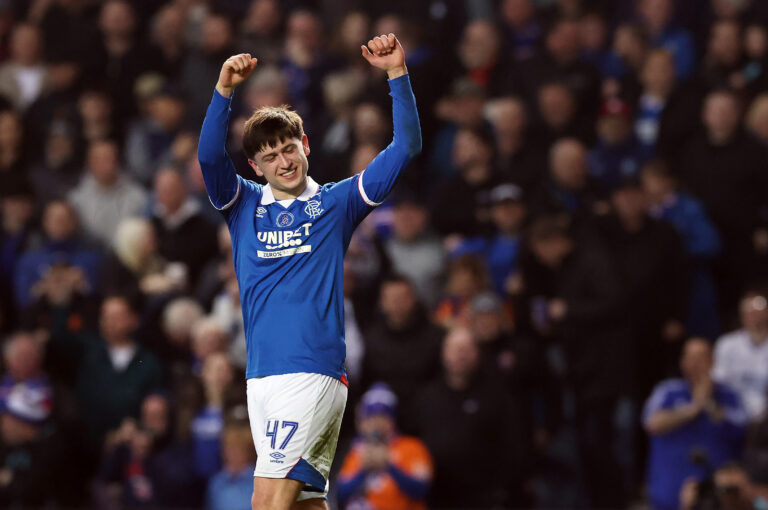
The 18-year-old winger arrived in Glasgow with promise but little expectation. What followed was a breakout campaign that has turned him into one of Rangers’ most influential attacking outlets. His ability to stretch defenses, create chances, and contribute goals has made him indispensable in Röhl’s system.
Now, that partnership appears set to end.
A Loan Success Story Nearing Its Conclusion
Moore’s numbers underline his importance. Six league goals and two assists only tell part of the story. His underlying metrics—particularly his expected goals and chance creation—highlight a player consistently involved in dangerous situations. More importantly, he brought unpredictability to Rangers’ attack, something they had lacked in recent seasons.
Beyond stats, it’s his style that made the difference. Fearless in one-on-one situations, sharp in tight spaces, and intelligent in movement, Moore offered a modern wide-forward profile that fits perfectly into high-tempo football.
That kind of development hasn’t gone unnoticed by his parent club.
Tottenham’s Situation Changes Everything
Tottenham’s current trajectory plays a major role in this situation. With relegation concerns casting a shadow over their season, squad restructuring is inevitable. High earners and established stars could depart, opening the door for emerging talents like Moore.
In that context, recalling him is not just logical—it’s strategic.
Rather than investing heavily in new signings, integrating a player already proving himself in a competitive environment offers both financial and sporting value. Moore’s experience at Rangers—playing under pressure, in big games, and within a demanding fanbase—has accelerated his readiness for senior football.
Whether Tottenham remain in the top flight or drop down, Moore is now firmly in their plans.
A Major Setback for Rangers’ Rebuild
For Rangers, losing Moore isn’t just about replacing a winger—it’s about replacing a system fit.
Röhl’s tactical setup allowed Moore freedom in the final third, and the youngster thrived under that responsibility. Finding another player who can replicate that balance of creativity, directness, and composure will be difficult, especially within financial constraints.
There’s also the timing to consider. With a title race still alive and European ambitions on the horizon, continuity is crucial. Losing a key attacking piece risks disrupting both momentum and morale.
What Comes Next?
Rangers now face a critical decision-making period. Do they look internally for a solution, trust another young talent, or dip into the transfer market?
Each option carries risk.
Internal replacements may lack Moore’s quality. New signings require adaptation time. And loan markets don’t always guarantee another perfect fit.
What is clear, however, is that Moore’s spell at Ibrox has been a success for all parties. Rangers gained a game-changing talent, the player gained invaluable experience, and Tottenham now stand ready to benefit.
Final Thoughts
Mikey Moore’s expected departure is a reminder of the challenges clubs like Rangers face in modern football. Developing top young talent is one thing—keeping them is another entirely.
As the season reaches its climax, Rangers remain focused on silverware. But regardless of how the title race unfolds, the summer ahead will define whether this campaign was the beginning of something sustainable—or just a fleeting high point.