The penalty awarded to Ipswich Town in their match against Charlton Athletic has sparked widespread debate, with criticism coming not only from supporters and analysts but also from a former FIFA referee who has described the decision as “well below the standard expected at professional level.”
The incident in question occurred during a tightly contested Championship encounter, where Ipswich were ultimately awarded a spot-kick that was later successfully converted by Jaden Philogene. While the decision proved decisive in the outcome of the match, it has since become the subject of intense scrutiny and disagreement over whether a foul had actually been committed.
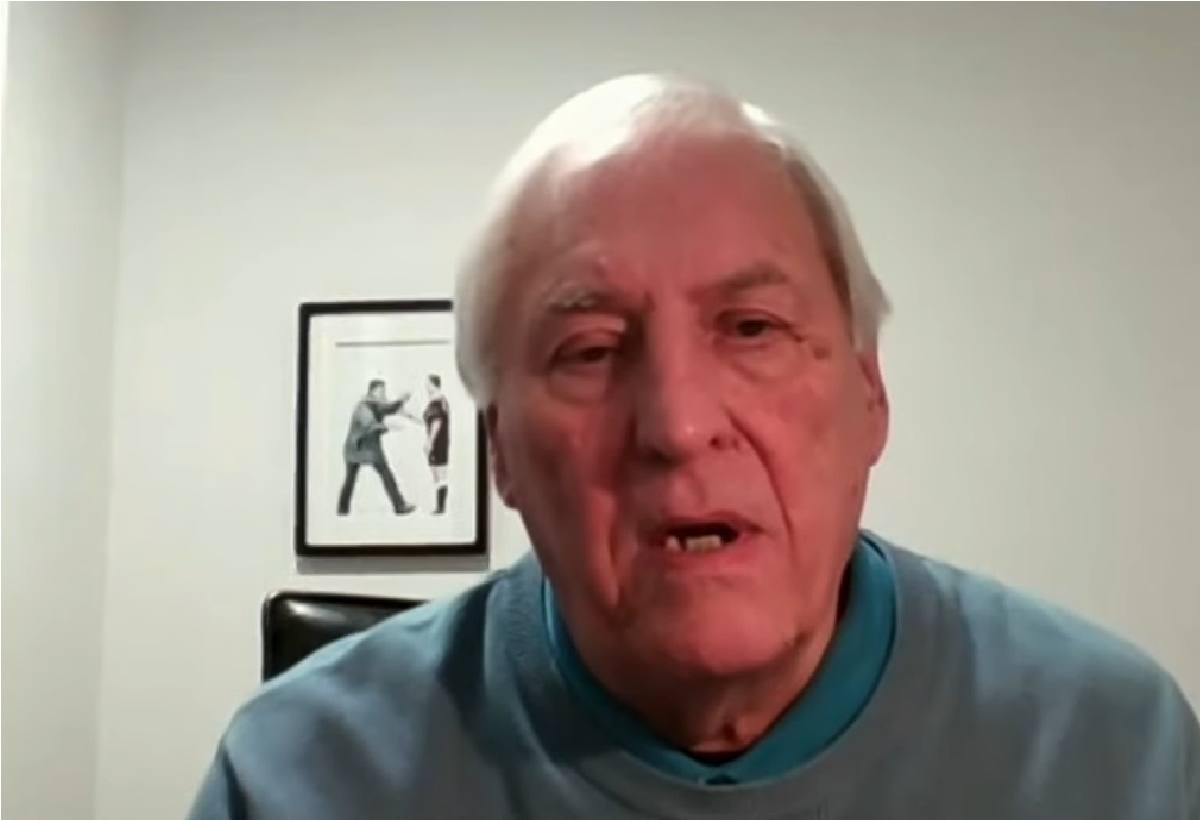
Former FIFA referee Keith Hackett offered a particularly strong critique of the call, arguing that the contact involved in the incident was not sufficient to justify a penalty under the Laws of the Game. He emphasised that football is inherently a physical sport and that not every collision inside the penalty area should automatically result in a foul being given.
“There is contact, yes,” Hackett explained, “but football is a contact sport. Not every touch inside the box is a foul. In this case, the attacker appears to be looking for the contact rather than being genuinely impeded.”
Video replays of the incident show a brief coming together between the Charlton defender and the Ipswich attacker inside the penalty area. However, observers have noted that the defender did not appear to make a reckless challenge, lunge, or use excessive force. Instead, the contact appeared minimal and incidental, which has fuelled arguments that the decision was overly harsh.
Hackett’s assessment focused heavily on the criteria set out by the International Football Association Board (IFAB), which states that a foul must involve carelessness, recklessness, or excessive force. In his view, none of these conditions were clearly met.
“For me, this is a coming together — nothing more,” he continued. “The defender does not lunge, does not trip, and does not use undue force. The attacker goes down far too easily, and that has influenced the referee’s decision.”
The timing and context of the decision have further intensified the debate. With both Ipswich Town and Charlton Athletic competing in a highly competitive Championship season where promotion hopes are finely balanced, the stakes attached to every refereeing call are significant. Hackett stressed that officials must maintain a particularly high threshold when awarding penalties in such high-pressure environments.
“A penalty is effectively a free goal opportunity,” he said. “You cannot give those on suspicion or minimal contact. The referee must be absolutely convinced — and I don’t see how that standard is met here.”
Another major point of discussion has been the absence of VAR in the Championship. Unlike the Premier League, where video technology is available to review contentious decisions, referees in the second tier must rely solely on their on-field judgement. Hackett suggested that this particular incident might have been overturned had VAR been in use.
“With VAR, this decision is likely overturned,” he argued. “Without it, Charlton are left with no recourse, and the match is effectively decided by a questionable call.”
The fallout from the decision has been particularly frustrating for Charlton Athletic, who feel that a closely fought contest was decided by an interpretation they strongly disagree with. For Ipswich Town, while the result strengthens their promotion ambitions, the manner in which it was achieved has inevitably been overshadowed by controversy.
Hackett concluded his assessment with a broader warning about consistency in officiating standards. “This is not the level of consistency or judgment we should expect,” he said. “If that is a penalty, then defenders are being put in an impossible position.”
As discussions continue, the incident is likely to remain a talking point throughout the Championship season, serving as another example of how single refereeing decisions can have major sporting and emotional consequences for clubs at both ends of the table.