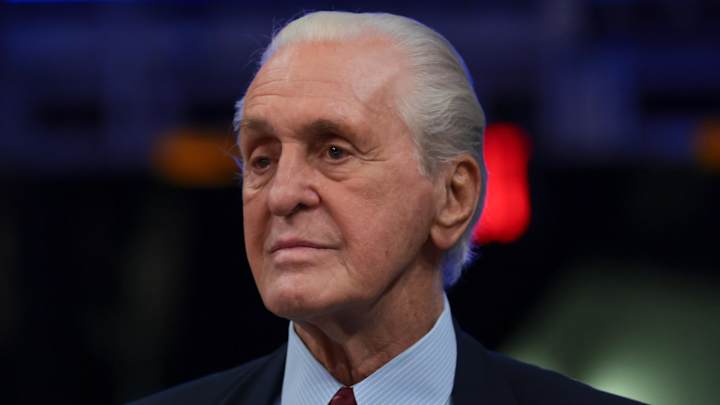
The Orlando Magic’s recent playoff surge is starting to cast an uncomfortable spotlight on the Miami Heat’s decision-making, with President Pat Riley’s approach increasingly looking questionable in hindsight as his in-state rivals thrive in the postseason spotlight.
While Miami’s season ended early after a disappointing Play-In exit, Orlando have continued to build momentum, pushing deep into the playoffs and outperforming expectations. Their current form has reignited debate about whether the Heat misjudged both their own roster and the competitive landscape of the Eastern Conference.
Heat’s gamble fails to pay off
Miami entered the season determined to compete rather than retool, resisting the idea of shifting into a rebuilding or asset-accumulation phase. Instead, the franchise doubled down on its existing core, hoping continuity and experience would be enough to remain a serious postseason threat.
However, that strategy ultimately fell short. The Heat failed to find consistent form across the campaign and were quickly eliminated from the Play-In Tournament, ending their playoff hopes earlier than anticipated.
In contrast, Orlando—despite their own inconsistencies during the regular season—have found another level in the postseason. Their energy, athleticism, and depth have allowed them to exceed expectations and establish themselves as one of the most competitive underdog stories of the playoffs.
Orlando’s rise highlights Miami’s miscalculation
Before the season, Orlando were widely projected as a developing team with potential to challenge for a higher seed, though few expected them to become a serious postseason threat so quickly. While they did not dominate the regular season, their underlying talent has become increasingly visible during the playoffs.
That contrast has only grown sharper as Miami reflect on their own shortcomings. The Heat’s roster, while experienced, lacked the consistent offensive output and adaptability needed to sustain a deep run in a loaded Eastern Conference.
The Magic, meanwhile, have benefited from a roster that, while young, possesses greater overall athletic upside and defensive versatility. That combination has proven decisive in high-pressure playoff environments.
Questions for the front office
Miami’s early exit has inevitably placed scrutiny on the front office’s long-term strategy. Critics argue that the franchise may have overestimated the competitiveness of its roster, potentially missing an opportunity to pivot earlier and position themselves more effectively for future roster improvements.
Had Miami taken a different approach during the season, they might have been better placed in terms of draft positioning or future flexibility. Instead, they now face an offseason where significant evaluation and potential restructuring could be required.
While Pat Riley’s leadership has historically been associated with bold decisions and championship success, recent seasons have prompted questions about whether the current direction remains effective in an evolving NBA landscape.
A contrasting path forward
As Orlando continue their postseason run, their success is increasingly being viewed as a benchmark of what a younger, more dynamic roster can achieve when given time to develop chemistry and confidence.
For Miami, the challenge now is to reassess their identity. The organization must determine whether to maintain its current competitive timeline or shift toward a more flexible rebuild that better aligns with the realities of the Eastern Conference hierarchy.
What is clear, however, is that the gap between perception and performance has become harder to ignore. The Magic’s rise has not only reshaped expectations in the East but also intensified pressure on a Heat franchise searching for answers after a disappointing campaign.