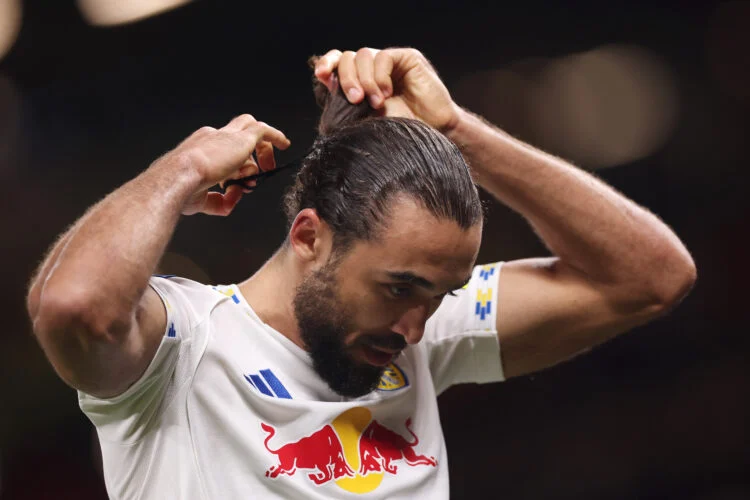
In recent pundit debate, former England striker Alan Shearer made a striking assertion: that Dominic Calvert-Lewin is the Premier League’s best striker in the air. It’s the kind of statement that usually triggers disagreement, especially when names like Erling Haaland are in the mix. But this season’s data, particularly from his spell at Leeds United, gives the argument more substance than it might first appear.
Aerial output that stands out
Across the current campaign in the Premier League, Calvert-Lewin has reportedly won 112 aerial duels, placing him among the division’s most effective players in the air. For context, elite centre-backs like Virgil van Dijk typically top these charts, with figures around the mid-140s in similar periods, so Calvert-Lewin’s total as a forward is significant.
That output isn’t just academic. He has also contributed 11 league goals in 31 appearances, with a large portion of his threat coming from crosses, set pieces, and direct deliveries—areas where aerial ability is decisive rather than decorative.
The Haaland comparison
The most eye-catching comparison is with Erling Haaland. The Manchester City striker is often viewed as the benchmark for physical dominance among forwards, yet his reported aerial duel wins this season sit considerably lower, around 69.
On raw numbers, that gap is substantial. However, it also reflects style rather than absolute dominance: City’s chance creation often prioritises cut-backs and low crosses rather than repeated high-ball deliveries into the box.
Still, the difference helps explain why Shearer’s comment gained traction—Calvert-Lewin is being used in a system that maximises aerial engagement far more consistently.
System and usage matter
At Leeds under Daniel Farke, the tactical approach has leaned more heavily into wide delivery and second-ball situations. That naturally inflates aerial duel counts for a central striker. In contrast, Haaland operates in a more varied attacking structure where finishing runs and box positioning often matter more than repeated aerial contests.
This doesn’t diminish Calvert-Lewin’s numbers, but it does contextualise them. Aerial dominance is not just about winning headers—it’s also about how often a player is asked to contest them.
Peer recognition backs the eye test
Former striker Chris Sutton has also previously praised Calvert-Lewin’s leaping ability and timing, highlighting traits like hang time and aggression as key strengths. That type of endorsement aligns with what the statistics suggest: he is consistently effective in contested aerial moments, not just opportunistically scoring from them.
So is Shearer right?
The data supports the idea that Calvert-Lewin is among the Premier League’s most productive aerial forwards this season. Whether that makes him the best depends on how the question is framed.
If the metric is pure aerial duel volume and impact in those situations, his case is strong. If it includes efficiency, chance quality, and tactical context, the picture becomes more nuanced.
What’s clear is that Shearer’s claim isn’t as subjective as it sounds. In a league where aerial threats are increasingly specialised, Calvert-Lewin’s profile remains unusually dominant—and statistically difficult to ignore.