Football’s governing bodies are once again examining potential rule adjustments after a controversial incident involving goalkeeper time-wasting during a high-profile cup match between Chelsea and Leeds United at Wembley.
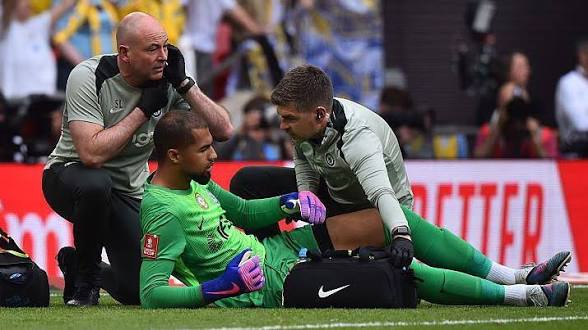
The situation arose when Chelsea goalkeeper Robert Sanchez went to ground during the second half of the FA Cup semi-final, prompting a stoppage in play for medical attention. At the time, Chelsea were narrowly ahead and under increasing pressure from Leeds, leading to frustration from both players and supporters.
Leeds fans reacted angrily, accusing Chelsea of deliberately disrupting the flow of the game. The incident escalated tensions on the pitch, with visible frustration among Leeds players, including their captain Ethan Ampadu, who was reportedly incensed by the interruption as his team pushed for an equaliser.
The stoppage also allowed Chelsea’s coaching staff to deliver instructions to their players, a moment that further fueled criticism from opposition supporters and pundits who viewed it as a tactical ploy rather than a genuine injury concern.
Among those critical of the situation was former Chelsea player Pat Nevin, who described such incidents as gamesmanship and suggested that officials need to be more decisive when assessing whether stoppages are legitimate.
The debate has now reached higher levels of football governance. The International Football Association Board (IFAB), which oversees the laws of the game, is exploring possible trials aimed at reducing or eliminating similar stoppage tactics. These proposals are expected to be tested during the 2026/27 season, with competitions such as the Women’s Super League volunteering to participate.
Several variations of potential rule changes are under review. One proposal would require any injured player receiving treatment to leave the field for a set period of time, potentially reducing teams’ ability to use medical stoppages as a tactical reset. Another version extends this idea by increasing the duration of enforced absence, which would leave teams temporarily down a player, creating a stronger deterrent against unnecessary delays.
Additional suggestions include restricting player movement during medical stoppages, particularly preventing teams from gathering near the technical area while play is paused. This aims to limit the opportunity for coaching staff to pass instructions during interruptions.
A separate approach, already used in other leagues, focuses on controlling on-field behaviour during stoppages and imposing disciplinary consequences if players or staff attempt to exploit injury breaks for tactical advantage.
However, these proposals have sparked debate within the sport. While supporters argue that stricter rules would improve fairness and maintain game flow, critics warn that overly harsh penalties could discourage genuine injury treatment or create unintended tactical consequences.
The issue reflects a broader concern within football about how to balance player welfare with the prevention of time-wasting tactics. With trials potentially beginning in the near future, the sport may soon see significant changes aimed at addressing one of its most controversial in-game strategies.