The Toronto Raptors’ 2025–26 campaign may not end with a deep playoff run, but internally and externally, there is a growing sense that this season still represents a meaningful step forward for the franchise.
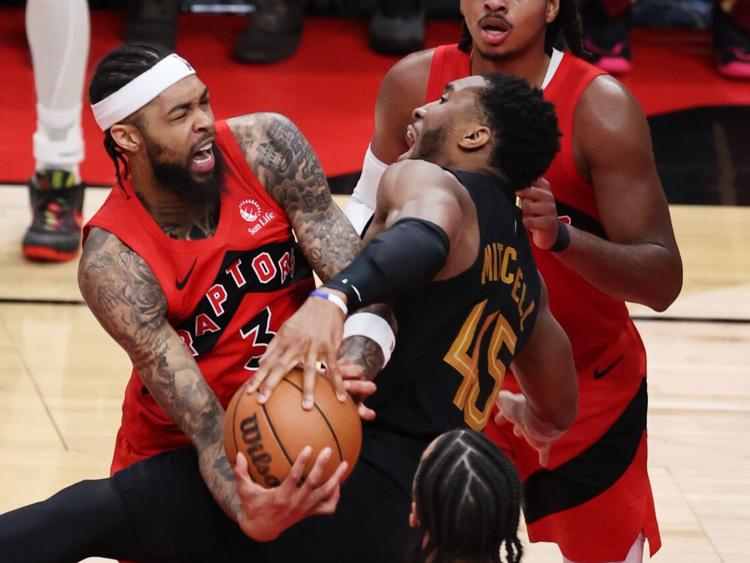
Regardless of what happens in their remaining postseason games against the Cleveland Cavaliers, the Raptors have already ticked off the primary objectives set at the start of the year: development of their young core, stability around Brandon Ingram, and a clearer evaluation of Scottie Barnes as a franchise cornerstone.
For a team that followed back-to-back seasons of 25 and 30 wins, the shift has been noticeable. Toronto has re-established itself as a competitive, defensively strong group capable of hanging with higher payroll, veteran-heavy opposition like Cleveland.
A key reason for that improvement has been the emergence of the Raptors’ younger players. Ja’Kobe Walter, Collin Murray-Boyles, and Jamal Shead have all taken meaningful steps in their development, transitioning from promising prospects into legitimate rotation contributors. Murray-Boyles, in particular, has stood out as one of the most impactful draft selections of the previous cycle, giving the front office renewed confidence in its scouting direction.
Scottie Barnes has been the defining storyline of the season. Already an All-Star and former Rookie of the Year, he has elevated his two-way game even further, becoming one of the league’s most versatile defensive presences while also increasing his offensive responsibility. In the playoffs, he has arguably been the most influential player in the series despite competing against established stars such as Donovan Mitchell, James Harden, and Evan Mobley.
His performance has reinforced the belief that he is capable of leading a contending team rather than simply supporting one.
There have also been encouraging contributions from unexpected sources. RJ Barrett, whose role fluctuated throughout the season and who was frequently mentioned in trade speculation, has delivered several strong postseason performances, adding valuable scoring punch in key moments. Head coach Darko Rajaković has also earned praise for keeping the group competitive, implementing defensive structure, and adjusting effectively throughout the year.
However, not everything has gone smoothly. Brandon Ingram’s season has been inconsistent, particularly in the playoffs, where injury issues and uneven production have raised questions about his long-term fit within the team’s core structure. His availability and impact remain key variables heading into the offseason.
Even so, the broader outlook for Toronto remains positive. The organization has built a strong defensive identity, finished among the league’s better units on that end of the floor, and developed multiple young players into contributors ahead of schedule. The G League pipeline has also provided depth, while upcoming draft capital gives the front office another opportunity to add shooting or backcourt creation.
The challenge now shifts to the next stage: progression.
Moving from a developing, mid-tier team into a consistent 45–50 win contender in a stronger Eastern Conference will require another leap. It will also require internal decisions on roster balance, shooting consistency, and whether additional veteran help is needed around Barnes.
But for now, the Raptors can reflect on a season that, by most measures, exceeded expectations. The foundation looks more stable, the young core more confident, and the identity clearer than it has been in years.
The next step is the hardest one—but Toronto finally looks equipped to take it.