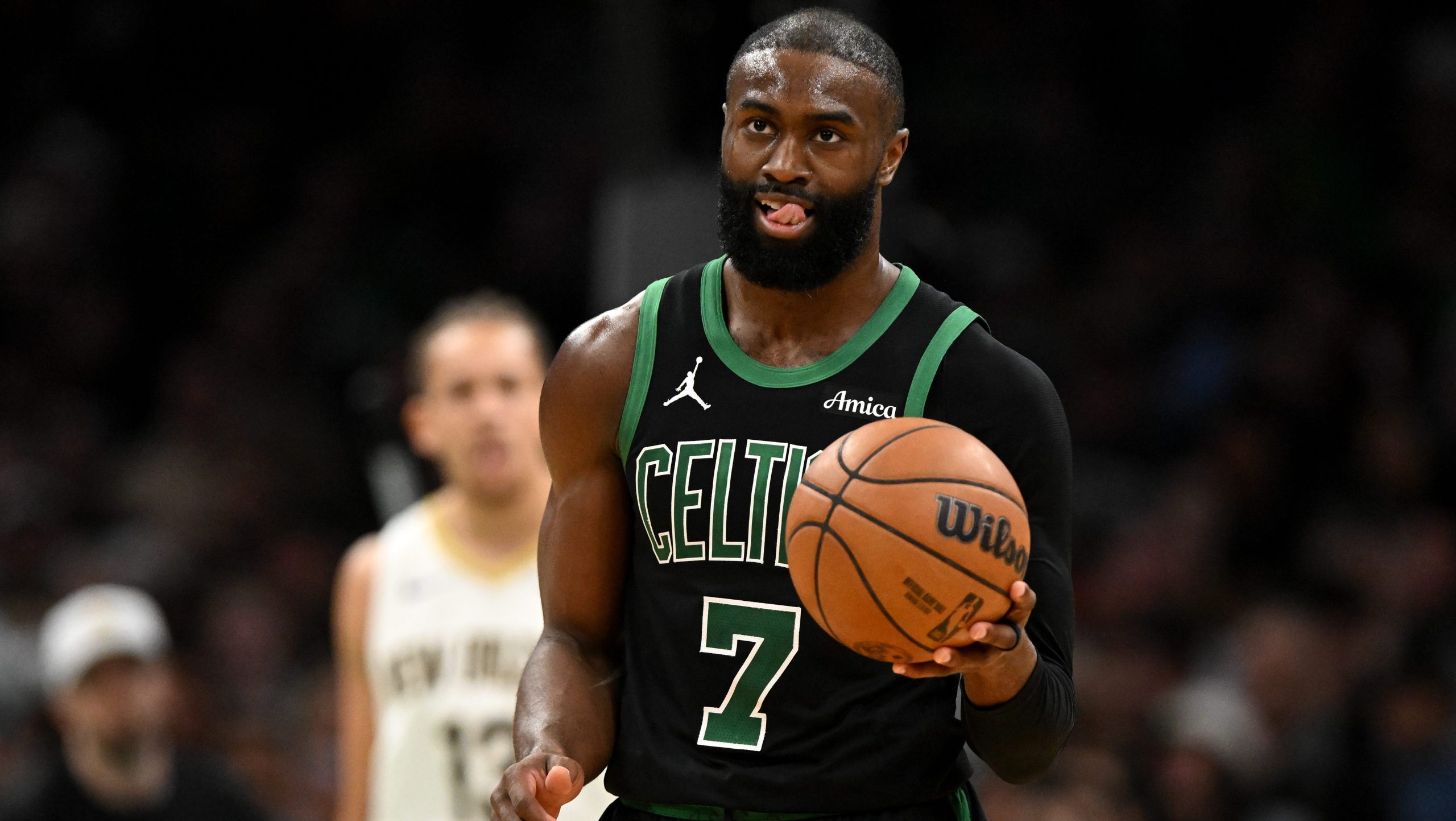
The Boston Celtics’ 2025-26 campaign ended in historic disappointment on Saturday night, as the franchise collapsed from a 3-1 series lead to lose Game 7 against the Philadelphia 76ers. While the box score suggests Jaylen Brown did his part to keep the ship afloat, a deeper look into the analytics reveals a more troubling narrative for the Celtics’ star.
In a 109-100 defeat that marked the first time in 44 years that Philadelphia bested Boston in a Game 7, Brown carried the offensive load in the absence of Jayson Tatum, who was sidelined with a last-minute knee injury. Despite the loss, Brown’s defiance remained unshaken.
The Numbers Behind the Collapse
On the surface, Brown’s individual effort in Game 7 was heroic. He finished with 33 points, spearheading a second-half surge that nearly erased an 18-point deficit. However, the data from the final three games of the series—all losses—paints a much bleaker picture of his overall impact.
The “Net-Negative” Reality:
- Plus/Minus: Brown was a staggering -57 over the final three games.
- Efficiency Dip: During the losing streak, his shooting fell to 41.8% from the field and a cold 31.6% from beyond the arc.
- Impact: While Brown put up points, the Celtics were consistently outscored while he was on the hardwood, contributing to the first blown 3-1 lead in the storied history of the franchise.
Derrick White, another cornerstone of the Celtics’ defense, also struggled with a -45 rating during that span, though his Game 7 performance (26 points, five 3-pointers) showed signs of a late-series recovery.
”No Regrets”: Brown Reflects on a Bitter End
Despite the statistical red flags and the stinging nature of the exit, Brown refused to point fingers or lament the team’s performance. Speaking to the media post-game, he emphasized the growth of their opponents and the effort of his teammates.
”Obviously, we would have liked to close it out… but Philadelphia is a good basketball team, and they’ve gotten better since the regular season. We knew it was going to be a fight. Nothing to hang our head over. Got no regrets.”
Brown praised the team’s intensity, especially considering the Celtics were forced to adapt throughout a season where many expected a “gap year” due to Tatum’s fluctuating availability. Instead, Boston defied expectations to win 56 games and enter the postseason as the Eastern Conference favorites.
Financial Gridlock: What’s Next for Boston?
The Celtics now face a daunting offseason defined by limited financial flexibility. While they have successfully avoided the “second apron” penalties for now, the roster is top-heavy and expensive.
The Salary Cap Situation for 2026-27:
- The Star Duo: Jayson Tatum and Jaylen Brown are set to earn a combined $115 million next season.
- Core Depth: Derrick White remains under contract for three more years at a total value exceeding $97 million.
- Flexibility: With only eight players currently under guaranteed contracts and the 27th overall pick in the upcoming draft, the front office has almost zero “cap room” to make meaningful additions via free agency.
Unless General Manager Brad Stevens considers a seismic trade involving one of the “Big Three,” the Celtics will likely have to rely on internal development and minimum-salary veterans to fill out the bench.
For a team that was just two wins away from the Eastern Conference Finals, the margin for error has never been thinner. As Brown enters another summer of scrutiny, the question remains whether this core can finally get over the hump, or if the “alarming” stats from this series exit signal a need for radical change.