The Oklahoma City Thunder have quietly built one of the most complete and flexible rosters in the modern NBA, and the deeper you look, the more the conversation shifts beyond just this season. The real question being raised isn’t only whether they can win now — it’s whether this team would be built to win in any era of basketball.
That idea starts with their identity on defense. Championship teams across NBA history have almost always shared one trait: they defend at an elite level. Whether it was the physical grind of the 1990s, the half-court battles of the early 2000s, or today’s spacing-heavy league, defense translates everywhere.
Oklahoma City checks that box in a way few teams can. With perimeter defenders like Lu Dort and Cason Wallace, versatile two-way wings in Jalen Williams, and interior protection from Chet Holmgren and Isaiah Hartenstein, the Thunder can switch, rotate, and protect the rim at a level that would hold up in any style of basketball. Add Alex Caruso into that mix, and the defensive intensity only deepens.
But defense alone doesn’t win championships in any era — stars do.
That’s where Shai Gilgeous-Alexander becomes the defining piece of the conversation. His game isn’t built on trends or systems. It’s built on shot creation, balance, midrange scoring, and the ability to slow the game down when everything else speeds up. Those traits don’t belong to one era. They survive all of them.
In a more physical, hand-check-heavy NBA, he still gets to his spots. In a modern switch-everything system, he still breaks down defenders. In a slower, grind-it-out playoff environment, he still generates offense when possessions matter most. That kind of scoring versatility is what separates stars from franchise cornerstones.
Then comes another overlooked factor: adaptability.
Oklahoma City isn’t locked into one style. They can play big with Holmgren and Hartenstein, controlling the paint and rebounding battles that defined older eras. Or they can stretch the floor, switch everything defensively, and push tempo like a modern contender. That tactical flexibility is rare — and historically, it’s been a trait of championship teams that survive multiple playoff rounds.
Depth also plays a major role in this discussion. Across decades of NBA champions, the pattern is consistent: teams that win are rarely top-heavy. They have waves of contributors who can step up when matchups change or injuries hit. The Thunder fit that mold, with a roster built to absorb pressure rather than collapse under it.
Equally important is how they play together. Oklahoma City doesn’t rely on isolation-heavy basketball or predictable sets. They move the ball, trust rotations, and defend with a level of buy-in that doesn’t fade when the game gets tight. That type of cohesion is often what separates contenders from champions — regardless of era.
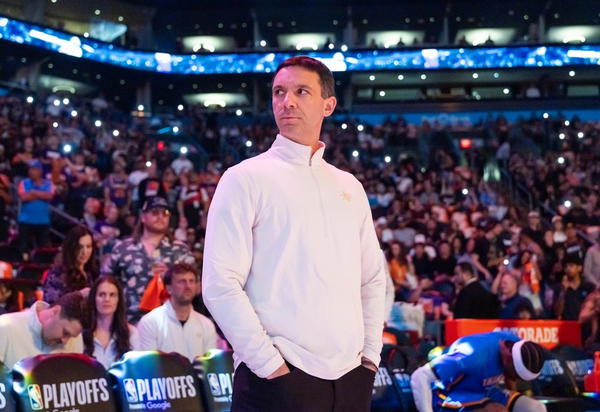
Coaching ties it all together. Mark Daigneault has shown an ability to adjust game plans, manage rotations, and solve problems on the fly. That adaptability is crucial when projecting teams across different basketball eras, where styles and rules constantly change.
So while comparisons across eras are always imperfect, the core ingredients remain consistent: elite defense, a true superstar, versatility, depth, and discipline.
By those standards, this Thunder team doesn’t just look like a modern contender.
They look like a team built to survive — and win — in almost any version of the NBA.