The NBA has always been defined by rivalries that transcend eras — from Russell vs. Chamberlain to Bird vs. Magic, Jordan vs. the Bad Boy Pistons, and LeBron vs. Curry. Now, a new chapter is beginning to form in real time.
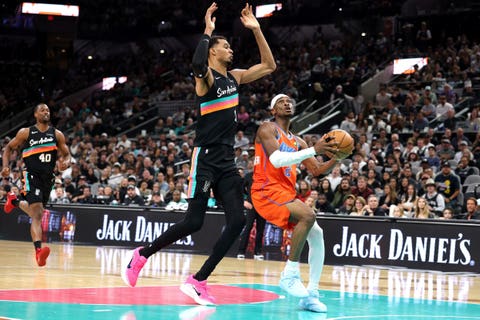
The Oklahoma City Thunder and San Antonio Spurs are no longer just two elite Western Conference teams. They are fast becoming the league’s most compelling new rivalry, with a potential dynasty-defining playoff series looming between them.
When Game 1 of the Western Conference Finals tips off, it won’t just be about a trip to the NBA Finals. It may mark the beginning of a long-term power struggle between two franchises built for sustained dominance.
A Collision of Two Modern Powerhouses
The Thunder enter as reigning NBA champions and the league’s most dominant regular-season force, finishing with a 64–18 record and an historically strong net rating. Led by MVP candidate Shai Gilgeous-Alexander, Oklahoma City has already established itself as the benchmark of consistency and execution.
Across the court stands San Antonio, led by generational phenom Victor Wembanyama. The Spurs have rapidly evolved into a contender, pairing elite defensive versatility with a rapidly improving supporting cast that has already proven capable of challenging Oklahoma City head-on.
These teams are not accidental contenders. They are built for years of contention — and that is exactly what makes this matchup so significant.
A Season Series That Raised Eyebrows
The regular-season meetings between these two teams only intensified the anticipation.
San Antonio won four of five matchups, including a dominant stretch where Wembanyama’s role and impact varied game to game, showcasing the Spurs’ tactical flexibility against the defending champions.
Oklahoma City’s lone victory came mid-season, but even that did little to settle the growing debate: which team actually holds the upper hand when it matters most?
As history has repeatedly shown, regular-season results rarely define playoff reality. But they often plant the seeds for something larger.
Wembanyama vs SGA: A Rivalry Within the Rivalry
At the center of this emerging storyline are two of the NBA’s brightest stars: Victor Wembanyama and Shai Gilgeous-Alexander.
Wembanyama represents the new-age unicorn — a defensive anchor with perimeter skills and unmatched physical tools. Gilgeous-Alexander, meanwhile, is the league’s most polished scoring guard, capable of controlling tempo and dismantling defenses with surgical precision.
There is already subtle tension forming between the two camps, fueled by competitive encounters dating back to international play and reinforced through high-stakes NBA battles.
Even subtle comments and competitive respect have been interpreted through a rivalry lens, with both players symbolizing opposing visions of modern basketball dominance.
The Playoffs Change Everything
While narratives are forming, the reality is that playoff basketball reshapes perception instantly.
Oklahoma City’s early postseason dominance — including an 8–0 playoff start — has reinforced their reputation as a machine-like contender. Their depth, discipline, and defensive identity have made them one of the hardest teams to break down in the league.
San Antonio, however, has taken a more gradual path. Their playoff run has required more adjustments, more problem-solving, and more reliance on Wembanyama’s evolving two-way impact.
But that may ultimately make them more dangerous — a team still discovering its ceiling while already competing at the highest level.
A Rivalry Built for the Future
Regardless of how this series ends, both franchises are positioned for long-term contention. That is what separates this matchup from a typical conference final.
This is not a one-off collision. It feels like the beginning of a recurring storyline — one that could define the Western Conference for years to come.
If Oklahoma City represents the established force, San Antonio represents the challenger arriving ahead of schedule.
And when those two forces collide on the playoff stage, the NBA rarely forgets what happens next.