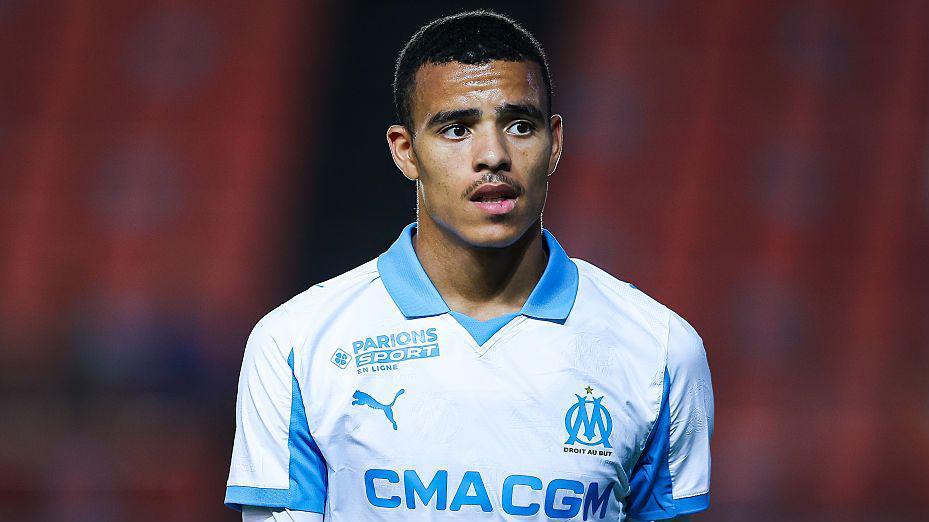
Leeds United’s return to top-flight ambition under Daniel Farke has naturally pushed the club into conversations around ambitious and controversial transfer targets. One name that continues to surface in discussions is Mason Greenwood, currently rebuilding his career in European football after a turbulent period away from the Premier League.
The question is simple but loaded: should Leeds United take the risk and attempt to sign him?
The answer depends on whether Leeds prioritize pure footballing impact or long-term stability and public perception.
Greenwood’s Current Form and Development
Greenwood’s recent career trajectory has been defined by a reset in Europe, where he has been working to re-establish himself as a consistent attacking threat at club level with Olympique de Marseille. He has been used primarily as a forward who can operate centrally or drift into wide attacking zones.
What stands out most in his recent performances is not just output, but refinement. His game has evolved beyond being purely left-foot dominant finishing. He has added:
- Better off-ball movement between the lines
- Improved link-up play in tight spaces
- Greater patience in final-third decision-making
- Increased versatility across the front line
While he is still not a fully complete, high-press system forward, he has clearly matured into a more rounded attacking player compared to his early Premier League breakthrough.
Why Leeds Should Consider the Signing
1. Elite Technical Ability
Even with time away from England, Greenwood’s technical level remains exceptional. His first touch, striking technique, and ability to convert half-chances would immediately raise Leeds United’s attacking ceiling.
In tight Premier League matches where chances are limited, a forward capable of producing goals out of nothing is a major advantage.
2. Tactical Fit for Leeds’ Style
Leeds under Daniel Farke typically rely on structured attacking play combined with vertical transitions. Greenwood’s strengths align well with that approach:
- Quick counter-attacking situations
- Attacking space behind defensive lines
- Efficient finishing from central zones
- Ability to operate across multiple forward roles
This makes him a natural fit for a system that values directness and quick attacking output.
3. Potential Market Value Opportunity
If Greenwood becomes available under favourable financial terms due to external circumstances, he could represent a rare market opportunity. A player with high-end technical ability entering his prime years is usually priced at a premium.
For a club like Leeds aiming to stabilise in the Premier League, such opportunities can accelerate progress.
Why Leeds Should Not Sign Him
1. Reputational and Public Pressure
Greenwood remains one of the most sensitive figures in English football due to past off-field allegations and the continued scrutiny around his career.
Any potential signing would carry significant consequences:
- Divided fan reaction
- Increased media pressure
- Possible sponsor concerns
- Constant public attention on and off the pitch
For a club rebuilding its Premier League identity, this is a major factor.
2. Squad Environment and Stability
Even if the player integrates professionally, high-profile controversial transfers can create an external distraction that affects squad focus. Leeds would need to manage constant media narratives alongside on-pitch expectations.
In a survival-focused Premier League season, stability is often more valuable than talent alone.
3. Risk of Tactical Over-Reliance
While Greenwood adds clear attacking quality, there is also the risk of Leeds becoming overly dependent on individual brilliance rather than collective chance creation.
Successful Premier League sides tend to rely on systems, not single players.
Final Verdict: A Decision That Defines Ambition
From a purely football perspective, Mason Greenwood would likely improve Leeds United’s attack. His finishing ability, versatility, and technical quality would offer something the squad currently lacks.
However, the decision is not purely football-based.
It sits at the intersection of performance, reputation, and long-term club direction.
If Leeds prioritise immediate attacking improvement and accept the external scrutiny, the move becomes logical. If they prioritise stability, squad harmony, and brand protection, they may decide the risk outweighs the reward.
Either way, Mason Greenwood remains one of the most divisive and high-impact potential transfer discussions in modern football—and Leeds United would be stepping directly into the centre of that debate.