As the 2026 summer transfer window builds momentum, few attacking players in world football are generating more attention than Crysencio Summerville. The Dutch winger has taken a major step forward in his career over the past year, and his performances at the FIFA World Cup have elevated him from an exciting Premier League talent into one of the most in-demand wide forwards in Europe.
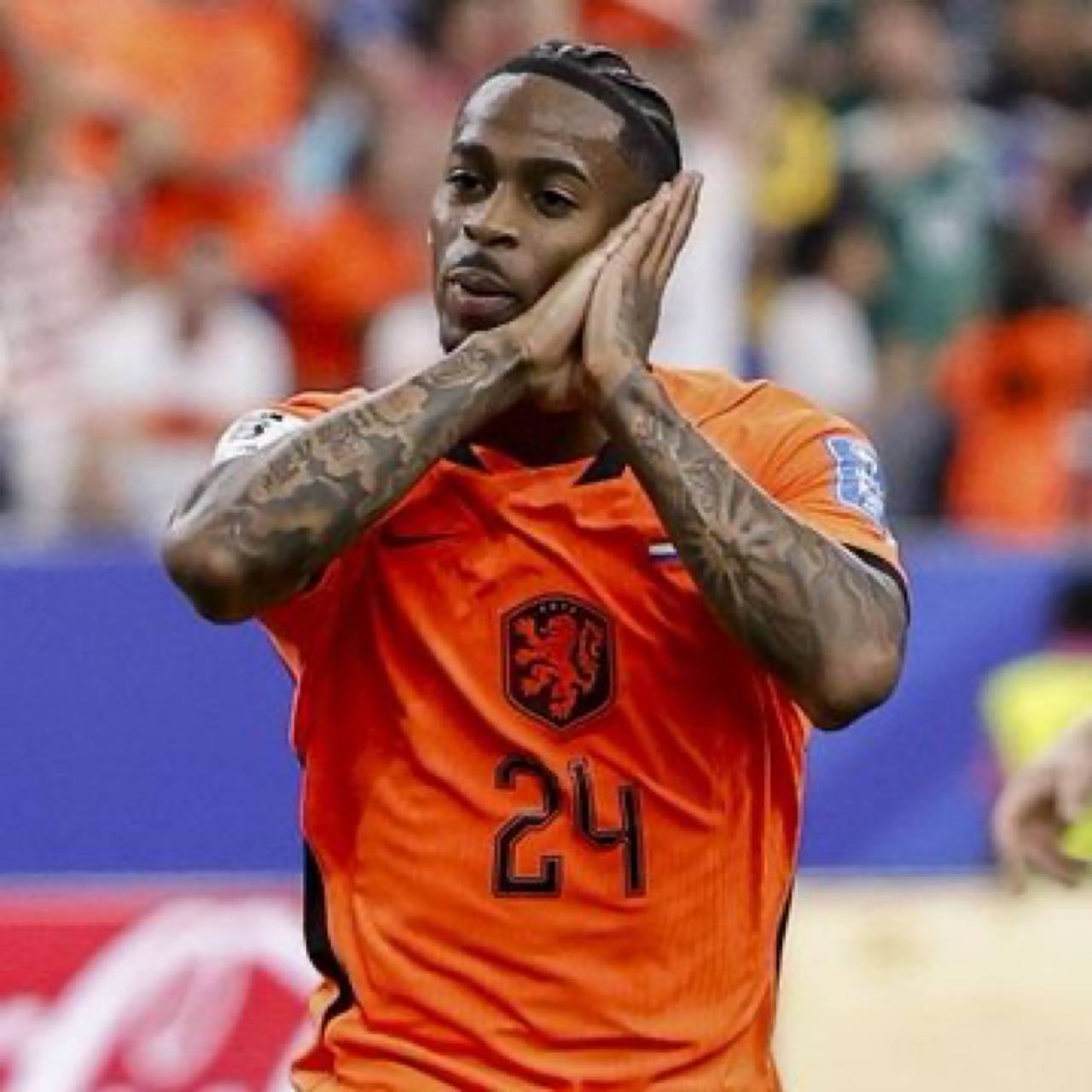
Representing the Netherlands, Summerville has made a decisive impact on the global stage. He has already scored in the tournament, including a late goal in the Netherlands’ emphatic 5–1 win over Sweden, where he also contributed creatively in a dominant attacking display that underlined his growing reputation at international level. His ability to influence matches at such a high level has significantly strengthened interest from top clubs ahead of the summer window.
One of the clubs reportedly monitoring his situation is Newcastle United.
For Newcastle, the connection is logical. Under Eddie Howe, the club has developed into a disciplined, high-energy side capable of competing for European qualification and challenging established Premier League powers. However, one area that continues to require refinement is wide attacking depth and consistent creativity from the flanks.
That need has become even more relevant following significant changes in Newcastle’s attacking structure. The departure of Anthony Gordon to Barcelona has left a clear gap in the squad’s left-sided attacking threat, removing one of the club’s most dynamic transition players. Gordon’s output in pressing, ball carrying and goal threat was central to Newcastle’s attacking identity, and replacing that profile is now a key recruitment priority.
This is where Summerville enters the conversation.
The Dutch international offers a slightly different but highly valuable profile. While Gordon excelled in aggressive off-the-ball pressing and rapid transition running, Summerville brings a more technical edge in possession. He is a highly effective one-vs-one dribbler, capable of breaking down compact defensive blocks—an area where Newcastle have occasionally struggled when opponents sit deep.
Rather than replicating Gordon’s exact role, Summerville would add a new dimension to Newcastle’s attack.
His World Cup performances have highlighted exactly why he is attracting elite attention. Beyond his goal against Sweden, he has consistently shown the ability to take on defenders, create chances in tight spaces, and produce moments of individual quality under pressure. Those traits are particularly valuable in knockout football and against low-block Premier League opposition.
From a tactical perspective, Eddie Howe’s system would likely suit him well.
Newcastle’s structure is built on intensity, vertical transitions, and quick attacking combinations. Summerville’s acceleration with the ball and willingness to drive forward fits naturally into that approach. While he is more technically oriented than a pure transition winger, he still offers the speed and directness required to thrive in Howe’s system.
There is also a strong comparison to be made with Jacob Murphy and Anthony Elanga.
Murphy provides reliability and work rate, while Elanga brings pace and direct running in wide areas. Summerville would sit between those profiles and a more creative winger—offering both the ability to stretch the pitch and the technical skill to unlock defences in settled possession. That combination is rare and valuable in a squad aiming to compete on multiple fronts.
At 24 years old, Summerville also aligns perfectly with Newcastle’s recruitment strategy. The club has consistently targeted players who are entering their prime years, with room for further development but already proven in competitive environments.
His Premier League experience with West Ham, combined with his previous breakthrough seasons at Leeds United, makes him a relatively low-risk adaptation signing.
Competition for his signature is expected to be intense. Clubs such as Manchester United, Aston Villa, and others across Europe are monitoring his situation closely, and his World Cup form will only accelerate that interest. West Ham are also unlikely to sanction a sale without a significant fee, especially given his importance and rising value.
Still, Newcastle United’s project remains one of the most attractive in Europe outside the traditional elite. Champions League ambition, financial strength, and a clearly defined tactical identity under Eddie Howe all contribute to their growing pulling power in the transfer market.
If Newcastle are looking to evolve their attack following recent squad changes, Crysencio Summerville represents exactly the kind of signing that would make sense: technically gifted, tactically adaptable, and already proving himself on football’s biggest stage.
His World Cup performances have confirmed what many scouts already believed—he is ready for the next step.
For Newcastle United, that step could be wearing black and white at St James’ Park.