The tactical landscape at Elland Road is undergoing a brutal, necessary transformation. As Leeds United prepares for the upcoming campaign, chairman Paraag Marathe has made one thing abundantly clear: the reckless spending of the past is over. Following last summer’s £100 million injection—which saw ten new faces arrive at the club—the financial reality for the Whites has shifted. With the new Squad Cost Ratio (SCR) regulations now dictating the terms of play, Leeds is operating under a strict “sell-to-buy” mandate.
The Perri Paradox: A £15m Investment Under the Microscope
The most striking development in this new era of austerity is the club’s stance on Brazilian goalkeeper Lucas Perri. Signed just last year for £13.9m, Perri was intended to be a long-term solution between the sticks. However, the emergence of veteran Karl Darlow—who is reportedly close to finalizing a new deal at Elland Road—has rendered the Brazilian surplus to requirements.
Reliable sources have confirmed that Leeds is officially “open to offers” for Perri. However, the situation remains a complex game of dominoes. The club is not simply looking to trim the fat; they are looking to upgrade. Perri’s exit is contingent on securing a legitimate, high-level replacement. If the club fails to land one of their primary targets—such as Manchester City’s James Trafford or Parma’s Zion Suzuki—the 28-year-old will be kept on the roster to fight for his place. It is a calculated risk, but one that highlights the club’s newfound commitment to ruthlessly evaluating their transfer hits and misses.
The Impending “Chop Block” List
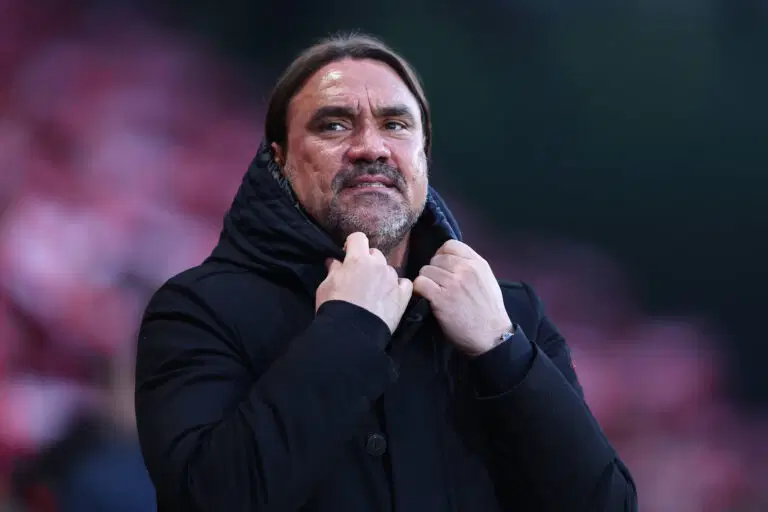
Perri is merely the tip of the iceberg. As Daniel Farke refines his squad, several high-profile names are facing an uncertain future. The arrival of creative maestro Harry Wilson is a statement of intent, but it creates a logjam in the attacking third. With Wilson now expected to command a significant share of the minutes, the writing may be on the wall for wingers like Wilfried Gnonto and Dan James. Both struggled to find consistent form last season, and with the club needing to generate significant capital, their departures would be the most logical way to balance the books.
The defensive line is also under scrutiny. Pascal Struijk is entering the final year of his contract, and with the club wary of repeating the mistake of letting talent walk away for free, he has become a prime candidate for a summer sale. Add in peripheral figures like Max Wober, Isaac Schmidt, and Joe Gelhardt—who are clearly not part of Farke’s tactical blueprint—and it is evident that a massive exodus is coming to West Yorkshire.
A Logical Approach to a Top-Flight Return
For the Leeds faithful, this ruthless efficiency might feel jarring. After a year of “quantity over quality,” the current administration is pivoting toward a leaner, more sustainable model. Marathe’s “logical approach” is a clear signal that the club is prioritizing long-term stability over short-term chaos.
The upcoming weeks will be a high-stakes chess match. Leeds must successfully offload their underperforming assets, appease the regulators, and secure the “statement” signings that Farke desperately needs to push for promotion. The era of the bloated squad is ending; the era of the high-stakes, surgical rebuild is here. Whether this bold, lean strategy results in silverware remains the burning question, but one thing is certain: no one at Elland Road is safe this summer. The clear-out has only just begun.