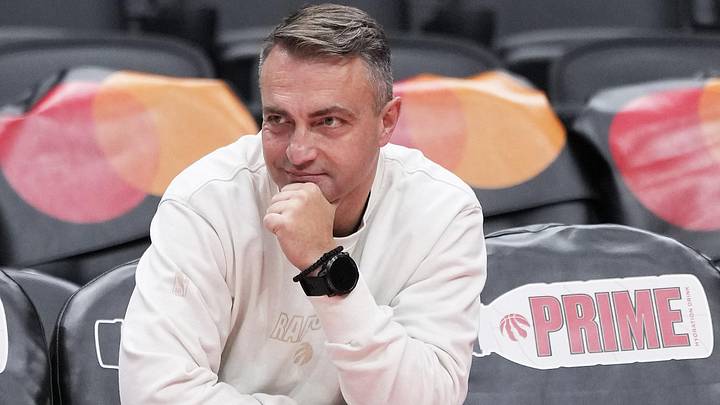
The NBA offseason has barely begun, yet the Toronto Raptors are already looking like the biggest losers of the summer. While rivals across the league are busy pulling off savvy, low-cost acquisitions to bolster their rosters, the Raptors remain locked in a financial prison of their own making. As the transaction wire fills up with names like Aaron Wiggins, Nic Claxton, and Isaiah Stewart moving to new homes for mere pocket change, Toronto fans are forced to watch from the sidelines, unable to participate in the most basic level of roster building.
The “Cheap” Misses That Are Stinging the Most
What makes this early-offseason malaise so frustrating for Toronto isn’t just the fact that they aren’t making moves—it’s that they aren’t making the right moves. Teams like the Atlanta Hawks, Chicago Bulls, and Detroit Pistons are successfully identifying undervalued talent and absorbing contracts using nothing more than second-round picks.
For a Raptors team clearly in need of both guard depth and frontcourt versatility, these players—Wiggins, Claxton, Stewart, and Isaiah Joe—would have been perfect, plug-and-play additions. They are precisely the type of “lateral moves” that a team at a crossroads should be making to sharpen their competitive edge without sacrificing their long-term future. Instead, Toronto is essentially spectating, paralyzed by a lack of maneuverability.
The Cost of Misguided Negotiations
The source of this paralysis? Previous financial blunders that have completely hamstrung the front office. The Raptors are currently squeezed into a “financial box,” possessing virtually no salary cap flexibility and lacking the mid-sized contracts required to make even simple, one-for-one trades.
This predicament traces directly back to a string of questionable contract extensions that have left the team’s books in tatters. Specifically, the deals handed out to Immanuel Quickley and Jakob Poeltl have become anchors. When these contracts are held up against league-wide benchmarks—like the bargain rates recently secured by rival guards and centers—it becomes painfully clear that Toronto drastically overpaid to retain their own talent. Now, those overpayments are preventing the team from pivoting, forcing the front office to consider “drastic” measures just to clear space.
The Crossroads: Big Swings or Total Stagnation?
Because they lack the flexibility to execute small-scale, team-improving trades, the Raptors are facing an impossible choice: stay stagnant or swing for the fences. Rumors of a “Kawhi Leonard-style” blockbuster trade continue to swirl, but for a team looking to build sustainable success, blowing up their core for a high-risk, high-reward move is a dangerous gamble.
Toronto still holds plenty of draft capital and a few massive contracts that could be used as trade bait, but utilizing these assets to force a “win-now” move before the team is truly ready could haunt them for the next decade. The irony is palpable: the Raptors have all the resources to build a champion, yet they have zero resources to build a competent supporting cast.
Unless the front office can orchestrate a complex, multi-team deal that somehow offloads their “unmovable” contracts, they are destined to remain at this crossroads for the duration of the summer. The road ahead is long, and there is still time for the narrative to change, but as it stands, the Raptors are paying the price for the financial mistakes of yesterday—and the bill is coming due at the worst possible time.