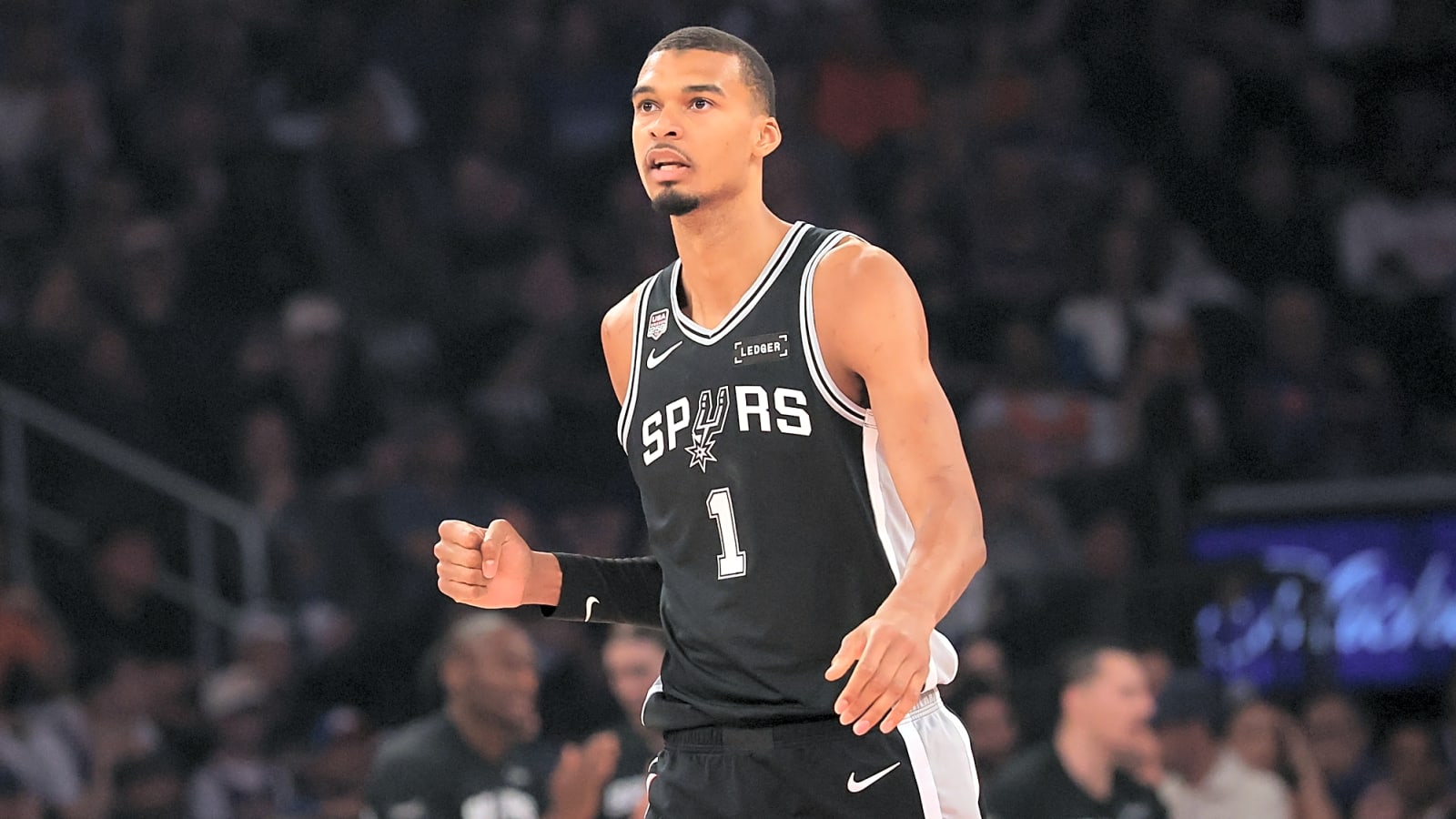
For a brief moment, it looked like the San Antonio Spurs were on the verge of building the NBA’s next unstoppable dynasty.
Victor Wembanyama, Stephon Castle, Dylan Harper and an exciting young core stormed all the way to the NBA Finals, arriving much earlier than almost anyone expected. But once they got there, one painful reality became impossible to ignore.
The Spurs weren’t strong enough.
Against the New York Knicks, San Antonio’s lack of size and physicality was exposed time and time again. Karl-Anthony Towns and Mitchell Robinson dominated the interior, and even Wembanyama found himself getting pushed around in ways fans simply hadn’t seen before.
For the first time in a long while, the 7-foot-5 superstar looked human.
The Finals made one thing clear: the Spurs needed help in the frontcourt.
And based on what happened during the 2026 NBA Draft, they may have found exactly what they were looking for.
San Antonio selected Kentucky forward Jayden Quaintance with the No. 20 pick before making another aggressive move to bring in UConn center Tarris Reed Jr. later in the first round.
At first glance, neither pick generated the same excitement as landing a superstar prospect. But the more you look at it, the more these moves feel like a masterclass from the Spurs’ front office.
Both players bring something San Antonio desperately lacked—size, strength and physicality.
Both weigh over 250 pounds and thrive doing the dirty work around the basket.
And perhaps most importantly, both players can make life significantly easier for Wembanyama.
Throughout his young career, Wembanyama has shown that he prefers to operate all over the floor instead of constantly battling bigger bodies in the paint. Offensively, he loves creating from the perimeter. Defensively, he can protect the rim, but the constant physical punishment takes its toll over an 82-game season.
The playoffs only amplified those concerns.
By adding two powerful frontcourt players, the Spurs suddenly have options.
They can experiment with Wembanyama playing power forward more frequently. They can limit his minutes at center. They can preserve his body and keep him fresh for deep playoff runs.
That flexibility could end up being invaluable.
Even more frightening for the rest of the NBA is that San Antonio didn’t have many weaknesses to address in the first place.
They already possess one of the league’s brightest young stars in Wembanyama, an emerging backcourt featuring Castle and Harper, and a collection of quality role players who perfectly complement their franchise cornerstone.
Yet they still managed to identify a problem and attack it aggressively.
That’s what great organizations do.
The Spurs may not have landed the flashiest names in the draft, but they may have accomplished something even more important.
They may have solved the biggest issue standing between Victor Wembanyama and NBA dominance.
And if that’s true, the rest of the league could soon discover that San Antonio’s Finals appearance wasn’t the end of a magical run.
It might have only been the beginning.