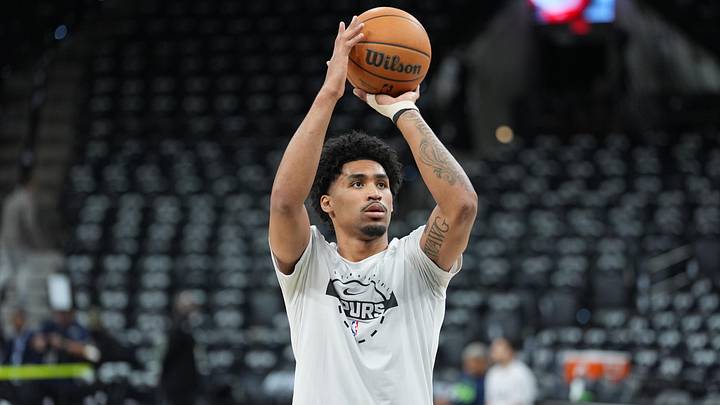
The 2026 NBA Playoffs were nothing short of a revelation for the San Antonio Spurs, but one name consistently rose above the noise: Dylan Harper. Despite entering the postseason without the “rookie of the year” hardware to his name, Harper’s explosive, high-IQ performance off the bench turned him into a fan favorite and a tactical headache for opponents. Now, as the dust settles on an unforgettable run, the narrative surrounding the 20-year-old phenom has shifted from “promising prospect” to “must-start talent.” But as San Antonio approaches the new season, Harper finds himself at a fascinating, albeit potentially turbulent, crossroads.
The Backcourt Logjam: A Blessing and a Curse
The primary obstacle standing between Harper and stardom is the Spurs’ own success in roster construction. San Antonio currently boasts a crowded guard rotation headlined by veteran floor general De’Aaron Fox and the promising Stephon Castle. While this depth provides coach Mitch Johnson with plenty of defensive flexibility and tactical variety, it also creates an undeniable logjam.
Throughout last season, we witnessed far too many high-stakes games where Harper looked like the most reliable scoring threat on the floor, yet he found himself glued to the bench during crunch time. It was a frustrating reality for Spurs fans: the kid who consistently ignited the offense was being boxed in by a rotation that refused to prioritize his development. Heading into his second year, the central question is whether Johnson can finally untangle this web and give Harper the minutes his talent demands.
The “Fox Factor”: Will a Trade Change Everything?
The most explosive storyline to watch this summer—and potentially into the trade deadline—is the future of De’Aaron Fox. While the Spurs’ front office has publicly committed to keeping their veteran guard, NBA history tells us that roster dynamics can shift in a heartbeat. If the Spurs start strong and decide to sell high on Fox to clear the path for their young core, the door opens wide for Harper to claim a full-time starting spot.
We have already seen that Harper doesn’t need a “developmental year” to adapt. His playoff performance proved he possesses the size, speed, and mental toughness to excel as a primary option. If the Spurs choose to pivot toward the future, Harper would not just be filling a void; he would be stepping into a role he is already prepared to dominate. An All-Star caliber trajectory is well within his grasp if the minutes are guaranteed.
The Worst-Case Scenario: Stagnation?
Conversely, if the Spurs decide to run it back with the status quo, the risk of stagnation is real. If Harper is relegated to the same low-20s minute total he saw last season, it could be seen as an indictment of the team’s offensive philosophy. At 20 years old, talent like Harper’s needs room to breathe. Continuing to limit his floor time would not only be a disservice to the player but could potentially stunt the ceiling of the entire San Antonio offense.
Ultimately, Harper’s sophomore season represents a wide spectrum of possibilities. He is a rare, versatile talent capable of thriving in whatever role he is given, but he has reached the stage where his growth is intrinsically linked to his opportunity. Whether he explodes into a starting role or continues to provide lethal energy off the bench, one thing is certain: Dylan Harper is the most critical piece of the Spurs’ future.
How Mitch Johnson manages this backcourt balancing act will likely be the defining story of the Spurs’ next campaign.
Do you think the Spurs should trade De’Aaron Fox to unleash Dylan Harper as a full-time starter, or is the depth provided by the current rotation too valuable to break up? Drop your take in the comments below!