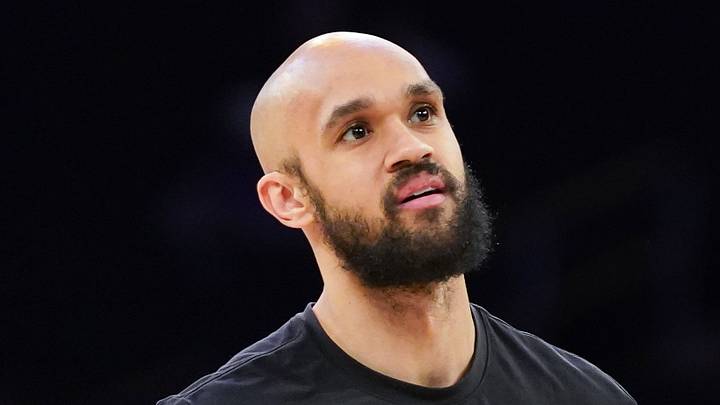
The Boston Celtics sent shockwaves through the NBA on July 1st, finalizing a blockbuster trade that saw 2024 Finals MVP Jaylen Brown depart for the Philadelphia 76ers. In return, the Celtics landed perennial All-Star Paul George along with a haul of draft capital. While the acquisition of George provides an immediate injection of talent, the departure of Brown leaves a massive void in Boston’s offensive hierarchy. As the dust settles, all eyes are turning toward one player to bridge the gap: veteran guard Derrick White.
To put it bluntly, the upcoming season is a defining moment for White’s tenure in Boston. Following a 2025-26 campaign that saw his efficiency crater under the weight of an expanded workload, White is now tasked with rediscovering the form that made him a crucial anchor during Boston’s 2024 championship run.
The “Efficiency Trap”: Why Last Season Was a Struggle
On the surface, looking at the box scores, it would be easy to misinterpret White’s 2025-26 season as a breakout year. He posted career highs in points (16.5), assists (5.4), blocks (1.3), and steals (1.1). However, those numbers mask a troubling decline in efficiency that plagued the Celtics throughout the year.
Forced into an uncomfortable role as a primary offensive focal point due to roster turnover and injuries to Jayson Tatum, White struggled to balance playmaking with scoring. The results were telling: he shot a career-worst 39.4% from the field and connected on just 32.7% of his attempts from beyond the arc. The postseason brought no relief; in the opening round against Philadelphia, his percentages plummeted to a disastrous 32.1% from the floor and 27.3% from three.
It was clear that the increased responsibility was stifling the natural rhythm of his game. For White to be successful, he doesn’t need to be the “lead option”—he needs to be the ultimate connector.
The Path to Redemption: Finding the Right Role
The good news for the Celtics is that the tactical setup for the 2026-27 season is likely to play to White’s strengths. With Paul George arriving to share the load alongside a healthy Jayson Tatum, the pressure on White to force shots will diminish.
If Boston moves forward with a projected starting lineup of Payton Pritchard, White, George, Tatum, and the newly extended Neemias Queta, White naturally slides into a more comfortable fourth-option role. This is where he thrives. By removing the burden of being a primary scorer, the Celtics can allow White to focus on what he does best: defending the opposition’s best perimeter threat, pushing the pace in transition, and hitting timely, high-percentage shots when the defense collapses on George and Tatum.
A Defining Contract Year
The stakes for this rebound couldn’t be higher. White is currently entering a crucial juncture in his career trajectory. If he can revert to the elite, ultra-efficient role player he was during the 2024 title run, he remains an untouchable piece of Boston’s core. However, should his efficiency continue to slide, the Celtics’ front office may be forced to explore alternative options to reshape the roster.
Boston doesn’t need White to be an All-Star; they need him to be the reliable, defensive-minded engine that makes their superstar duo click. The “Post-Brown” era is officially underway in Beantown, and while Paul George will dominate the headlines, the ultimate success of the 2026-27 Celtics may very well rest on the shoulders of Derrick White. It is time for him to stop worrying about the box score and get back to the fundamentals of championship-caliber basketball. The Celtics are betting that he still has that gear in him—and the entire league is waiting to see if he can find it.