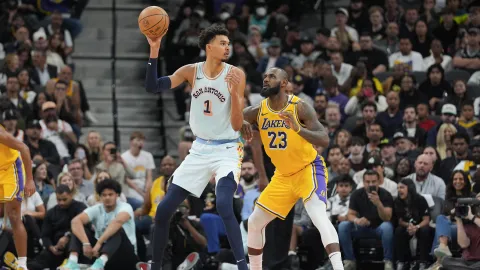
The basketball world is still reeling from the news that San Antonio Spurs superstar Victor Wembanyama has intentionally left a staggering $50.5 million on the table. In an unprecedented display of selflessness, the reigning Defensive Player of the Year signed a five-year, $252.3 million rookie-scale extension but opted out of the “Rose Rule” performance escalators that would have pushed his deal toward the supermax threshold.
The goal? To give the Spurs the financial breathing room needed to build a championship dynasty around him. But while fans and analysts are busy painting Wembanyama as the ultimate team player, the most powerful man in NBA representation—LeBron James’ longtime agent, Rich Paul—is sounding a very different alarm.
Rich Paul: “Players Aren’t Meant to Play Forever”
During a recent appearance on the Nightcap Show, Paul offered a stark, reality-check perspective that contradicts the widespread narrative of the “noble sacrifice.” For Paul, the NBA isn’t a charity; it’s a high-stakes business where career longevity is never guaranteed.
”The way I look at things has always been, you guys aren’t going to play forever,” Paul explained. “I don’t know if you’re going to play five years, seven years, ten years, fourteen. And at some point, you know, your value doesn’t stay consistent or doesn’t increase. Most people’s value decreases, especially after the year five or six, sometimes seven.”
Paul’s warning is clear: by choosing to cap his own earnings, Wembanyama is effectively shifting the burden of franchise-building onto his own shoulders. In the current NBA climate, where the collective bargaining agreement punishes teams that spend aggressively, the burden of managing the salary cap should rest on the front office—not the players.
The Financial Cost of a “Hometown Discount”
Under the league’s rules, if Wembanyama had triggered the performance escalators—by winning an MVP, securing All-NBA honors, or taking home another DPOY—his contract would have automatically vaulted to 30% of the team’s salary cap. By opting out, Wembanyama is locked in at the 25% maximum, a decision that will save the Spurs roughly $10 million per season over the next five years.
For San Antonio, this is a dream scenario. It allows them to retain elite talent, sign key role players, and keep their core together without hitting the suffocating penalties of the league’s new second-apron system. But for Wembanyama, it is a massive gamble on his own health and longevity. If an injury were to strike or the team failed to capitalize on the extra cap space, Wembanyama would have effectively given away generational wealth for a result that was never guaranteed.
The NBPA’s Growing Concern
Rich Paul isn’t the only one concerned. The National Basketball Players Association (NBPA) has been vocal about the “problem” Wembanyama’s decision creates. The fear among union executives is that owners will now use Wembanyama’s “team-first” sacrifice as leverage against other superstars during contract negotiations. “If Wemby took less to help his team win, why can’t you?” is a question every elite player is now terrified of hearing in a board room.
As we look toward the future, the debate will continue to rage. Is Wembanyama a visionary paving the way for a new era of winning, or is he setting a dangerous precedent that devalues the earning potential of every NBA player who follows in his footsteps?
For now, the French superstar is focused on the court, currently sitting with +2000 odds for the MVP title. He is betting on his own brilliance, but as Rich Paul points out, in the brutal world of professional sports, betting on the team’s finances is a gamble that rarely pays off in the long run.
NBA Fans: Is Victor Wembanyama a hero for sacrificing $50M to build a dynasty, or is Rich Paul right that he’s making a massive mistake? Should players stay out of the business of roster construction, or is this the new path to winning a title? Drop a comment below and let us know your take!