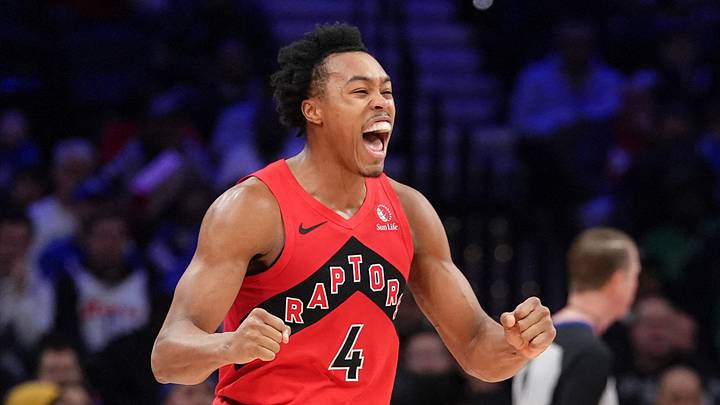
The Toronto Raptors are officially surging into a brand-new era with immense optimism. Following a thrilling playoff run and high-stakes roster adjustments—including the blockbuster tracking of the Kawhi Leonard trade rumors—head coach Darko Rajakovic’s squad is looking more competitive than ever.
However, beneath the heavy wave of preseason excitement, a glaring vulnerability threatens to derail their dreams. According to prominent NBA analysts, the Raptors’ persistent lack of size and frontcourt depth could come back to haunt them, leaving them dangerously exposed against the league’s elite interior powerhouses.
The Rebounding Crisis That Won’t Go Away
During their postseason battles last year, the Raptors’ struggles on the glass were painfully apparent. When pitted against physically imposing frontcourts—such as the Cleveland Cavaliers and Jarrett Allen aggressively dominating the paint—Toronto frequently found themselves bullied on the boards.
Yet, as the summer transfer window unfolds, the franchise has made the calculated decision to double down on positional versatility rather than traditional size. Without adding any true, elite big men taller than 6-foot-9 this offseason, NBA.com contributor John Schuhmann points out that the Raptors risk getting physically outmuscled when opposing teams decide to set a bruising, paint-heavy tone.
While playing small-ball can force opponents to adapt on certain nights, elite rebounding teams could easily flip the script and exploit Toronto’s lack of bulk down low.
Betting on Versatility: The Allen Graves Gamble
Rather than selecting a traditional center with their 19th overall pick in the 2026 NBA Draft, Toronto opted for 6-foot-9 forward Allen Graves.
Graves arrives with high expectations, expected to step into the backup big-man role vacated by Sandro Mamukelashvili, who departed for the Los Angeles Lakers in free agency. Interestingly, several traditional center options were still staring the front office in the face on draft night:
- Jayden Quaintance: The 6-10 Kentucky standout went to the San Antonio Spurs with the very next pick.
- Tarris Reed Jr.: The bruising UConn center was snapped up by San Antonio just six picks later.
- Chris Cenac Jr.: The 6-11 Houston big man ultimately landed with the Boston Celtics at No. 27 overall.
While all three players were firmly on Toronto’s radar at various points, the Raptors ultimately chose Graves to fit a specific mold. He shares a remarkably similar athletic profile to Collin Murray-Boyles, Scottie Barnes, and Kawhi Leonard—elite, switchable defenders who provide maximum tactical flexibility.
One Piece Away From True Contender Status?
There is no denying that the Raptors possess the talent, speed, and competitive fire to lock down a high playoff seed. The pieces are undeniably there to create matchup nightmares for opponents on the perimeter.
However, the difference between bowing out in a frustrating first-round exit and evolving into a legitimate, deep-playoff championship contender often comes down to protecting the rim and controlling the glass. If Darko Rajakovic’s small-ball and forward-heavy units can’t find a way to neutralize dominant interior scorers, that missing piece of size could prove to be a fatal flaw.
As the new season approaches, all eyes will be on how Toronto mitigates their rebounding disadvantage. If they can survive the physical onslaught of the league’s heaviest frontcourts, the Raptors will soar. If not, their lack of size might just bring them crashing back down to earth.