The Toronto Raptors are currently holding their breath, anxiously awaiting the outcome of the NBA’s ongoing investigation into the Los Angeles Clippers regarding alleged salary-cap circumvention. The ruling will ultimately determine whether Toronto pulls the trigger on finalizing a blockbuster trade for Kawhi Leonard. However, while a potential Leonard acquisition dominates the headlines, the franchise has yet to secure the definitive center upgrade that a vast majority of the fanbase has been crying out for.
Following an injury-riddled campaign and a postseason run where he was largely outplayed by opposing rookies, many supporters feel they have seen enough of the Jakob Poeltl experience. Despite these frustrations, all indications suggest the Raptors are prepared to enter the upcoming season with Poeltl as their starting center. The hope in the front office is that he can bounce back, stabilize the frontcourt, and rebuild enough trade value to spare the franchise from attaching multiple draft picks just to shed his contract.
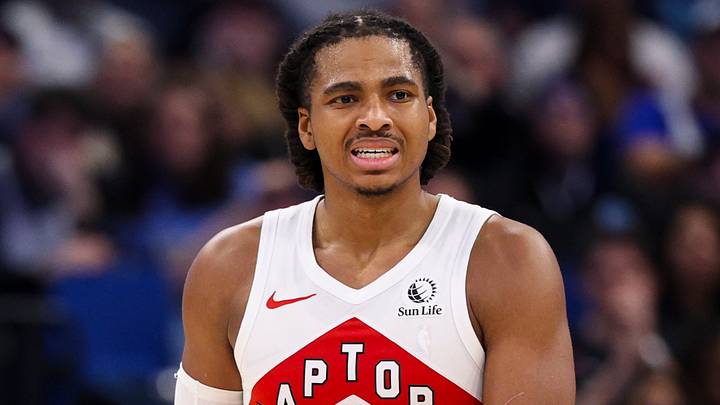
Meanwhile, head coach Darko Rajakovic must prepare to deploy second-year forward Collin Murray-Boyles heavily in the post and at the five-spot.
The Double-Edged Sword of Small-Ball Frontcourts
Relying extensively on Murray-Boyles in the paint certainly has its perks. If the Kawhi Leonard trade crosses the finish line, pairing him alongside Scottie Barnes and Murray-Boyles would form an absolute defensive terror on the perimeter and in the lanes. That trio would offer incredible length, versatility, and defensive switchability.
However, that exact configuration poses a massive challenge on the glass. Rebounding was a glaring Achilles’ heel for Toronto last season, particularly when the pressure mounted in the playoffs.
Highlighting this exact vulnerability in the NBA’s latest Eastern Conference power rankings, John Schumann pointed out the core dilemma: “The Raptors’ best lineup would seemingly have Leonard, Scottie Barnes, and Murray-Boyles on the frontline. That’s a strong, switchable group, but those three guys are 6-foot-6, 6-foot-8 and 6-foot-7, respectively. That means rebounding could be an issue for a team that ranked 13th in rebounding percentage in the first round, getting outscored by 28 points (45-17) on second chances over the last two games.” Despite these concerns, the Raptors still managed to secure a respectable fourth spot in the power rankings.
Capitalizing on Future Assets and Roster Flexibility
If the Leonard trade is officially completed, Toronto will still possess a robust chest of future assets, including first-round picks in 2028, 2029, 2030, and 2032, alongside multiple second-round selections. Coupled with RJ Barrett’s expiring salary (barring an extension) and the sizeable contracts of Immanuel Quickley and Poeltl, the front office retains plenty of flexibility to make subsequent moves.
Should Poeltl struggle out of the gate once again, the front office will need to scour the market for a reliable center upgrade or a sturdy reserve ahead of the trade deadline. Asking an undersized second-year player like Murray-Boyles to anchor the backup center minutes full-time is a tall order.
When looking across a brutal Eastern Conference—where contenders boast elite frontcourts like Karl-Anthony Towns in New York, Jarrett Allen and Evan Mobley in Cleveland, Giannis Antetokounmpo and Bam Adebayo in Miami, and Ivica Zubac alongside Pascal Siakam in Indiana—addressing interior depth and rebounding must remain a top priority for Toronto’s long-term success.
Do you think the Toronto Raptors can make a deep playoff run with their current frontcourt rotation? Let us know your thoughts in the comments below!