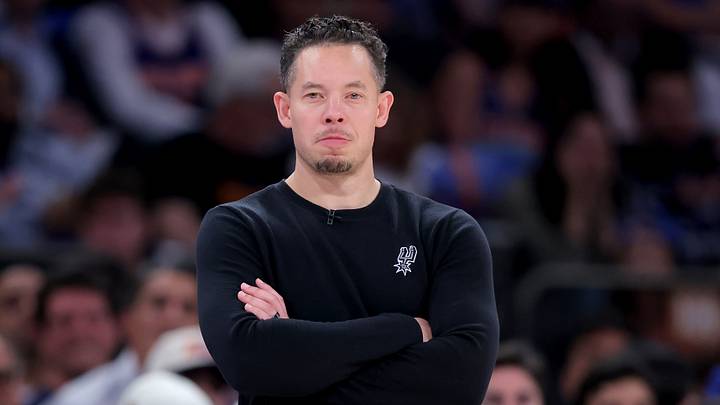
Entering the summer, the San Antonio Spurs faced one glaring, undeniable roster flaw that demanded immediate attention. Last season, the team carried a bloated rotation of five centers, yet when the intense pressure of the playoffs arrived, head coach Mitch Johnson trusted only two of them: generational centerpiece Victor Wembanyama and reliable veteran Luke Kornet.
The supporting cast of aging big men—including Kelly Olynyk, Bismack Biyombo, and Mason Plumlee—simply failed to prove they belonged on the floor when it mattered most. Unsurprisingly, none of those veterans were brought back for another campaign.
Instead of pursuing high-priced free-agent depth, the Spurs completely overhauled their strategy by attacking the NBA Draft, selecting young talents Tarris Reed Jr. and Jayden Quaintance. It is a fascinating, high-stakes gamble by the front office, especially considering neither rookie has logged a single minute of professional NBA experience.
Trading Experience for Youth: The Center Rotation Gamble
By ditching veteran presence for raw, unproven youth, San Antonio is doubling down on the very developmental philosophy that earned them heavy criticism before their surprise run to the NBA Finals last season.
In theory, the blueprint could pay off handsomely. Tarris Reed Jr. is already flashing the tools of a capable third-string center. Having spent four years in the college ranks with over 100 collegiate games under his belt, Reed brings a level of maturity that should help him adjust to the speed of the professional game much quicker than a typical one-and-done prospect.
However, the reality of next season’s depth chart is largely dictated by unfortunate circumstances: Reed is practically locked into the primary backup role simply because Jayden Quaintance is sidelined.
Quaintance is currently deep in recovery following major knee surgery and is not expected to step back onto the floor until January at the absolute earliest. Even when he does return, his immediate impact remains a massive question mark. The young big man could easily spend extended stints in the NBA G League to regain his footing, facing a steep uphill battle to carve out meaningful minutes behind Wembanyama and Kornet. That puts immense pressure on Reed to hold down the fort early on.
A Looming Future Logjam in San Antonio
Looking further down the road, however, the Spurs might find themselves wrestling with an entirely new luxury-turned-problem: a full-blown frontcourt logjam.
If a healthy Quaintance eventually returns to full form and realizes his massive potential, he could seriously challenge Luke Kornet for rotational minutes. Furthermore, financial realities could force the Spurs’ hand; in a couple of seasons, the front office may need to move away from Kornet’s contract to cleanly navigate league financial thresholds like the second apron. In that scenario, having Quaintance and Reed locked into affordable rookie-scale contracts for two more years would provide incredible flexibility.
Yet, there is an inherent risk. If both rookies hit their development ceilings and thrive, San Antonio could suddenly find themselves overflowing with talented centers—begging the question of how to distribute minutes behind Wembanyama.
Perhaps the front office envisions Quaintance developing a reliable perimeter jumper to eventually share the floor alongside Wembanyama, or perhaps they plan to slide Wembanyama to power forward as an elite floor-spacer while deploying a traditional rim-protector down low.
Whatever the long-term tactical solution may be, the Spurs successfully eradicated last year’s glaring bench weakness. While a future logjam is entirely possible, for Mitch Johnson and the coaching staff, having too many talented young giants is the ultimate good problem to have.