The San Antonio Spurs are coming off an exhilarating, high-stakes run to the NBA Finals—an extraordinary achievement that firmly cements them among the league’s elite heavyweights. Yet, beneath the glow of their postseason brilliance lies a lingering tactical dilemma that quietly sabotaged one of their biggest stars all season long.
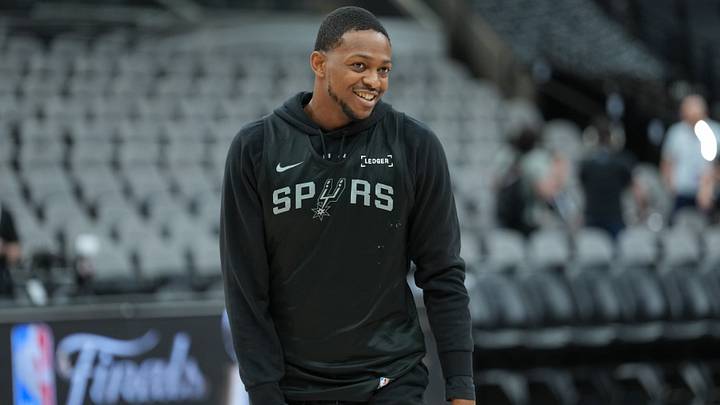
With an embarrassment of riches at the point guard position, San Antonio was forced to get creative. Someone had to make the ultimate sacrifice to balance the backcourt touches, and superstar De’Aaron Fox drew the short end of the stick.
The resulting backcourt experiment did wonders for sophomore standout Stephon Castle’s playmaking development, but it came at a steep cost to Fox’s production and comfort level. As the Spurs look ahead to capturing that elusive championship ring, analysts and fans alike agree on one vital truth: it is time to end the Castle point guard experiment and put the ball squarely back in Fox’s hands.
The Cost of the Backcourt Shift: How Fox Suffered
When De’Aaron Fox arrived in San Antonio, expectations were sky-high that he would anchor the offense as the undisputed floor general. Instead, the coaching staff opted to pivot Stephon Castle—who spent his rookie year primarily playing off-ball—into the de facto primary point guard role for his second campaign.
The experiment was a double-edged sword. On one hand, forcing Castle into the fire accelerated his passing vision, helping him emerge as an above-average distributor by season’s end. On the flip side, the growing pains were immense: Castle infamously led the entire NBA in turnovers through his first 20 games before eventually reigning in his miscues with Fox’s guidance.
For Fox, however, the adjustment was brutal. Shoved into an unfamiliar off-ball role, his offensive numbers dipped, and he looked nothing like the dynamic, game-controlling star the Spurs traded for. Because Fox’s perimeter shooting isn’t built for a traditional off-ball shooting guard spot, his scoring efficiency plummeted as he struggled to find a consistent rhythm playing second fiddle in the half-court offense.
The statistical proof of what happens when Fox is allowed to cook is undeniable. During a crucial 10-game stretch last season when both Victor Wembanyama and Stephon Castle were sidelined, Fox exploded back into his vintage form, averaging an elite 26.8 points and 6.9 assists per game.
Why Switching Castle to Shooting Guard Benefits Everyone
Moving away from Castle as the primary ballhandler doesn’t mean diminishing his role or stunting his growth. In fact, it might be the exact key to unlocking his next evolutionary level.
Castle showcased massive strides as a perimeter shooter during the second half of the season and deep into the playoffs. Those tangible improvements suggest he is actually custom-built to slide over to the shooting guard position next to a true floor general.
By designating Fox as the primary ballhandler and letting Castle operate as a secondary creator and cutter, San Antonio can maximize both players simultaneously. Castle would still see plenty of touches and initiate secondary actions, but Fox would regain the rhythm and dominance that makes him a premier guard in the association.
The Verdict: Chasing a Championship with a Re-energized Star
If the Spurs are going to take the final step and turn their Finals appearance into a championship parade, getting De’Aaron Fox back to playing like an elite, 20-plus-point-per-game star is non-negotiable.
Paired alongside generational phenom Victor Wembanyama—and with the continued internal development of youngsters like Dylan Harper and Stephon Castle—a properly structured backcourt makes San Antonio virtually unstoppable. By handing the keys back to Fox and letting Castle thrive on and off the ball as a dynamic two-guard, the Spurs can solve their biggest offensive puzzle before the new season even tips off.