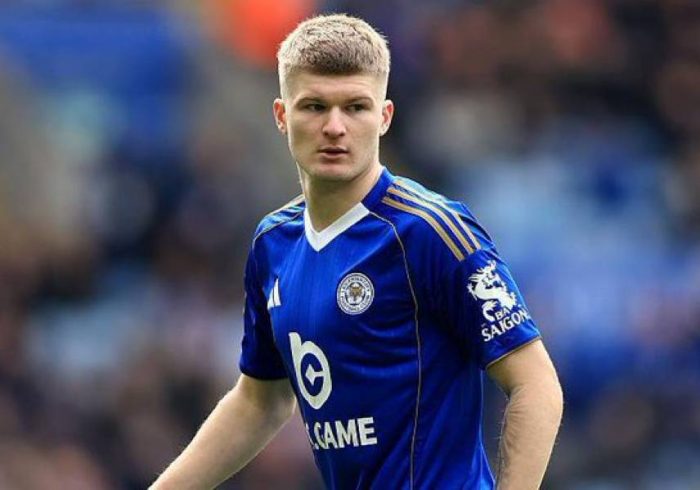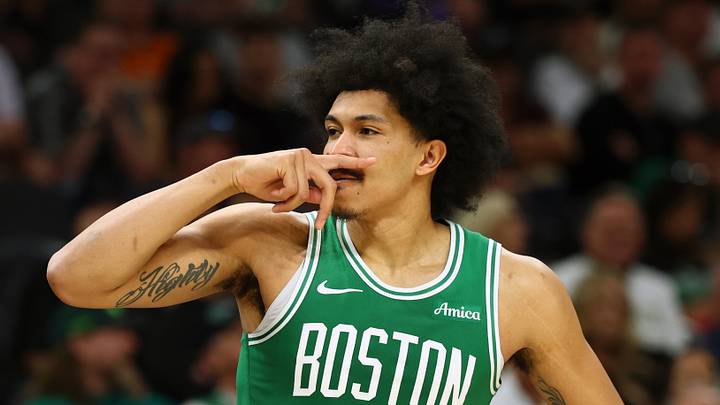
The Boston Celtics have made a resounding long-term commitment to guard Ron Harper Jr., transitioning him from a modest Exhibit 10 contract all the way to a secure four-year deal. With the front office officially invested in his developmental upside, the stage is set for the 26-year-old wing to make a massive leap during the 2026-27 NBA season.
While some analysts have viewed Harper primarily as a developmental project for the future, the reality of Boston’s roster construction opens up an undeniable pathway to meaningful, nightly minutes right now.
From Exhibit 10 to Core Rotation: Harper’s Rising Confidence
Appearing in 29 games for the Celtics during the 2025-26 campaign, Harper flashed explosive scoring capability when given an opportunity. Though a smaller sample size made it tough to lock down a permanent spot in Joe Mazzulla’s rotation, he shot a respectable 35.0 percent from beyond the arc and caught fire late in the year, erupting for two separate 20-point performances in his final 11 regular-season appearances.
Reflecting on his journey in a recent interview with NBA.com’s Taylor Snow, Harper expressed absolute confidence in his ability to be a difference-maker for a championship contender.
“I feel like after that game where I started – I played all those minutes, and I played well – I felt like after that point, I could be a real contributor to this team and a part of bringing this team back to a championship,” Harper shared. “So that’s something I look forward to doing next year.”
Opportunity Knocks: Backcourt Uncertainty Opens the Door
The primary catalyst for Harper’s potential breakout lies in Boston’s current roster dynamics. Beyond star guards Payton Pritchard and Derrick White—the only two returning backcourt players who averaged at least 20.0 minutes per contest last season—the team’s guard rotation features a noticeable degree of uncertainty.
While newcomers and depth pieces like Mike Conley, Hugo Gonzalez, and Baylor Scheierman will all compete for minutes, nothing is locked in stone. This wide-open competition gives Harper a golden opportunity to seize a permanent role with a strong showing during training camp.
Elite Physical Tools and Defensive Versatility
For Harper, securing consistent playing time will ultimately come down to maximizing his stellar physical profile. Standing at a robust 6’5″ and 233 pounds with an extraordinary 7’1.5″ wingspan, Harper possesses the ideal frame for modern NBA defensive switching.
According to Basketball Index, those physical traits translated into high-end production last season, with Harper ranking in the 65th percentile in perimeter isolation defense and the 71st percentile in off-ball chaser defense.
If he can consistently replicate the stellar shooting touch he displayed during his final collegiate campaign—where he shot an elite 39.8 percent from deep—opposing defenses won’t be able to sag off him. Paired with untapped potential as a secondary playmaker and shot creator, a locked-in Harper becomes virtually impossible for Mazzulla to leave on the bench.
As training camp approaches, the message to Ron Harper Jr. is clear: defend with intensity, knock down open perimeter shots, and seize the moment. If he delivers, Boston’s backcourt rotation is about to get a whole lot more dangerous!