The NBA thought it had finally created a system that would permanently kill superteams and enforce league-wide parity. Introduced in the collective bargaining agreement, the dreaded second apron was designed to severely penalize high-spending front offices, forcing elite franchises to dismantle loaded rosters and trade away star players.
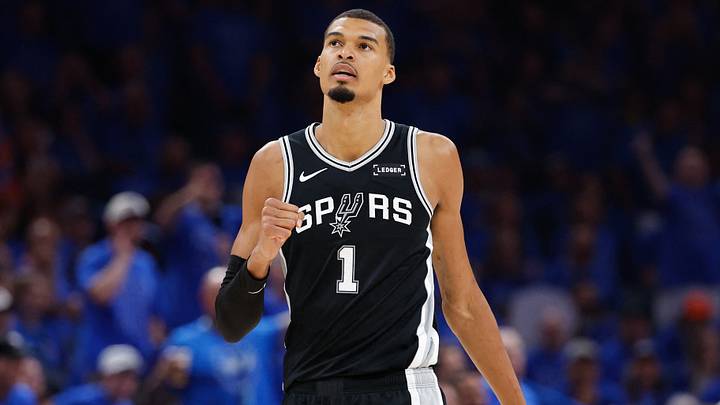
However, the San Antonio Spurs appear to have unlocked a genius loophole. Guided by a masterclass in long-term roster construction, the Silver and Black are staying several steps ahead of the rest of the league—and it’s all thanks to an unprecedented sacrifice from superstar Victor Wembanyama.
Outsmarting the System: Wemby’s Unbelievable Pay Cut
While other stars across the league continue to demand every single penny available under maximum contract rules, Wembanyama has chosen a drastically different path.
Despite solidifying his standing as arguably the absolute best player on the planet with a dominant playoff run, Wembanyama voluntarily took a staggering $50 million pay cut on his new deal. By sacrificing top-dollar money, Wembanyama handed General Manager Brian Wright crucial financial flexibility, allowing San Antonio to build a deep, championship-caliber supporting cast without tripping the second apron’s harsh trade and draft-pick restrictions.
Currently, point guard De’Aaron Fox stands as the Spurs’ only player on a maximum contract. While Fox faced criticism for inconsistent postseason play, Wembanyama’s willingness to take less relieves massive financial pressure, giving San Antonio a huge structural advantage over rival contenders.
Spurs vs. Thunder: A Tale of Two Financial Blueprints
To understand how brilliant San Antonio’s strategy is, one only needs to look north toward their fierce Western Conference rivals: the Oklahoma City Thunder.
OKC is entering a brutal luxury-tax squeeze. Their formidable core—Shai Gilgeous-Alexander, Jalen Williams, and Chet Holmgren—is set to swallow up a breathtaking 85 per cent of the team’s total salary cap. That massive financial burden drastically limits Oklahoma City’s ability to surround their stars with quality depth or make aggressive mid-season trades.
By contrast, the Spurs enter the next two seasons with a significantly smaller payroll, giving them a golden window of opportunity to strike before Wembanyama’s and rising star Stephon Castle’s next extensions officially kick in.
The Culture of Sacrifice: Will Castle and Harper Follow Suit?
Wembanyama’s decision isn’t just a short-term money saver; it sets a cultural blueprint for the entire organization. Rising stars Stephon Castle and Dylan Harper could both command 25 per cent max extensions in the coming years—Castle becomes extension-eligible in the summer of 2027, while Harper follows in 2028.
If Wembanyama’s leadership inspires Castle and Harper to accept slightly less than their full 25 per cent maximum slots, San Antonio’s “Big Three” could eat up under 80 per cent of the salary cap. That would preserve invaluable cap space to maintain an elite, high-caliber bench for years to come.
Could San Antonio Force the NBA to Kill the Second Apron?
If San Antonio successfully uses this blueprint to dominate the league while completely dodging second-apron penalties, it could force the NBA and the Players’ Association into a corner.
With the current CBA eligible for renegotiation in the fall of 2028, rival executives may lobby to alter or eliminate the second apron entirely if they feel the Spurs have effectively rendered the rule useless.
Until then, San Antonio holds a massive competitive advantage. If the Spurs capitalize over the next two seasons, they won’t just win championships—they might just break the NBA’s financial system for good!