As training camp approaches, the Toronto Raptors front office and coaching staff are furiously fine-tuning their strategy for the upcoming 2026-27 campaign. While the franchise has largely opted against orchestrating a massive external roster overhaul this summer, internal evolution will be the ultimate catalyst if Toronto hopes to elevate its ceiling beyond last season’s finish.
The core is firmly in place, but internal dynamics are shifting rapidly—particularly with high-profile roster adjustments reshaping the rotation. To unlock elite contender status in a brutal Eastern Conference, several key players will be asked to step into modified, expanded responsibilities. Here is a close look at three Raptors whose roles could experience the most dramatic shifts this season.
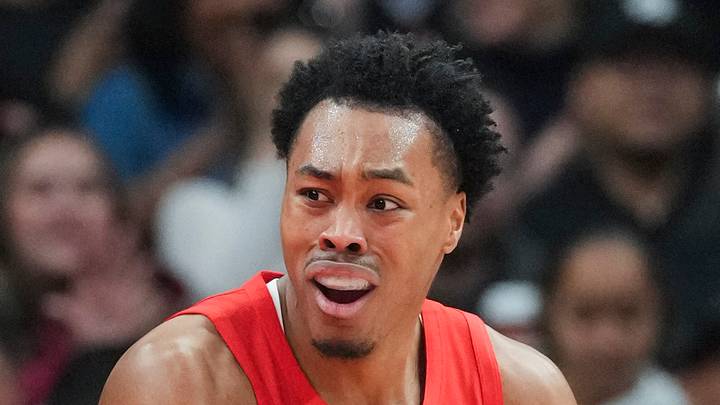
1. Scottie Barnes: Moving Beyond the “Swiss Army Knife” Box
As Scottie Barnes continues his relentless progression toward becoming the undisputed franchise centerpiece in Toronto, his overarching job description remains that of a multi-positional Swiss Army Knife. However, the nature of how he executes that role is slated for a major evolution.
Last season, Barnes carried an immense burden, frequently forced to be the primary scorer, primary facilitator, and defensive anchor all at once. The impending integration of seasoned superstar Kawhi Leonard changes that equation entirely. With Leonard commanding defensive gravity on the wing and capable of taking over late-game scoring responsibilities, the immense pressure on Barnes’s shoulders will be alleviated, at least on the offensive end.
The Raptors won’t need Barnes to force the issue or be the absolute best player on the floor in every single quarter. Instead, he will be empowered to operate with even greater confidence and freedom as a dual-threat playmaker. By leveraging his elite passing vision alongside his scoring prowess without being locked into a rigid box, Barnes can finally optimize his game as a true modern superstar.
2. Collin Murray-Boyles: Evolving into the Ultimate Small-Ball Catalyst
After navigating the steep learning curve of an NBA rookie season—which included valuable reps in a high-stakes playoff series—Collin Murray-Boyles is poised for a significant sophomore leap. Throughout portions of his debut campaign, Toronto deployed Murray-Boyles in a specialized small-ball center role, a tactical wrinkle that yielded intriguing results and forced the young forward to adapt quickly.
Now, with a full summer of professional development under his belt, the coaching staff should be asking for—and expecting—even more responsibility. When looking toward closing lineups in tight games, a five-man combination featuring Immanuel Quickley, RJ Barrett, Kawhi Leonard, Scottie Barnes, and Murray-Boyles offers a terrifying blend of length, defensive versatility, and transition speed. If Murray-Boyles can solidify his footing as a reliable small-ball five, he could become the secret weapon that swings tight games in Toronto’s favor.
3. Ja’Kobe Walter: Stepping Up as the Perimeter Spark Plug
Entering his third professional season, 22-year-old guard Ja’Kobe Walter faces a critical developmental window. Last year saw Walter log just over 20 minutes per contest—a slight tick down from his rookie campaign—meaning his efficiency and production must scale up as he looks to cement his long-term value.
With roster shifts creating an opening for a reliable perimeter spark plug off the bench, Walter is in prime position to absorb a larger share of the backup shooting guard minutes. In today’s hyper-spaced NBA, contending teams require elite floor-spacers who can punish defenses from beyond the arc. For Walter, asserting himself as one of the deadliest three-point shooters on the roster isn’t just an option; it’s a mandatory requirement to secure a consistent rotation spot.
If Walter takes that expected developmental step forward, Toronto’s second unit will possess the lethal outside shooting required to sustain momentum whenever the starters rest. As training camp tips off, the internal growth of these three players will dictate just how far the Raptors can fly.