As the NBA offseason rapidly winds down, front offices across the league are sweating over difficult personnel choices. Among them, the Memphis Grizzlies are facing a glaring roster crunch. With 19 players currently locked into roster spots, prominent NBA insider Jake Fischer has highlighted several names floating on the chopping block as Memphis prepares to finalize its opening-night squad—and one specific player should immediately trigger high alert for the Toronto Raptors.
Fischer’s reported cut candidates include names like Micah Peavy, D’Angelo Russell, Jordan Hawkins, Kris Murray, and young guard Walter Clayton Jr. If the Grizzlies are ultimately forced to waive Clayton Jr. due to sheer numbers, the Raptors need to be first in line to scoop him up from the open market.
Unlocking Backcourt Depth and Perimeter Firepower
Toronto’s shortcomings were laid bare during their early postseason exit last spring, where a glaring lack of backcourt depth and stagnant perimeter scoring crippled their offensive ceiling. The numbers don’t lie: the Raptors finished the campaign with the fifth-fewest three-pointers made in the entire association.
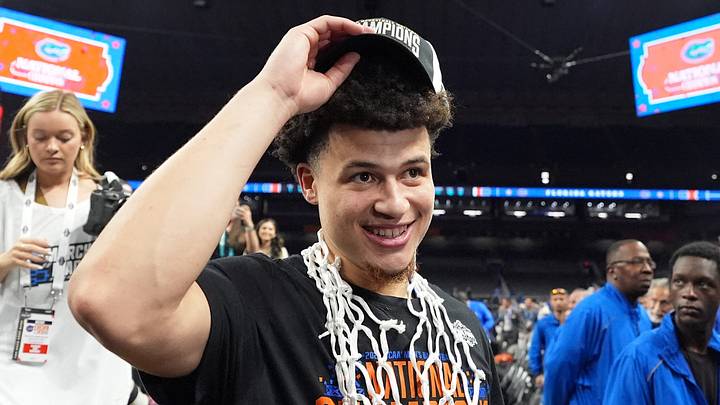
Enter Walter Clayton Jr. A certified collegiate flamethrower who led the Florida Gators to a stunning national championship in 2025, Clayton possesses the exact offensive pedigree Toronto desperately needs. While his rookie professional campaign experienced turbulence—split between a rocky stint with the Utah Jazz and a mid-season trade to Memphis as part of the blockbuster package that landed Jaren Jackson Jr.—evaluating him strictly on his debut year misses the forest for the trees.
During his rookie campaign, Clayton averaged 7.8 points, 2.0 rebounds, and 4.0 assists per game, while shooting 38.4 percent from the field and 30.7 percent from beyond the arc. Skeptics may balk at that 30.7 percent three-point clip for a player billed as a sharpshooter, but rookie shooting slumps are a well-documented rite of passage as young guards adjust to NBA defensive coverages, speed, and physicality.
A Proven Pedigree of Elite Shooting and Playmaking
Instead of letting a small sample size dictate his upside, a deeper dive into Clayton’s collegiate body of work reveals his true capability. Following his transfer from Iona to Florida, Clayton operated on massive offensive volume and high efficiency as the Gators’ primary engine in the brutally competitive SEC. He drilled 36.5 percent of his threes on 7.1 attempts per game as a junior, before bumping that up to a blistering 38.6 percent on 7.8 attempts as a senior. That proven volume and efficiency carry far more weight than an unsettled rookie year.
Furthermore, Clayton flashed encouraging sophistication as a playmaker, quietly averaging 4.0 assists to just 1.7 turnovers per game in his debut season. Comfortable running pick-and-rolls and orchestrating as a table-setter, he famously carved up the Indiana defense for a stellar 14-assist performance in March.
While defensive questions naturally followed him out of college, the flashes he displayed in the pros suggest he can become more than serviceable, especially if sheltered within Toronto’s notoriously elite, high-octane defensive infrastructure.
For a franchise with a rich history of rehabilitating young talent and turning castaways into core rotational pieces, taking a flier on a 23-year-old champion with elite shooting range is a no-brainer. If the Grizzlies’ roster math forces them to cut ties with Clayton Jr., the Raptors must be ready to pounce.