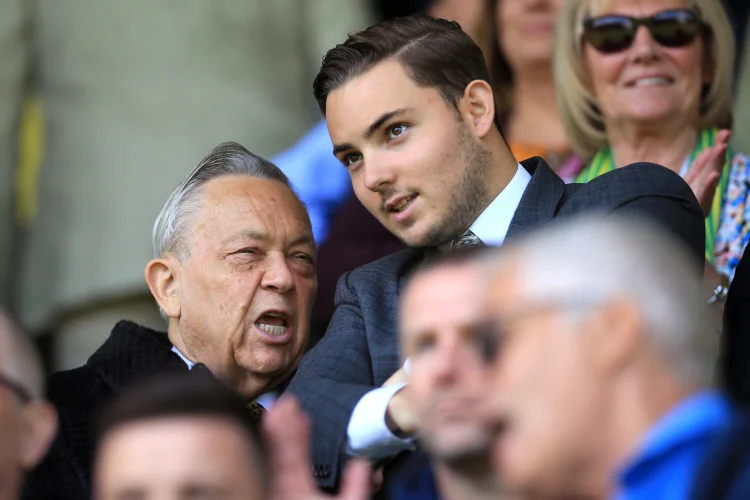
Fresh reports claiming that David Sullivan intends to keep a stranglehold on West Ham United and eventually pass his lucrative stake down to his sons, Jack and Dave, have sent shockwaves of fury through the fanbase. After years of turbulent protests and a fractured relationship with the supporters, the prospect of a dynastic Sullivan succession plan felt like a bitter pill to swallow.
However, beneath the surface of these frustrating headlines lies a much more calculated reality. Far from closing the door on a potential takeover, Sullivan’s latest maneuver is increasingly looking like a masterclass in high-stakes brinkmanship—and a direct signal that the battle for control of West Ham with financier Amanda Staveley is entering its most critical phase.
The Staveley Factor: A Much Bigger Ambition
To understand why Sullivan’s claims should be taken with a heavy dose of skepticism, one must look at the shifting landscape of the boardroom. When Amanda Staveley emerged earlier this summer with serious interest in buying into the Hammers, many initially believed her target was limited to Vanessa Gold’s 25.1 percent stake.
However, recent revelations have blown that narrative wide open. Staveley’s camp made it crystal clear that her initial ambitions were far grander: she had actively attempted to acquire Sullivan’s massive 38.8 percent block of shares as well.
Although a clever pre-emption maneuver saw Daniel Kretinsky increase his stake to roughly 46 percent—effectively blocking an immediate buyout—Staveley has publicly warned that her interest in West Ham has not cooled. The math moving forward is fascinatingly simple: if Staveley can eventually negotiate a deal for the combined stakes of Sullivan and Albert Tripp Smith, she would instantly command a controlling 51 percent majority, triggering an automatic buyout offer for the remaining shares.
With Kretinsky publicly signaling that he has no desire to push his own holding past the 50 percent threshold, a clear pathway for Staveley exists—provided one crucial hurdle can be cleared. Sullivan actually has to be willing to sell.
Why Sullivan Is Playing Hardball
This brings us directly to the recent reports leaking out of Sullivan’s camp regarding a family succession plan. For a fanbase that has spent years chanting for the co-owner’s departure, the timing of these claims feels calculated to provoke. Yet, veteran football observers point out that Sullivan is an immensely shrewd businessman who understands market timing better than most.
First, West Ham are currently tearing up the Championship under Nuno Espírito Santo, sitting proudly at the top of the table. With an immediate return to the Premier League looking increasingly realistic by the week, the value of Sullivan’s stake is on the verge of skyrocketing. Announcing an intention to sell while still in the second tier would be financial suicide; it would invite lowball offers and strip him of his leverage.
Second, Sullivan knows exactly who he is dealing with. Staveley’s financial backers—PCP Capital Partners and their network of wealthy US-based billionaires—possess the capital required to pay a massive premium. By floating the idea of a family succession plan through friendly media channels, Sullivan is essentially playing hardball. He is driving up the price, letting the prospective buyers know that if they want out-and-out control of a Premier League-bound West Ham, they are going to have to break the bank.
A High-Risk Game of Chess
Of course, this strategy is not without its risks. Staveley has already cautioned that she will not linger indefinitely and is entirely prepared to walk away and invest elsewhere if a deal cannot be struck on her terms. Whether she is willing to bide her time through an eight-month promotion race—and ultimately pay the exorbitant markup a Premier League status commands—remains the ultimate billion-dollar question.
Ultimately, the fury over David Sullivan’s supposed succession plan misses the forest for the trees. Rather than a genuine blueprint to hand the club over to his sons, it is almost certainly a posturing tactic designed to lay the groundwork for the next phase of negotiations. The war for the soul and ownership of West Ham United is far from over, and all the key players are simply positioning themselves for the decisive final move.