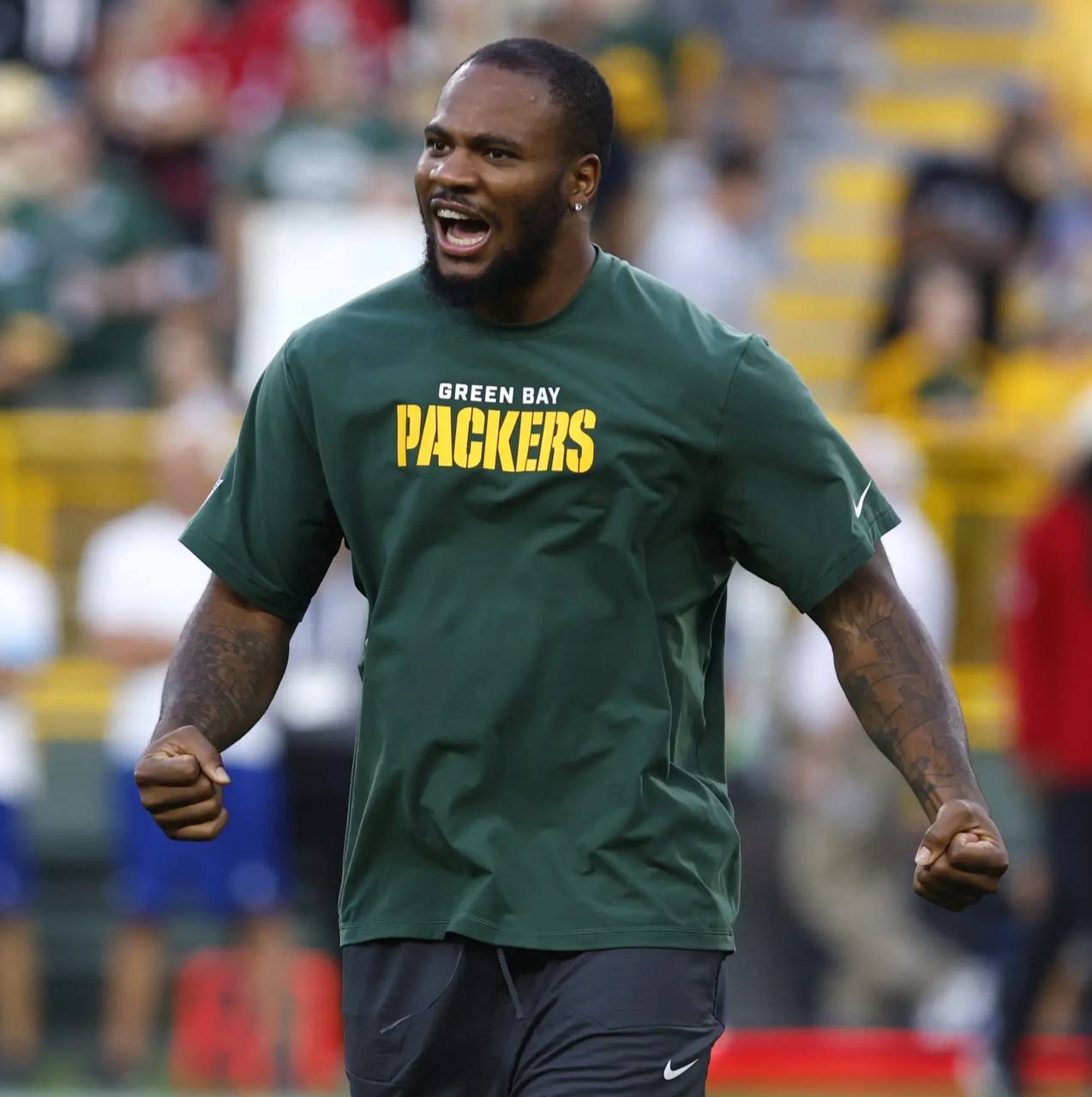
It has been just over a year since the Dallas Cowboys shocked the NFL world by trading superstar pass-rusher Micah Parsons, embarking on a bold defensive redesign under owner Jerry Jones. Eschewing elite speed and edge-rushing dominance, Jones redirected those financial resources toward building a bigger, heavier, and more physical unit designed specifically to plug gaps, stop the run, and bully opponents at the line of scrimmage.
However, the grand experiment suffered a catastrophic reality check on Sunday night during a humbling 28-20 defeat to the New York Giants.
By head coach Brian Schottenheimer’s own admission, the Cowboys were completely “out-physicaled” on their home turf. New York carved up the defense for 165 rushing yards, while Dallas managed zero sacks and surrendered conversions on nine out of 11 third downs. Rather than resembling the immovable brick wall Jones envisioned when he shipped Parsons off to Green Bay, the defensive unit looked disjointed, sluggish, and entirely devoid of an identity.
A Star-Studded Front That Failed to Fire
The defensive collapse cannot be blamed solely on a lack of investment. In the wake of Parsons’ departure, Dallas has poured massive resources into restructuring the front seven.
Quinnen Williams arrived in a blockbuster trade that cost the Cowboys defensive tackle Mazi Smith along with a first- and second-round draft pick, followed by a lucrative three-year, $105.9 million contract extension in August. Yet, against the Giants, Williams was practically invisible, logging just a single quarterback pressure across 28 pass-rush snaps despite facing single-blocking on 17 of those plays.
Similarly, Kenny Clark—acquired as a centerpiece of the original Parsons trade—failed to record a single pressure in 28 attempts, frequently getting neutralized even when matched up against a rookie guard.
With the run defense surrendering a staggering five yards per carry and forcing only one turnover despite four fumbles from the Giants, the new-look front line offered virtually no resistance.
Growing Pains or a Fatal Flaw?
Club executives have pointed to the sheer volume of change as the primary culprit for the opening-week disaster. Defensive coordinator Christian Parker, stepping into the role at just 34 years of age after arriving from the Philadelphia Eagles, implemented an aggressive scheme that blitzed on over 44% of New York’s pass plays. Yet Giants quarterback Jaxson Dart picked the secondary apart with ease, completing 23 of 29 passes for 230 yards and three touchdowns while adding 59 yards on the ground.
Speaking on 105.3 The Fan, Cowboys VP Stephen Jones admitted the unit may have had unrealistic expectations.
“We just probably had a little unrealistic expectations in terms of what we could do, especially on the defensive side of the ball with all the new faces and a brand new coordinator,” Jones said. “It’s not like they were popping explosives. They were grinding it out. We didn’t make the plays to get them off the field.”
Despite the public backing from the front office—with Jerry Jones insisting that management sees no reason to abandon the current blueprint—the underlying concern for Cowboys fans is glaring: Where is the game-wrecker?
Missing the Presence of a True Superpower
As Dallas prepares to lick its wounds and turn its attention toward a crucial matchup against the Washington Commanders at AT&T Stadium, the lingering shadow of Micah Parsons hangs heavier than ever.
While rookies like safety Caleb Downs showed flashes of promise, and veterans like DaRon Bland and DeMarvion Overshown harbor high expectations for breakout campaigns, the defense currently lacks a player who commands absolute terror from opposing offensive coordinators.
As one anonymous opposing offensive assistant coach aptly put it, Parsons possessed an aura that transcended individual stat lines:
“The thing about him was that even if he had a bad game, he changes things just by his presence. You had to game-plan around him. You had to account for him on every snap… That made everyone else’s job easier. That made his teammates more dangerous.”
For Dallas to salvage their season and prove that life after Parsons can yield championship football, the defense must undergo an overnight transformation. Until someone steps up to fill the colossal void left by their former superstar, the Cowboys will continue searching for the missing piece of a puzzle that stubbornly refuses to fit.