The recent decision by Rushcliffe Borough Council to grant conditional planning permission for Nottingham Forest’s ambitious City Ground redevelopment has been met with an overwhelming wave of euphoria across the footballing community. The landmark approval paves the way for the historic stadium to expand its capacity to 45,000—and eventually up to 52,000 with future extensions to the Brian Clough Stand—securing a gleaming modern future on the banks of the River Trent.
However, amidst the widespread celebrations and jubilation from supporters worldwide, one dissenting voice stood completely alone in the council chamber.
A Lone Stand Against the Tide
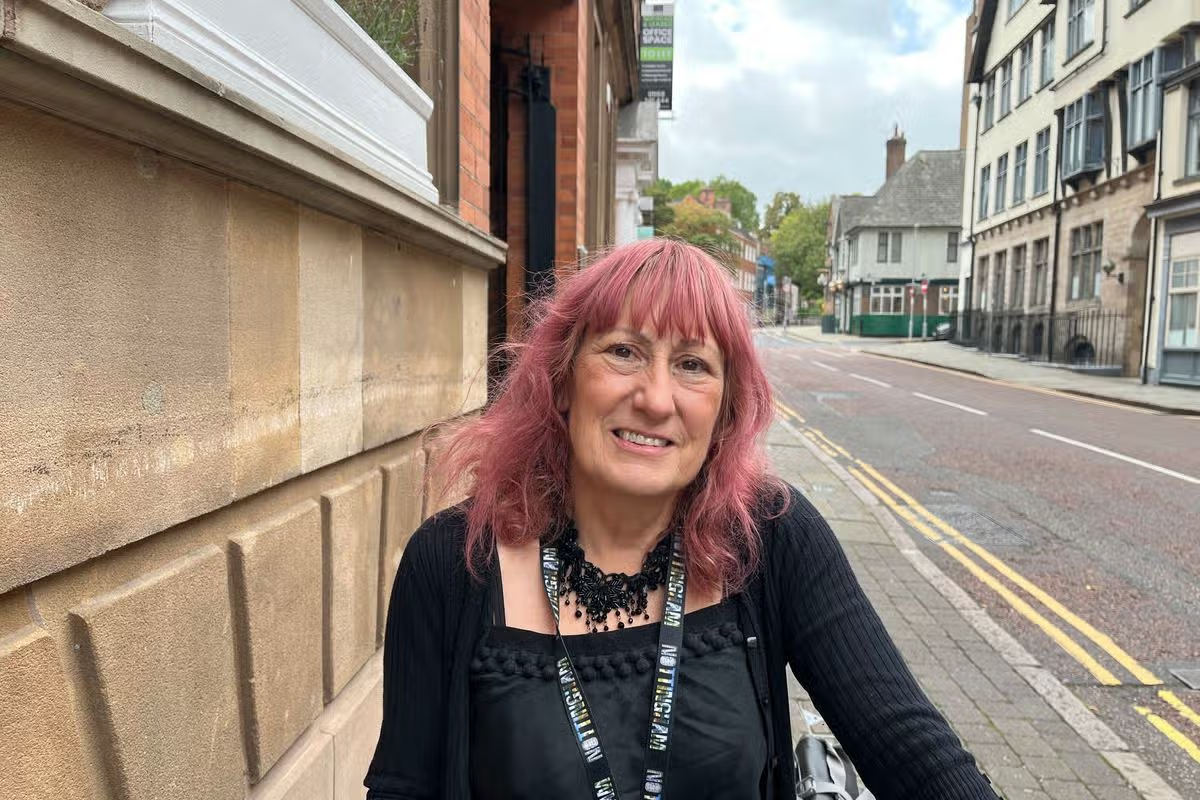
Sue Mallender, the Green Party councillor representing the Lady Bay ward on Rushcliffe Borough Council, made headlines after becoming the sole member of the 11-person planning committee to vote against the Reds’ grand proposals during Wednesday’s crucial meeting.
Her lonely vote immediately drew intense public attention, including a wave of ferocious online backlash and offensive language targeted at her on social media from frustrated fans. Despite facing a barrage of criticism for standing in the way of the beloved club’s progression, Cllr Mallender remains entirely unrepentant, insisting her opposition was rooted in practical, community-focused concerns that have yet to be properly addressed.
Speaking exclusively to the Nottingham Post just days after the tense meeting, Mallender made it clear that she is far from an opponent of football or the club’s architectural vision.
“I think the design of the stadium is excellent—it looks iconic with the Wembley arch and it will bring jobs to the local community,” she explained. “I can see all the arguments that were made about the fact that Forest desperately need a new stadium and they should be able to have a new stadium.”
Unresolved Infrastructure and Parking Nightmares
Where Mallender drew the line, however, was the perceived lack of concrete, definitive mitigation strategies to protect local residents from the immediate fallout of a 52,000-seat stadium. Her primary anxieties center on severe congestion, emergency access, and illegal parking on residential streets in Lady Bay, West Bridgford, and The Meadows during matchdays.
While Nottingham Forest have proposed funding a Controlled Parking Zone (CPZ)—meaning parking on designated streets would be restricted on matchdays—Mallender fears that statutory government fine limits fail to provide a strong enough deterrent for motorists willing to take a gamble.
“Unfortunately it’s the government that decides how much the fines are for parking, so you couldn’t have a higher fine in a very sensitive area,” she noted. “At the moment, if you’re not fined very often, you can afford to pay it on the rare occasions you get charged and it’s not a disincentive.”
Furthermore, the local councillor highlighted existing infrastructure strain, pointing out that even prior to the expansion, emergency services and local buses frequently struggle to navigate congested narrow routes into Lady Bay during high-attendance fixtures.
Debating the Trent Bridge Crossing
Another major sticking point during the planning process has been how a massive influx of tens of thousands of fans will cross the river. Earlier proposals from the Premier League club to permanently close two lanes on Trent Bridge on matchdays faced widespread pushback before being rightly rejected by local authorities—a move Mallender welcomed. Instead, councils have suggested the club should fund an entirely new pedestrian and transport bridge, though critics argue there is still very little concrete detail or immediate timeline regarding that project.
Despite enduring personal abuse and online vitriol from a subset of passionate supporters—some of whom do not even reside locally—Mallender maintains a pragmatic perspective on the realities of public office.
“I suppose there might be a level of unpleasantness that goes on when you raise valid concerns,” she reflected. “You find people supporting planning applications when they live in other countries. But then there’s the much smaller group of local people that are affected.”
Looking Ahead to Forest’s Future
With outline approval now officially secured, Nottingham Forest can proceed with drafting detailed architectural applications to bring their multi-million-pound stadium dreams to life, ending years of uncertainty that once saw the club briefly contemplate moving away from their historic home.
For the thousands of Reds fans eagerly anticipating European nights and packed-out stands at a modernized City Ground, the future has never looked brighter. Yet, as the bulldozers prepare to roll in, Councillor Sue Mallender’s solitary dissent serves as a vital reminder that the roaring success of a footballing powerhouse must continually balance against the daily lived experiences of the local community right on its doorstep.