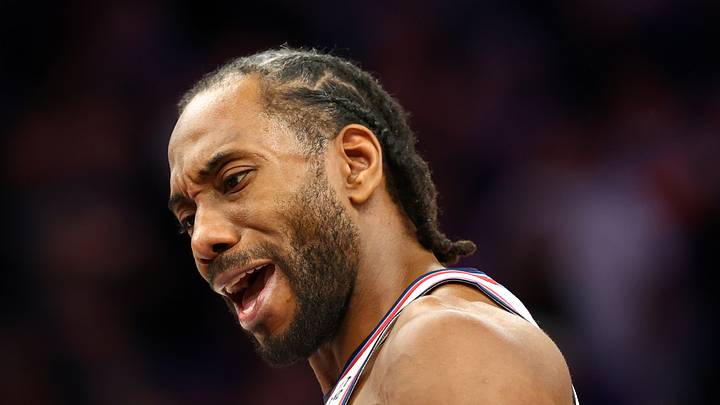
The Toronto Raptors made waves across the NBA landscape this offseason by pulling off one of the most explosive blockbuster trades in recent memory, bringing superstar forward Kawhi Leonard back to the franchise. While the acquisition immediately thrusts Toronto into the upper echelon of Eastern Conference contenders, a lingering question remains: did the front office mortgage too much of the team’s future for a short-term window?
According to a recent analysis by Rocco Moschella on On SI, the move brings undeniable star power, but it also carries a staggering long-term risk that could ultimately come back to haunt the franchise if things go sideways.
The Immediate Reward: Why the Trade Makes Sense
There is no denying the immense talent and playoff pedigree Kawhi Leonard brings back to Toronto. When healthy, the two-way superstar operates at an elite level, capable of changing the entire complexion of a game on both ends of the floor.
For a rising star like Scottie Barnes, the arrival of Leonard is a massive relief. Barnes no longer has to shoulder the crushing weight of carrying the franchise as the sole focal point on both offense and defense. Furthermore, perimeter talents like RJ Barrett and Immanuel Quickley benefit immensely, as opposing defenses will be forced to send double teams and shifting coverages toward Leonard, opening up much easier looks across the floor.
For an organization eager to capitalize on its current roster construction and prove it belongs in the championship conversation, trading for an established superstar makes a logical, aggressive statement.
The Staggering Price Tag and Future Risks
However, the acquisition came at an exceptionally steep cost. To secure Leonard, the Raptors didn’t just add a piece—they gutted major depth and future flexibility, parting ways with Brandon Ingram, young guard Gradey Dick, and two future unprotected first-round picks.
For a player with Leonard’s well-documented injury history, tying up future assets in an aging superstar is a massive gamble. The unprotected picks sent out by Toronto are slated for 2031 and 2033—years well beyond the current Leonard era.
If Toronto establishes itself as an elite championship contender over the next two to three years, those future draft assets will become a nonfactor. But if the window closes quickly, injuries flare up, or the roster fails to get over the hump in a brutal Eastern Conference, those unprotected picks could skyrocket in value, leaving the franchise stranded in a lengthy rebuild with zero draft capital to rescue themselves.
The Verdict: High Risk, High Reward
Ultimately, the Kawhi Leonard trade is the definition of a high-stakes, win-now maneuver. It signals that the Raptors’ front office is done waiting and wants to win a championship right now. Whether that aggressive gamble is remembered as a stroke of genius that brought a second title to Toronto, or a desperate miscalculation that crippled the team’s future, will depend entirely on how the next few seasons unfold on the hardwood.