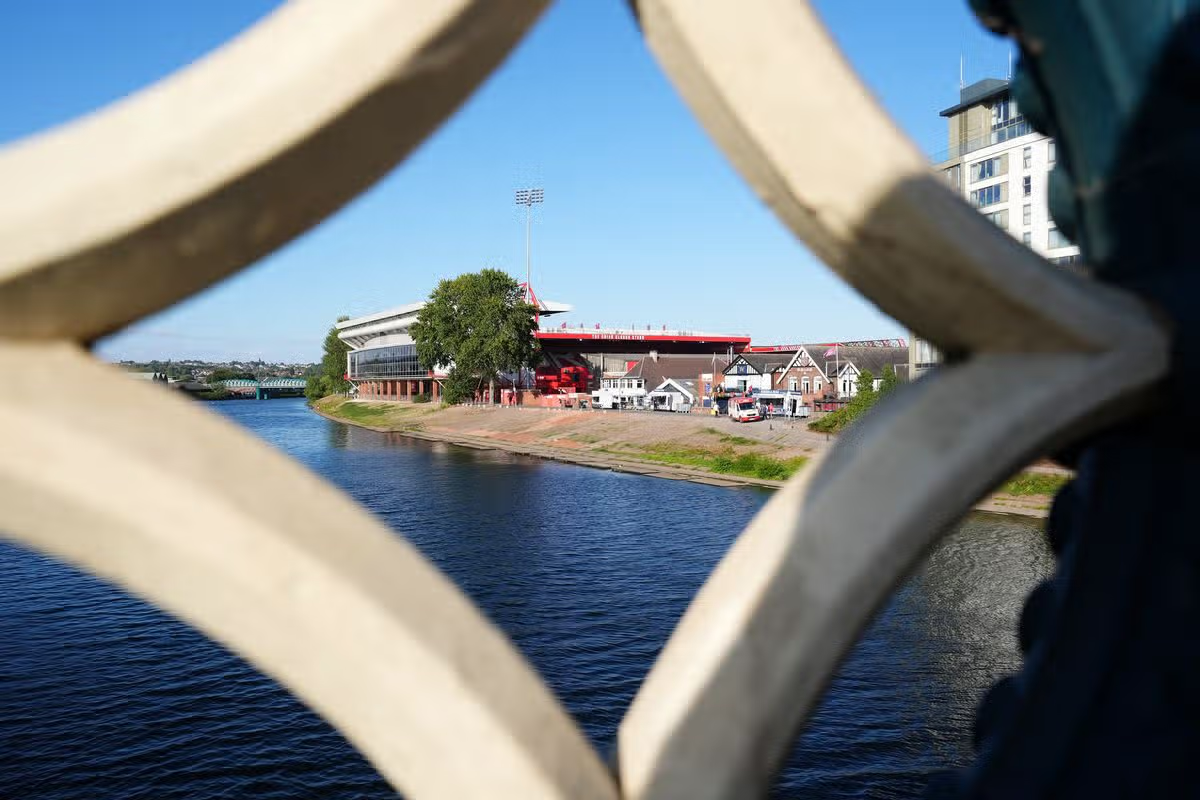
Nottingham Forest’s ambitious quest to modernize and future-proof their historic home received a monumental boost last week when Rushcliffe Borough Council officially granted planning permission for the club’s revised City Ground redevelopment project.
Subject to final conditions, the Reds have the green light to expand stadium capacity from roughly 31,000 to 45,000 by extending the iconic Peter Taylor Stand and filling in both corners of the Trent End. Furthermore, outline planning permission has been secured for a second phase involving the expansion of the Brian Clough Stand, which will eventually push total capacity up to an astonishing 52,500 seats.
For owner Evangelos Marinakis, this milestone breathes life into a prime target first set back in September 2024, when he outlined his vision to deliver one of the finest stadiums in England to match the club’s passionate fan base and massive season ticket waiting list.
Why Stadium Expansion is Essential Under Modern Financial Rules
In the cutthroat landscape of the Premier League, survival and growth require more than just on-pitch heroics; they demand strict adherence to financial regulations. Under the Premier League’s Squad Cost Ratio rules, clubs are restricted to spending 85 per cent of their football-related revenue and net profits from player sales on squad costs.
Because television broadcasting revenues are centrally negotiated and distributed equally, clubs cannot organically boost their TV income. Instead, expanding commercial operations and matchday gate receipts—the one stream entirely within a club’s control—becomes paramount.
Renowned football finance expert Kieran Maguire explained to the Nottingham Post the underlying logic of Marinakis’ multi-million-pound investment.
“The logic is that Nottingham Forest want to establish themselves as a Premier League football club,” Maguire noted. “Clearly, Mr Marinakis wants to ensure that they don’t have another bump in the road, and in order to do that you need to be competitive in terms of recruitment. With the new Squad Cost Ratio rules, it’s really important that you increase your revenues.”
The Financial Realities: Return on Investment and Hospitality
While the stadium makeover carries an estimated cost ranging anywhere from £550 million to £790 million, Maguire cautions that the financial payback will be a long-term marathon rather than a sprint.
Currently, Forest average roughly £31 per fan, per match—lagging behind traditional “Big Six” clubs like Manchester United, Liverpool, and London sides who rake in £75 to £90 per attendee through lucrative hospitality packages and higher ticket tiers. By introducing premium seating and enhanced hospitality offerings in the redeveloped stands, Forest aim to elevate that average yield, potentially generating an extra £22 million annually in gate receipts.
However, factoring in construction costs and capacity math, Maguire estimates it could take over three decades to fully recoup the initial capital outlay purely through ticket sales. For Marinakis, the project is clearly driven by sporting ambition rather than short-term financial returns.
Following Modern Standards: Head Coach Oliver Glasner Speaks Out
Head coach Oliver Glasner fully backs the club’s modernization efforts, noting that English football infrastructure is catching up to European standards—particularly regarding corporate hospitality and fan comfort. Drawing comparisons to German giants Bayern Munich, Glasner highlighted how premium hospitality revenues often subsidize affordable general admission tickets, striking a healthy balance for traditional supporters.
“We recently played at Villa Park and they are building a new stand. Crystal Palace started to extend the stadium. We are the next ones,” Glasner said. “It is also about comfort for fans and revenue, with all the financial rules. After 25 years you think… we need a new sofa. It’s the same with the City Ground. You have to do it.”
Beyond matchdays, the club is also eyeing opportunities to sweat the asset further by hosting non-matchday events and concerts, positioning the venue as a multi-purpose entertainment hub.
Ultimately, while the financial return requires patience, the overarching prize is security. Securing a permanent Premier League footprint means safeguarding an annual television windfall worth upwards of £110–120 million compared to Championship revenues. When those capacity crowds pack out a 50,000-seat City Ground for future European nights under the lights, the grand investment will truly come alive.