The San Antonio Spurs enter the 2026–27 NBA season boasting arguably the deepest roster in the entire league. But with elite depth comes a delicate challenge: keeping a locker room full of starting-caliber players happy.
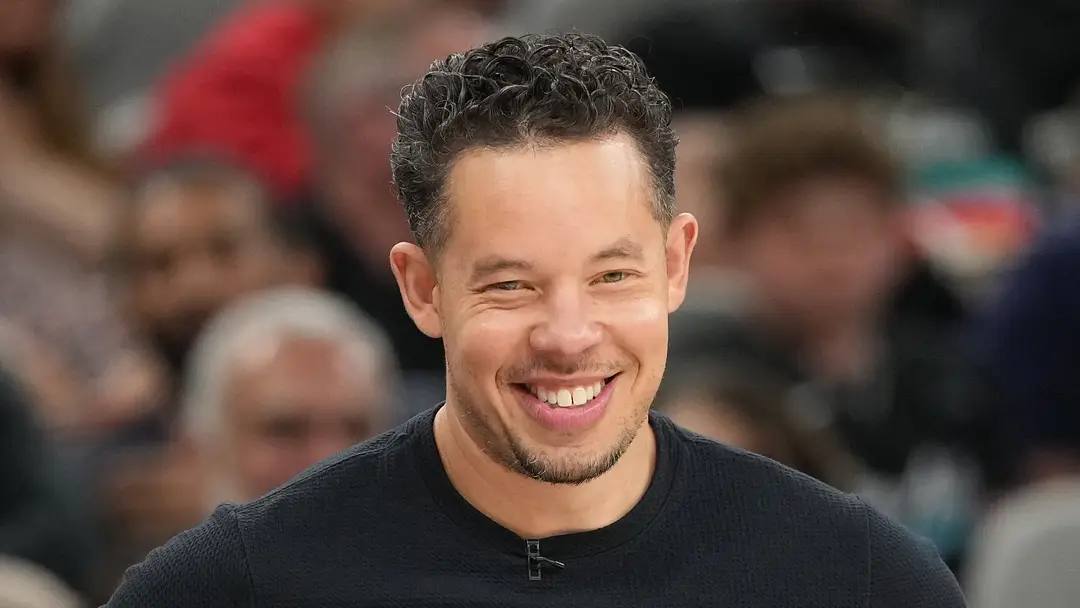
Fortunately, head coach Mitch Johnson appears to have a master plan to sidestep potential training camp controversy. Speaking during team media day, Johnson addressed the elephant in the room regarding how he plans to manage a rotation packed with players capable of starting.
His answer was refreshingly pragmatic: “I’ll try to help everybody. I’ll try to win. I’ll be honest with everybody.”
That simple, transparent mindset signals a willingness to experiment with multiple starting lineups, effectively neutralizing potential training camp friction and turning a roster logjam into a tactical weapon.
Navigating Training Camp Battles and Ego Management
Heading into camp, several positional battles loomed large over the organization. Questions about whether newcomer Tobias Harris or sharpshooter Julian Champagnie would lock down the forward spot, or how minutes would be distributed between veteran star De’Aaron Fox and rising sophomore Dylan Harper, sparked plenty of summer debate.
While conventional wisdom suggests Johnson will likely trot out a baseline starting unit featuring Fox and Champagnie to open the regular season, the head coach’s recent comments prove he isn’t married to a single five-man combination.
Depending on tactical matchups, we could easily see Tobias Harris cracking the starting lineup for his veteran size and floor-spacing. Alternatively, Johnson could shake things up entirely by slotting Dylan Harper directly into the starting backcourt alongside Fox, Stephon Castle, Devin Vassell, and franchise cornerstone Victor Wembanyama.
Embracing Tactical Versatility
With at least seven legitimate starting-caliber players on the roster, locking yourself into one rigid starting lineup would be a missed opportunity.
San Antonio’s unique blend of personnel allows them to pivot between vastly different styles of play. They can run teams off the floor with blinding speed utilizing their deep point guard trio, Vassell, and Wembanyama. On the flip side, they possess the frontcourt size to play big when needed, opening up intriguing rotation possibilities alongside their revamped center depth.
More importantly, a fluid starting lineup directly addresses lingering rumblings from last season regarding player roles—such as whispers that a young talent like Harper was eager for a more prominent starting responsibility. By mixing and matching early in the year, Johnson can reward hard work, keep fresh legs on the floor, and prevent internal frustration before it boils over.
Finding the Ultimate Core Four
Beyond keeping the peace, experimenting with different combinations serves a vital long-term purpose: finding out which lineups truly maximize the team’s ceiling.
While a starting unit of Fox, Castle, Vassell, Champagnie, and Wembanyama racked up impressive minutes last season, getting core pieces like Fox, Castle, Harper, and Wembanyama more reps together could unlock an even higher gear.
The San Antonio Spurs are built to contend right now, but navigating a grueling 82-game regular season requires adaptability. By leaning into Mitch Johnson’s open-minded, transparent approach to lineup construction, the Spurs have found a brilliant way to turn fierce internal competition into a drama-free recipe for success.
Do you think the San Antonio Spurs should stick with a consistent starting five, or should Mitch Johnson frequently mix up the lineup based on matchups?