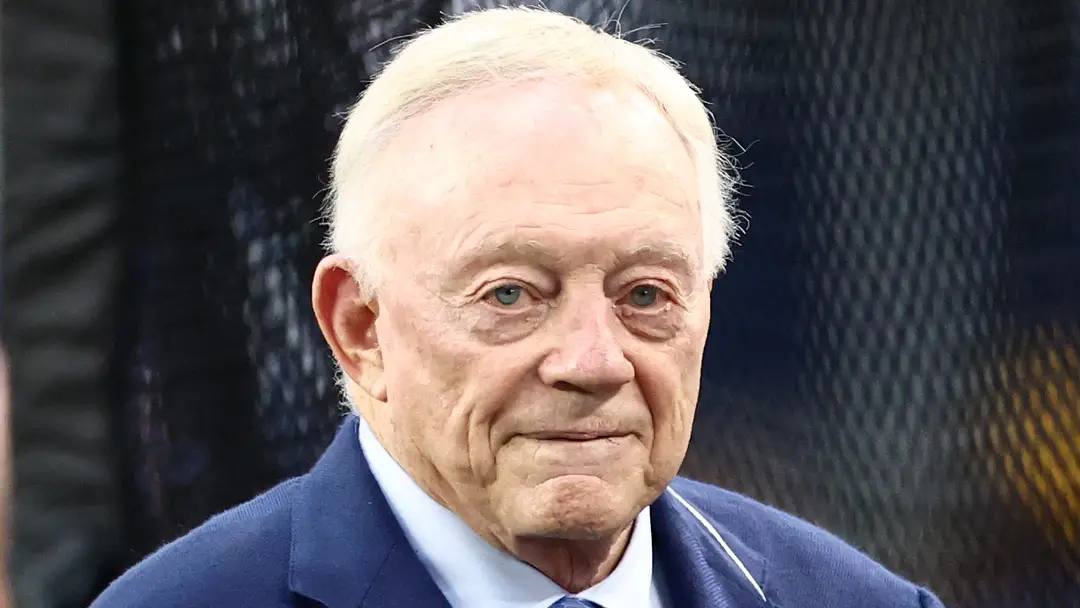
The Dallas Cowboys sent shockwaves across the National Football League when owner and general manager Jerry Jones pulled off a late-night blockbuster trade to acquire star cornerback Joey Porter Jr. from the Pittsburgh Steelers. Sending a 2028 second-round pick and a 2027 sixth-rounder to Pittsburgh seemed like a masterstroke on paper, immediately injecting elite lockdown talent into Christian Parker’s struggling defensive backfield.
However, beneath the initial excitement of landing a premier young cornerback, a deeply concerning detail has emerged from the front office. According to NFL insider Jordan Schultz, the Cowboys have no immediate plans to sign Porter to a contract extension. Instead, Dallas is opting to let the defensive standout play out the remainder of the season and address his contract status down the road.
For observant fans and analysts, this strategy sounds frighteningly familiar—and it directly mirrors the exact same gamble Jerry Jones took with George Pickens.
The Uncanny Parallels to the George Pickens Situation
Trading premium Day 2 draft capital to pry a young star away from the Steelers, only to refuse an immediate long-term extension, is a high-wire act that carries immense risk. We saw this exact script play out when Dallas acquired Pickens. Rather than locking him down right away, the front office forced him to prove himself through a full season, ultimately watching his price tag soar sky-high after he earned second-team All-Pro honors.
While exercising caution is understandable—especially given that Porter recently engaged in a contract stalemate with Pittsburgh that caused him to miss the first three games of the season—waiting only creates a ticking financial time bomb.
If Porter thrives under Christian Parker’s defensive scheme and recaptures the form that saw him log a career-high 14 pass breakups last year, his market value will skyrocket. By refusing to extend him now, the Cowboys are running the very real risk of pricing themselves out or creating a fresh wave of avoidable contract drama just as the team was enjoying a peaceful locker room environment.
What Is the Long-Term Plan?
The front office’s ultimate endgame with this trade remains shrouded in mystery. Are the Cowboys viewing Porter as a foundational cornerstone whom they fully intend to pay handsomely next spring, or is this blockbuster simply an expensive one-year rental?
If it turns out to be nothing more than a rental, the arithmetic makes very little sense. Trading a valuable second-round draft pick only to let a player walk into free agency and collect a compensatory third-round pick down the road is a losing proposition. It amounts to trading premium, controllable draft assets for a downgraded compensatory return—a sideways move that a contending franchise simply cannot afford to make.
Jerry Jones and the Cowboys’ front office find themselves at a crucial crossroads. Playing the middle in the NFL rarely yields sustainable success. If Porter proves to be the transformative defensive anchor Dallas desperately needs, the front office will have no choice but to break the bank.
The only question is whether waiting until the end of the year will end up costing them millions more than if they had just gotten a deal done on day one.
Do you think the Cowboys should have locked down Joey Porter Jr. with an immediate contract extension, or is waiting to see him play in Dallas the smarter front office move?