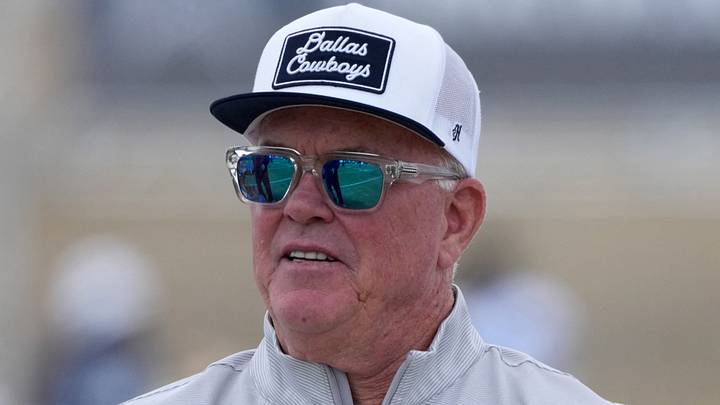
When the Dallas Cowboys pulled off the blockbuster decision to trade All-Pro pass rusher Micah Parsons to the Green Bay Packers, the front office’s primary justification was clear and strategic. The narrative sold to Cowboys Nation was that parting ways with a mega-contract edge rusher would free up vital financial flexibility, allowing the franchise to allocate those funds toward building a more well-rounded, balanced defensive unit.
However, subsequent roster moves under Jerry Jones have thoroughly thrown that entire financial philosophy into question. By pivoting into massive commitments for other high-profile defensive acquisitions, the Cowboys may have inadvertently defeated the core purpose of trading Parsons in the first place—ultimately paying more money for less overall defensive impact.
The Numbers Game: Paying More for Less Production
To understand why the post-Parsons strategy has drawn fierce criticism, you only have to look at the ledger. Green Bay’s market-resetting contract extension for Parsons pays the superstar defender an average of $46.5 million per season. While that is undeniably a massive financial commitment, recent moves by Dallas suggest they are actually spending even more to replace him.
Following the acquisition of defensive tackle Quinnen Williams—who inked a lucrative three-year, $105 million extension—alongside the trade for Pittsburgh Steelers star cornerback Joey Porter Jr., the Cowboys’ financial allocation on those two players alone is staggering. According to financial analysis from ESPN’s Ben Solak, Dallas could end up paying just shy of $20 million more per year combined for Williams and Porter than they would have spent had they simply kept Parsons on the books.
Even when acknowledging that Williams is an elite interior presence and Porter instantly upgrades the secondary, football purists and analytics experts alike agree: Parsons is a generational, singular talent. His relentless pass-rush juice completely warped opposing game plans and supercharged every defensive scheme he played in. Recreating that kind of game-wrecking production in the aggregate is difficult enough; doing it while paying more money makes the initial trade logic extremely hard to defend.
A Struggling Pass Rush and Lacking Defense
The practical results on the field so far have done little to quiet the doubters. Without No. 11 terrorizing opposing quarterbacks off the edge, the Cowboys’ pass rush has noticeably suffered.
Early-season metrics from Pro Football Focus highlight slow starts for both Williams and fellow Parsons trade asset Kenny Clark, while edge rusher Rashan Gary has been largely invisible through the opening stretch of the year. This lack of pressure has forced young defensive prospects like Donovan Ezeiruaku and Malachi Lawrence into high-leverage roles before they are fully ready to shoulder them.
Compounding matters, the defensive secondary struggled significantly prior to the arrival of Porter, and defensive coordinator Christian Parker’s unit has yet to find the immediate, cohesive rhythm many anticipated. Meanwhile, future financial flexibility remains strained, with unresolved contract negotiations hanging over offensive weapons like wide receiver George Pickens.
Rebuilding the Vision in Dallas
The core argument for trading a player of Parsons’ caliber was always about avoiding crippling financial squabbles and achieving superior roster balance. Yet, by splurging on massive extensions across other defensive positions while watching the pass rush regress, the Cowboys have seemingly failed to achieve either goal.
Can Dallas turn public sentiment around? Absolutely. If Joey Porter Jr. sparks a dramatic turnaround in the secondary and the defensive front eventually finds its footing under Parker, fans will quickly forgive the front office’s unorthodox accounting.
However, watching Micah Parsons wreak absolute havoc in Green Bay while the Cowboys pay a premium price for a disjointed aggregate defense serves as a painful reminder: letting go of a true superstar is a gamble that only pays off if your contingency plan actually works.
Do you think the Dallas Cowboys made a catastrophic mistake trading Micah Parsons, or will their heavy investments in Quinnen Williams and Joey Porter Jr. eventually pay off?