The Toronto Raptors didn’t just snap a miserable six-game losing streak with Friday night’s gritty 105-102 victory over the Detroit Pistons—they quietly uncovered a massive postseason blueprint.
On paper, Detroit looks like a team every Eastern Conference contender should want to avoid. They have surged into the upper echelon of the East, boasting a legitimate shot at a top-three seed after turning their franchise around. Yet, despite both rosters dealing with injuries during Friday’s clash, the game exposed a glaring reality: if Toronto sneaks into the postseason, there is no better seven-game opponent for them than the Pistons.
A Battle of Defensive Heavyweights
The biggest reason Toronto can thrive against Detroit is that both teams speak the exact same basketball language. Neither roster is built to win nightly 130-point track meets. Instead, both squads rely on suffocating, physical defense to wear opponents down. Throughout Friday’s matchup, both teams relentlessly hounded ball handlers, threw aggressive blitzes at ball screens, and hunted turnovers to spark transition buckets.
The numbers back up this mirror-image identity:
- Defensive Grit: Detroit currently sits sixth in the NBA in defensive rating, while Toronto—even with a sub-.500 record—ranks right behind them at 11th.
- Three-Point Volume: While Detroit shoots the three more efficiently (8th in the league compared to Toronto’s 26th), neither team buries opponents under an avalanche of perimeter attempts. Detroit averages 35.5 three-point tries per game, virtually identical to Toronto’s 35.4.
Come April, playoff basketball slows down into a half-court grind. Toronto’s offense will naturally jump once Kawhi Leonard returns from his 14-game absence to provide elite half-court shot creation. Still, the Raptors’ best path to surviving a series is dragging their opponent into a mud fight—a style Detroit willingly plays right into.
The Cade Cunningham Achilles’ Heel
Where a seven-game series truly tilts in Toronto’s favor is tactical execution. Entering the offseason, Detroit’s biggest priority was finding a reliable secondary creator to take pressure off Cade Cunningham. While Cunningham has played off the ball more this year, he remains the undisputed engine of Detroit’s offense. When defenses knock him off his spots, the Pistons’ scoring grinds to a halt.
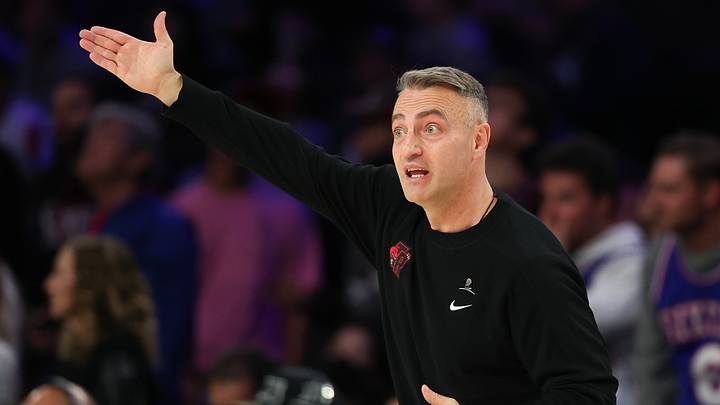
In a best-of-seven series, head coach Darko Rajakovic has the ultimate luxury: waves of versatile, physical defenders. Between Kawhi Leonard, Scottie Barnes, CMB, Allen Graves, and Ja’Kobe Walter, Toronto can throw a fresh, exhausting look at Cunningham on every single possession.
Detroit will undoubtedly try to deploy similar defensive pressure against Leonard and Barnes. However, Toronto holds a decisive trump card in backcourt creation. With Immanuel Quickley and RJ Barrett both capable of manufacturing their own offense when plays break down, the Raptors possess secondary scoring punch that Detroit simply cannot match.
The Verdict
The NBA landscape shifts rapidly between November and April, and trade deadlines or late-season surges can completely reshape the Eastern Conference bracket. But looking at how these rosters are built today, Rajakovic’s playoff game plan against Detroit would be crystal clear: lock down Cade Cunningham, let Toronto’s superior depth of shot creators take over, and watch the Raptors pull off a massive postseason upset.


