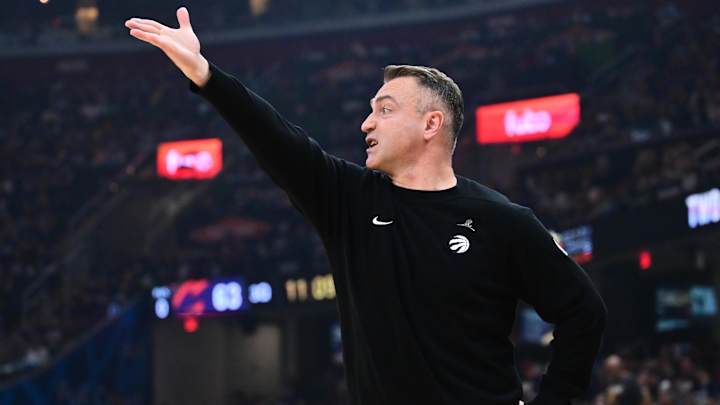
The Toronto Raptors’ long-awaited return to the NBA playoffs began with a frustrating sense of déjà vu, as they fell 126–113 to the Cleveland Cavaliers in Game 1—and once again looked unprepared for the intensity of postseason basketball.
It was a familiar story: early struggles, defensive breakdowns, and a team chasing the game before it ever truly settled in.
Same Story, Different Year
For a franchise that prides itself on competitiveness, Toronto’s Game 1 record tells a different story.
The Raptors are now just 5–18 in playoff series openers, a trend that has followed them across multiple eras. From the DeMar DeRozan–Kyle Lowry years to the present roster, slow starts in the postseason have become an unwanted identity.
Even their 2019 championship run began with a Game 1 loss—before adjustments eventually flipped the series and the season.
But this time, there is no guarantee of a turnaround.
Cavaliers Arrive Ready, Raptors Arrive Late
Cleveland looked like a team that understood exactly what playoff basketball demands.
They controlled the tempo, dominated the glass, shot more efficiently, and consistently punished Toronto in the paint. Every key statistical category leaned the Cavaliers’ way, highlighting the gap in readiness between the two sides.
Toronto, meanwhile, struggled to impose its identity.
Their regular-season strength—fastbreak scoring—completely disappeared. After leading the league in transition points, the Raptors managed just three in the entire game.
For a team built on pace and pressure, that drop-off was decisive.
Experience Gap Becomes Obvious
One of the clearest differences between the two teams was playoff experience.
Cleveland’s rotation entered the series battle-tested, with hundreds of combined playoff appearances shaping their composure and decision-making.
Toronto’s group, by contrast, is still learning what postseason basketball demands. Outside of Jakob Poeltl, most of the roster is navigating this stage for the first time.
That gap showed up immediately in Game 1 execution, particularly in defensive rotations and late-game control.
No Answers for Cleveland’s Control
The Cavaliers dictated nearly every major aspect of the game.
They hit more threes, forced more turnovers, won the rebounding battle, and consistently broke down Toronto’s defensive structure. Whenever the Raptors attempted a run, Cleveland responded with composure and efficiency.
It was not just a loss—it was a control problem.
Toronto never truly dictated terms at any stage of the contest.
Raptors Face a Rapid Reality Check
If there was any hope of easing into the series, Game 1 removed it instantly.
Toronto now faces a short turnaround and an urgent need for adjustments across both ends of the floor. Their identity—speed, transition scoring, and defensive disruption—must return immediately if they are to compete in the series.
Otherwise, this could become another early playoff exit defined by a single recurring theme: Game 1 setting the tone for everything that follows.
The Pattern That Won’t Go Away
For all the roster changes and tactical evolution, one issue continues to follow the Raptors into every postseason:
They are slow to arrive when it matters most.
And against a disciplined Cavaliers team, that hesitation was all it took to fall behind in the series before it truly began.