Victor Wembanyama is quickly becoming one of the NBA’s most compelling figures—not just for his dominance on the court, but for how openly he expresses everything that comes with it.
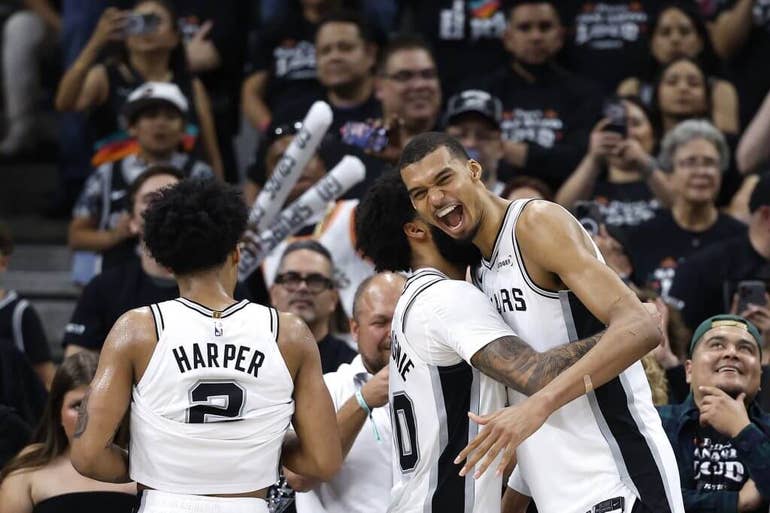
After the San Antonio Spurs sealed their playoff series win over the Portland Trail Blazers, emotions spilled over on the bench. Wembanyama, alongside teammates like Julian Champagnie, shared a moment of visible relief and joy as the franchise celebrated a breakthrough postseason victory. For many of the younger Spurs players, it was their first taste of playoff success—and Wembanyama did not try to hide what it meant to him.
Speaking after the game, Wembanyama explained that he deliberately refuses to suppress his emotions. He said there is often pressure on elite athletes to appear composed or detached, but he doesn’t believe in carrying that burden. For him, expressing emotion is not a weakness—it’s part of competing at the highest level.
Teammates have noticed and embraced that mindset. Champagnie, for example, described Wembanyama’s openness as something that strengthens the group. In his view, seeing a superstar willing to show frustration, joy, and vulnerability helps reinforce the idea that everyone in the locker room is fully invested.
This emotional transparency has shown up throughout the season. Whether it was a dramatic comeback win earlier in the year or a difficult loss where Wembanyama addressed the media through tears after dealing with personal grief, the young star has consistently refused to separate his humanity from his role as the face of the franchise.
That moment earlier in the season—when he attended a press conference shortly after losing a family member—stood out across the league. Despite the option to step away, he chose to speak publicly, acknowledging the loss while still fulfilling his responsibilities as the team’s leader. It reinforced a growing perception that Wembanyama sees accountability and authenticity as part of the same identity.
Within the Spurs organization, that approach is having an impact. Players like Luke Kornet have noted that the modern game comes with constant outside noise—media, fans, and social platforms all shaping narratives. Kornet has suggested that part of survival in the league is learning to focus only on what is directly within a player’s control: teammates, coaches, and personal standards.
Wembanyama, however, seems to be carving out his own path within that environment. Rather than retreating from attention or trying to manage perception, he leans into it, offering unfiltered reactions to both success and disappointment. Teammates say that authenticity makes him relatable despite his extraordinary talent.
As the Spurs continue their playoff run, that emotional openness may become one of their defining traits. In a league often shaped by control and caution, Wembanyama is standing out for something simpler—refusing to hide how much it all matters.