The Boston Celtics’ identity has long been tied to one clear idea: win the math game, shoot more threes than everyone else, and trust the volume to eventually break opponents down. Under Joe Mazzulla, that philosophy didn’t just stick — it became the blueprint.
But the 2026 playoffs are forcing a harder conversation.
After a first-round exit that exposed the limits of that approach, there’s growing evidence across the league that the “Celtics-style” blueprint might no longer be the guaranteed path it once looked like.
A league quietly shifting away from the three-point obsession
The numbers from this postseason are starting to tell a different story.
Of the 11 highest-volume three-point shooting teams in the regular season, only one has survived past the opening round. Several high-volume offenses didn’t even make it that far, while others — including Boston — were quickly eliminated once defenses tightened and possessions slowed down.
It’s not just coincidence. It’s a trend.
Teams are defending the perimeter differently now. Closeouts are more disciplined, rotations are more compact, and defenses are increasingly willing to live with drives and mid-range shots if it means taking away rhythm threes.
Boston felt that shift directly.
When the threes stopped falling, everything else broke down
Against Philadelphia, the Celtics’ offense often looked predictable when their perimeter shots weren’t dropping. What once felt like a system advantage turned into an offensive stall.
Defenses stayed home on shooters, forced the ball into isolation, and challenged Boston’s ability to generate efficient offense without relying on volume from deep.
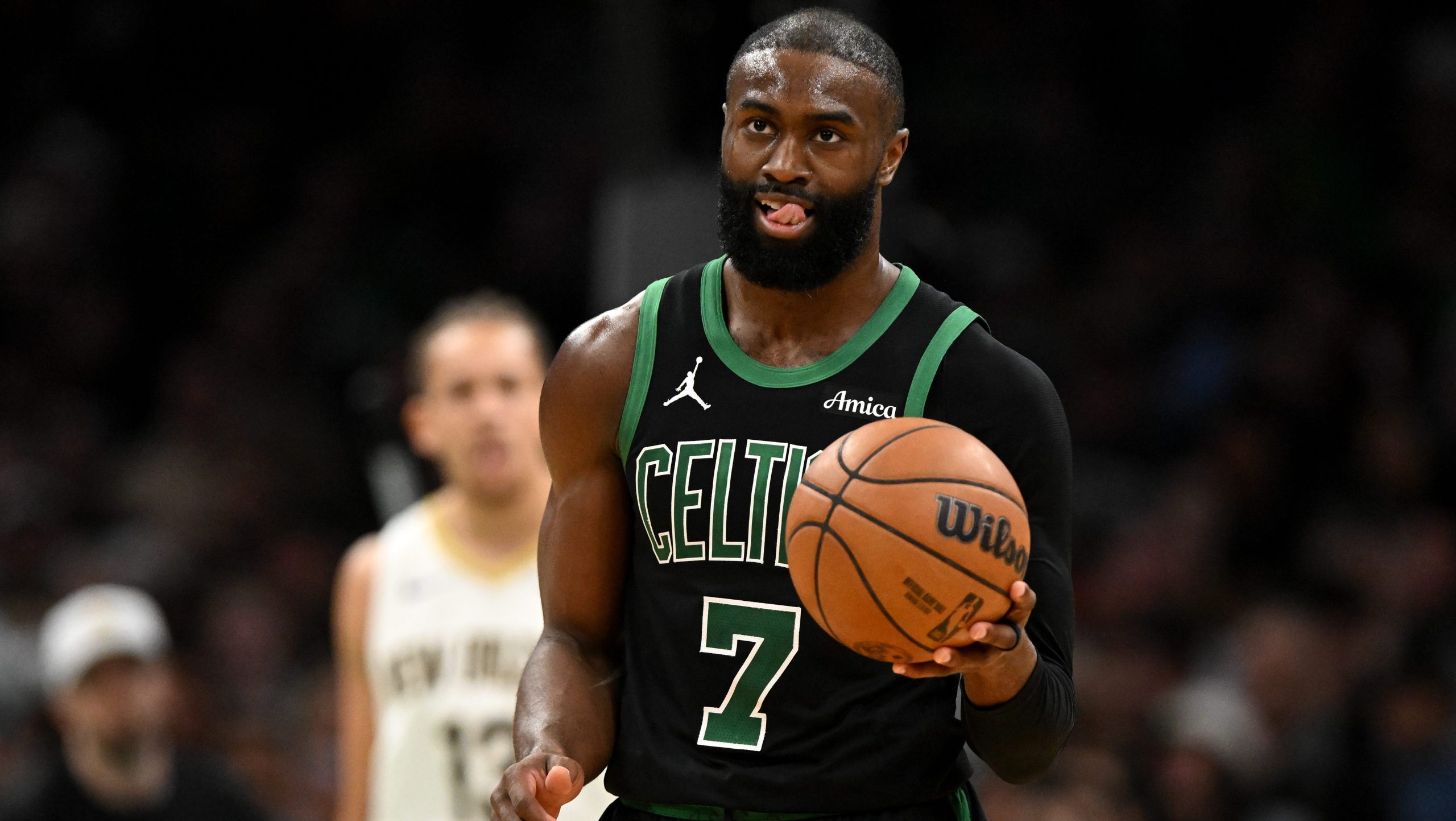
At times, the Celtics were forced into exactly what they didn’t want — late-clock isolations and tough shot creation from Jayson Tatum and Jaylen Brown.
The results spoke for themselves.
The problem isn’t the philosophy — it’s the flexibility
This isn’t a suggestion that Boston should abandon its identity. The three-point shot remains one of the most valuable tools in basketball.
But the playoffs are exposing a gap between regular-season dominance and postseason adaptability.
When shots aren’t falling, Boston currently lacks a consistent “change of pace” option — something to slow the game down, get easy paint touches, or manufacture offense without relying heavily on perimeter variance.
That’s where the concern lies.
A roster question heading into the offseason
As the Celtics head into a critical summer around Tatum and Brown, the conversation is shifting from “how many shooters can we add?” to something more complicated: “what happens when the shooting stops working?”
That could influence how Boston approaches roster construction moving forward. The need for additional self-creation, rim pressure, and secondary playmaking is becoming more obvious in high-leverage playoff settings.
The math-heavy model still works — until it doesn’t.
And right now, the playoffs are showing just how thin the margin can become when defenses fully adjust.
A warning, not a collapse
This isn’t the end of Boston’s style. Far from it.
But it may be a signal that the rest of the league has caught up — and is now actively building countermeasures.
If the Celtics want to stay ahead of the curve, the next evolution won’t be about taking more threes.
It will be about what they can do when they’re taken away.