The Toronto Raptors of 2026 are no longer a “blank canvas.” With the paint drying on a season that saw the emergence of a clear core, General Manager Bobby Webster—fresh off a successful trial period and likely heading toward a contract extension—faces a summer defined by patience rather than blockbuster splashes.
While the “win-now” sirens are blaring in other NBA markets, the view from the Scotiabank Arena is one of measured refinement. Here is how the Raptors’ off-season pathways are shaping up.
The “Quiet Summer” Projection
Barring a sudden opportunity to land a disgruntled superstar, all signs point to a conservative off-season. The primary reason? The Luxury Tax.
- The Math: Toronto is currently hovering near the tax line. With 13 roster spots effectively accounted for (including the incoming 19th overall pick), the team has roughly $6 million in wiggle room to avoid penalties.
- The Priority: That money is likely earmarked for Sandro Mamukelashvili. “Mamu” turned down larger offers last year to stay in Toronto’s system, and the front office is expected to prioritize rewarding that loyalty to keep the rotation intact.
The Gradey Dick Dilemma
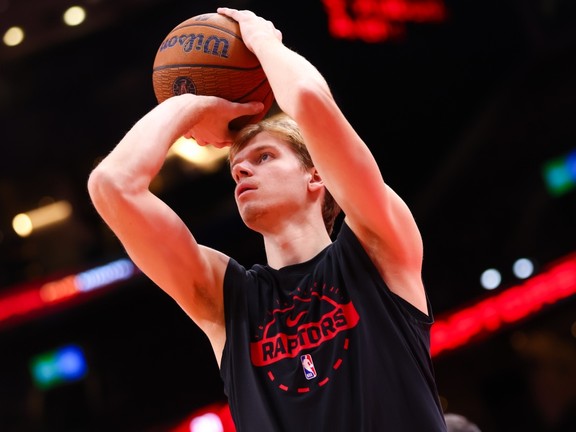
To create the financial flexibility needed to keep the roster together, Webster may have to make a difficult choice regarding Gradey Dick.
- The Regression: After showing promise early, Dick took a significant step back in his third professional year.
- The “Redraft” Market: Several cap-space teams reportedly view Dick as a “buy-low” candidate. The question for Toronto is whether they sell now for cap relief or hold out for a draft pick, hoping his shooting stroke returns in Year 4.
The RJ Barrett Extension Wait
RJ Barrett was the heartbeat of Toronto’s gritty first-round playoff series and proved he belongs in the “homegrown success” category. However, don’t expect a pen to hit paper this summer.
- The Strategy: Webster indicated he is in no rush to finalize an extension. While Barrett is a professional and wants to stay, signing him now would lock the Raptors into an expensive 2027-28 payroll that would make the luxury tax unavoidable.
- The Comparison: Unlike the “black cloud” that hung over the franchise during the Pascal Siakam negotiations, the vibes surrounding Barrett remain positive. The team is comfortable letting him play out the next season before making a final long-term commitment.
Building the “Wall of Defense”
The Raptors have found a defensive identity that Webster is loath to disrupt. The pairing of Scottie Barnes and rookie Collin Murray-Boyles is viewed as the league’s next great defensive tandem.
- Untouchables: Both Murray-Boyles and 21-year-old Ja’Kobe Walter are considered essential building blocks. Unless a true All-NBA guard (think a younger superstar) becomes available, Toronto is expected to “keep the kids” and build around their defensive versatility.
- The Poeltl Factor: While Jakob Poeltl’s contract is often criticized, he remains the only 7-footer on the roster. Between his value as a “Barnes favorite” and the high cost of a salary dump, he is expected to remain the starting center for the foreseeable future.
The Missing Pieces
Even as they stay patient, the Raptors’ “wish list” remains clear. To move from respectable to elite, they still lack:
- A Speed Merchant: A fast, penetrating lead guard who can collapse defenses and kick out to shooters.
- A Modern Big: An athletic 7-footer capable of both protecting the rim and stretching the floor.
The Verdict
Bobby Webster is playing the long game. By keeping their future first-round picks (Toronto is one of the few teams that owns all of its own capital) and developing their defensive-minded youth, the Raptors are positioning themselves to strike when the right star becomes available—not just any star.
Inside the Front Office: With expectations growing that Webster has officially moved out of Masai Ujiri’s shadow, this off-season will be the first true test of his “pragmatic” philosophy as the primary decision-maker.