Morgan Gibbs-White’s absence at Villa Park wasn’t just felt by Nottingham Forest — it was exposed in the most brutal, unforgiving way possible.
By the final whistle of their 4-0 Europa League semi-final defeat to Aston Villa, Forest weren’t just beaten. They were unpicked, overrun, and left searching for answers they never found on the pitch. And at the centre of that silence sat their talisman, watching helplessly from the bench.
This was the game that underlined a reality Forest can no longer ignore: Morgan Gibbs-White isn’t just important to this team — he is the structure holding it together.
The moment it all unravelled
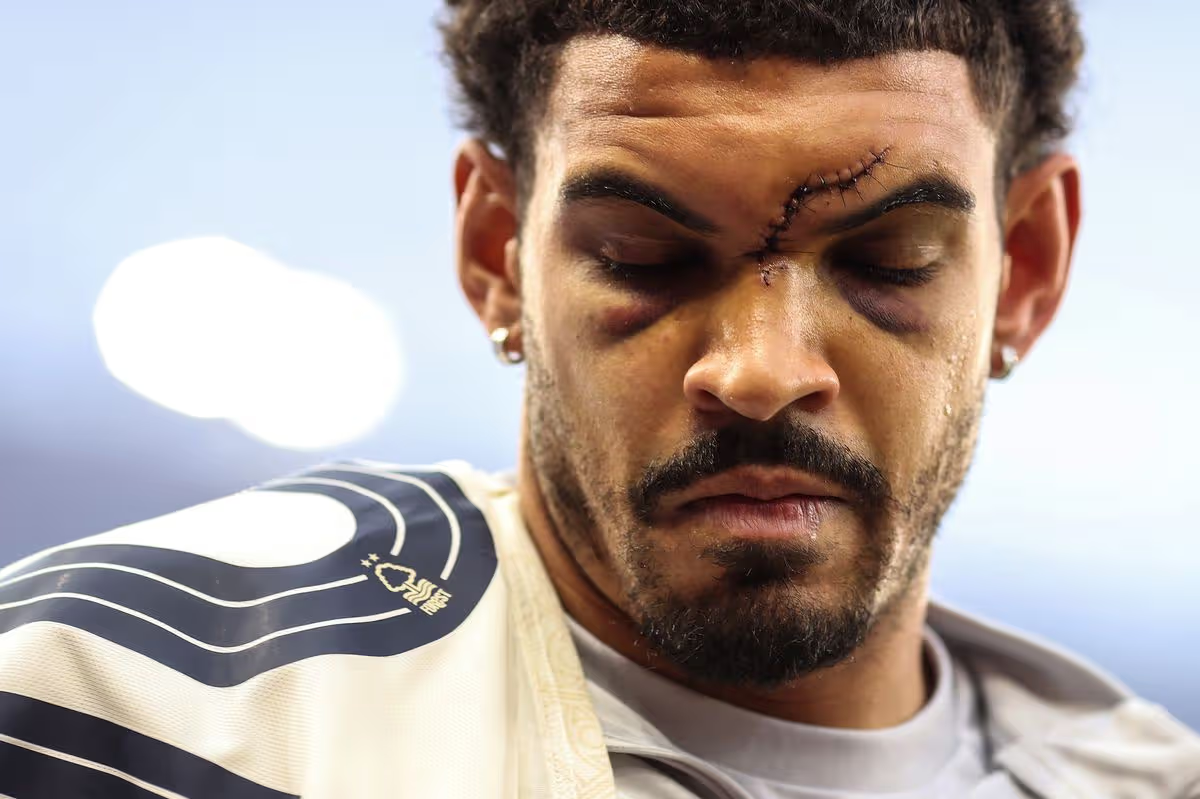
There was a telling image that summed up the night. Gibbs-White, still carrying the physical aftermath of a brutal head collision against Chelsea goalkeeper Robert Sánchez, sat slumped forward, head in hands, as Aston Villa tore through Forest’s defence.
The stitches, the swelling, the two black eyes — they told their own story before a ball was even kicked. But what followed told a harsher one.
Without him, Forest lacked rhythm. Without him, they lacked resistance. Without him, they lacked belief.
Villa didn’t just win the tie — they accelerated through it once Forest’s midfield lost its only real point of control.
A team built around one player — exposed without him
It’s easy to frame defeat as collective failure, but this was different. Forest didn’t just miss chances or lose duels — they lost their identity.
Gibbs-White has become the connector: dropping deep, carrying transitions, dictating tempo, and injecting urgency when games drift. Strip that away, and everything else starts to fall out of sync.
Even before Villa’s decisive surge, Forest looked fragmented. The press lacked coordination. The attack lacked an outlet. The midfield lacked direction.
And when the pressure rose, there was no one to steady it.
The uncomfortable question Forest can’t avoid
Would Gibbs-White have changed the outcome? Nobody can say for certain. Villa were ruthless, and Forest were also without multiple key players, compounding the damage.
But what is undeniable is this: the gap between Forest with him and Forest without him is no longer subtle — it’s structural.
That reality lands heavily on a club still fighting to define its long-term direction. Because if one injury can shift them from competitive to overwhelmed on a European semi-final stage, the question writes itself.
How replaceable is he, really?
A transfer warning wrapped inside heartbreak
Forest have been here before. Last summer, there was serious interest in Gibbs-White from Tottenham Hotspur, and only a collapse in negotiations kept him at the City Ground.
Since then, his importance has only grown — along with the inevitability that more attention will follow.
Alongside players like Murillo and Elliot Anderson, he now sits in the category of assets the club cannot casually afford to lose, yet may struggle to fully protect.
And Villa Park didn’t just highlight his value. It magnified it.
The player Forest cannot afford to misread
What makes Gibbs-White different isn’t just goals or assists — it’s influence. He carries responsibility in moments when others retreat into structure.
That’s why his absence hurt more than any single tactical adjustment.
Forest didn’t simply lose a creative midfielder. They lost their reference point.
And in a semi-final where margins disappear quickly, that absence became the difference between belief and collapse.
The summer question hanging over the City Ground
Forest now face a defining window. Not because they lack talent — but because they have too much of it concentrated in too few irreplaceable profiles.
Thursday night didn’t just end a European run. It delivered a warning they cannot ignore.
Because if Morgan Gibbs-White is this essential in one game, the real issue is what happens if they ever have to plan without him for a whole season.
At Villa Park, the answer was already there — loud, uncomfortable, and impossible to miss.