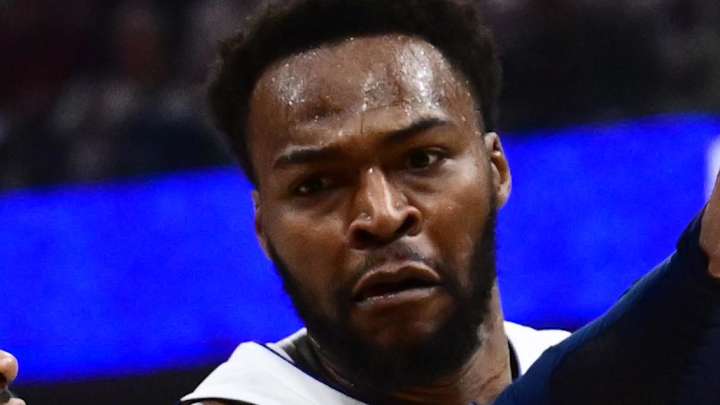
The Boston Celtics are entering a crucial offseason focused on restoring their championship pedigree. While the front office is heavily linked to the unfolding Giannis Antetokounmpo sweepstakes, smart roster building often requires finding high-value, tactical pieces. Following a first-round exit where Boston’s frontcourt depth was thoroughly exposed and humiliated, the front office needs to look no further than a brewing salary-cap dilemma in the Motor City.
The Detroit Pistons are the undisputed darlings of the Eastern Conference, closing in on their first Eastern Conference Finals appearance since 2008. However, an upcoming financial crisis surrounding their starting center, Jalen Duren, could force them to part with their true postseason savior: Paul Reed.
The Jalen Duren Max Contract Trap
Despite a highly successful playoff run for the team, Jalen Duren’s individual postseason performance has been wildly enigmatic and inconsistent. Yet, because of his immense ceiling, Detroit is facing an incredibly difficult financial reality.
Under the NBA’s restrictive new CBA apron rules, matching aggressive offer sheets from cap-space teams like the Chicago Bulls or Brooklyn Nets could completely paralyze Detroit’s long-term team building.
“He’s not a max player, but they’re probably going to have to give him the max,” an Eastern Conference executive told ESPN’s Brian Windhorst. “Because now cap-space teams… might see him as someone they could get with a max offer sheet and Detroit will have to match. With the new apron rules, it might come back to bite them.”
To navigate this looming tax hell while retaining Duren, the Pistons will likely be forced to move off secondary assets. This is where Boston must strike.
Paul Reed: The Diamond in the Rough
Paul Reed’s contract is non-guaranteed for next season, but after his spectacular performance in the second round against the Cleveland Cavaliers, letting him walk for nothing is entirely out of the question for Detroit.
With Duren struggling to find his footing against Cleveland’s elite frontline of Jarrett Allen and Evan Mobley, Pistons head coach J.B. Bickerstaff turned to Reed starting in Game 3—and “BBall Paul” completely altered the series.
Reed’s Mind-Boggling Postseason Efficiency:
- The Scoring Clip: Playing just 14.3 minutes per game, Reed is averaging an astonishing 13.3 points, 5.3 rebounds, and 0.8 blocks.
- Elite Efficiency: He is converting his looks at a staggering 76% clip from the field, outplaying All-Star caliber centers in highly restricted minutes.
Reed has proven to be the ultimate modern backup big man—possessing high-energy rebounding, switchable perimeter defense, and elite screen-and-roll finishing.
Why Boston Must Make the Call
Boston’s frontcourt rotation completely vanished when it mattered most in the opening round of the playoffs. Relying on an aging, injury-prone rotation simply will not cut it if the Celtics intend to challenge the East’s elite in 2027.
Reed is a premier “buy-low” candidate whose trade value is at an all-time high, but whose financial availability is compromised by his team’s cap structure. While Detroit might be incredibly hesitant to send a playoff-proven weapon to a conference rival, a package of future draft capital and salary relief from Boston could prove too logical to decline.
If Brad Stevens is serious about fixing the identity of the Celtics’ bench, he needs to get on the phone with Detroit before Reed’s postseason showcase raises his price tag any further.