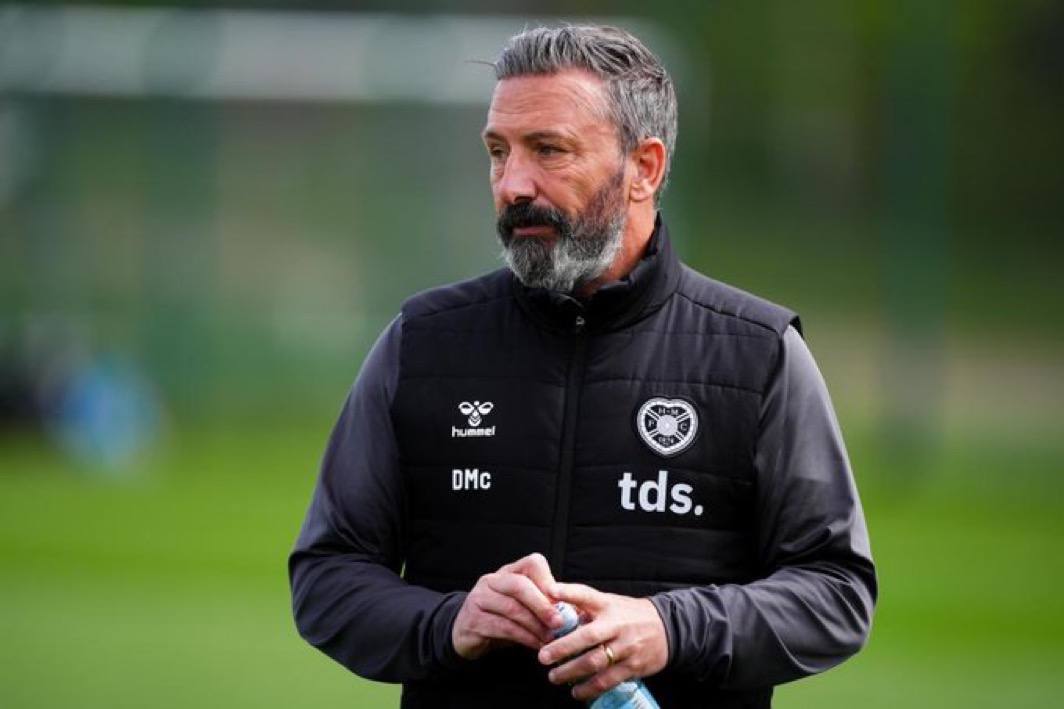
Rangers are closing in on one of the most significant managerial appointments in Scottish football this summer, with Derek McInnes now on the verge of returning to Ibrox after the club finally agreed to pay a substantial compensation package to secure his services.
The move marks a decisive shift in strategy from the Glasgow giants, who have long been hesitant to pay large fees for managerial targets. But this time, with urgency building behind the scenes and pressure to begin a new era under fresh leadership, Rangers have pushed forward aggressively to land their preferred candidate.
McInnes, currently in charge at Hearts, is now expected to leave Tynecastle and take over at Rangers on a three-year contract, barring any last-minute complications.
RANGERS BREAK FROM PAST TRADITION TO GET DEAL DONE
In previous attempts to bring McInnes to Ibrox, Rangers had reportedly balked at the financial demands required to release him from his contract. That hesitation had stalled negotiations in the past and led the club to explore alternative options.
However, this time the situation is different.
With the club now under an ownership group led by Andrew Cavenagh, Rangers have taken a more decisive and ambitious approach in the transfer market—both for players and management. The approval of a “substantial” compensation package, described as significant by Scottish football standards, signals a clear willingness to invest in leadership rather than delay decisions.
This marks a major turning point in how the club is being run, with executives determined to avoid drawn-out managerial searches and instead act quickly to secure their top targets.
WHY McINNES IS THE CHOSEN MAN
Behind the scenes, McInnes has long been admired within Rangers’ leadership structure. His reputation for structure, consistency, and the ability to maximize limited resources has made him an appealing candidate for a club aiming to rebuild dominance domestically.
Sources suggest that senior figures were particularly impressed by his ability to develop competitive squads and maintain stability under pressure—qualities they believe are essential for the next phase at Ibrox.
There is also a strong historical connection. McInnes previously spent five years at Rangers as a player during one of the club’s successful periods, winning multiple honours and building a deep familiarity with the club’s culture and expectations.
That connection has reportedly played a role in his desire to eventually return.
HEARTS EXIT AND FINAL NEGOTIATIONS UNDERWAY
While the agreement over compensation has now been reached, final contract details are still being ironed out. McInnes is expected to sign a three-year deal once all formalities are completed, with discussions now focused on final clauses and structural terms.
Rangers are reportedly aiming to confirm the appointment officially within days, with a Monday announcement being targeted if negotiations continue on their current trajectory.
Should everything proceed as expected, McInnes will step into one of the most high-pressure jobs in British football, tasked with narrowing the gap on Celtic and restoring Rangers’ domestic dominance.
A NEW ERA AT IBROX BEGINS TO TAKE SHAPE
This appointment is being viewed internally as more than just a managerial change—it represents the beginning of a broader reset at Rangers.
With new ownership backing more aggressive decision-making, the club has already shown willingness to act quickly in the market, including securing key player targets. Now, with McInnes set to lead from the dugout, the focus shifts to building a squad capable of competing immediately at the top level.
For Rangers supporters, the message is clear: hesitation is over, and ambition is back at the forefront.
If the deal is completed as expected, McInnes will not only return to Ibrox—but also inherit one of the most crucial rebuilding projects in the club’s modern era, with expectations rising from day one.