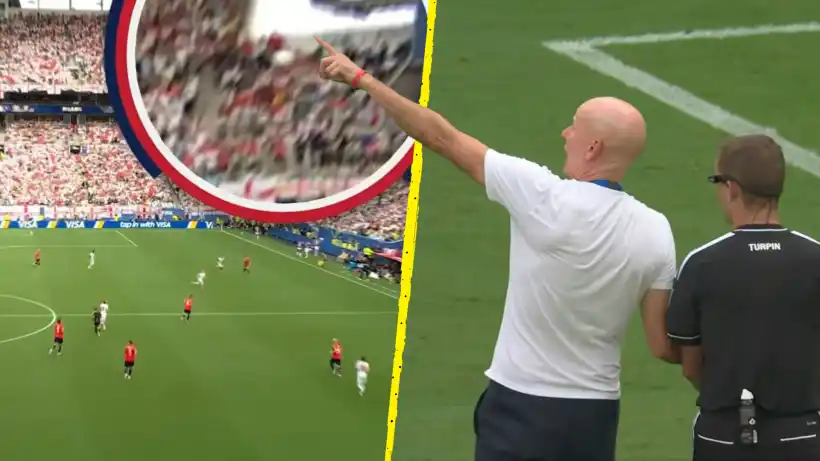
The 2026 World Cup has witnessed no shortage of drama, but few moments have ignited as much fury as England’s narrow 2-1 extra-time victory over Norway in the quarter-finals. While Jude Bellingham will be remembered for his sensational brace that booked the Three Lions a ticket to the semi-finals, the post-match atmosphere has been dominated by a bitter, simmering rage from the Norway camp.
At the center of the storm? A goal that Norway boss Ståle Solbakken insists “should never have stood.”
The “Spidercam” Scandal
The controversy erupted just moments before half-time. With Norway holding a precarious lead, Anthony Gordon threaded a pass through the defense that eventually landed at the feet of Jude Bellingham, who coolly slotted home the equalizer. However, the celebrations were immediately muted by the Norwegian bench, who launched into a frenzied protest.
The claim was clear: Norway insisted that the ball had clipped the overhead spidercam cable during the build-up play before dropping to Elliot Anderson. Under FIFA’s strict technical regulations, any interference from equipment—including cables—should result in an immediate stoppage of play and a restart via a drop ball. Had the referee blown the whistle, Bellingham’s goal would have been wiped from existence, and the entire trajectory of the quarter-final could have shifted in Norway’s favor.
FIFA vs. The “Eye Test”
Despite the furious appeals from the Norwegian players and coaching staff, the goal was upheld after a tense check. FIFA later issued a rare, firm statement to defend the decision, citing sensor data from within the match ball itself.
”The sensor inside the match ball showed no contact with the overhead wire,” the official statement read. According to the governing body, there was zero empirical evidence that the ball had made contact with the cable before England launched their decisive attack.
But for Ståle Solbakken, the data is a bitter pill to swallow. Speaking to the media after the heartbreak of elimination, the Norway manager wasn’t backing down. “Many on the bench reacted immediately. I think it’s pretty clear that it did [hit the wire]. It was a strange thing,” Solbakken remarked. His refusal to accept the official line has created a massive talking point, with fans and pundits debating whether technology is stripping the “human element”—and the human error—out of the game.
A Night of Frustration
The “Spidercam controversy” was merely the tip of the iceberg for a frustrated Norway side. The match felt like a litany of grievances for the underdogs. Earlier in the second half, they had a potential go-ahead goal wiped off the board after a contentious VAR review determined that Erling Haaland had committed a foul on Elliot Anderson during the build-up. To make matters worse, England later saw a penalty overturned by VAR, further muddying the waters of an already chaotic officiating performance.
For Norway, the journey ends in Miami with a sense of profound injustice. They leave the tournament believing that key decisions—rather than superior play—cost them a historic place in the semi-finals.
The Road Ahead: England’s Rocky Path
While England advances to face Argentina, the pressure on the squad has only intensified. Jude Bellingham’s heroics have cemented his status as the tournament’s standout performer, but the “Ghost Goal” debate will follow them to the semi-final. With Joe Cole already sending a public warning to Lionel Messi and the Argentine squad, the stakes have never been higher.
England has survived the quarter-final gauntlet, but the question remains: Can they overcome the weight of expectation and the lingering controversy of their most recent win, or is the dream about to unravel against an Argentine side looking for revenge?
Football Fans: Was the “Spidercam” goal a legitimate match-decider, or are Norway just looking for a scapegoat after a tough loss? Do you trust FIFA’s internal sensors, or does the human eye tell a different story? Let us know your thoughts in the comments below!