The Toronto Raptors are entering the 2026-27 season with more hype than we’ve seen in years. Between the seismic rumors surrounding Kawhi Leonard’s potential homecoming, Scottie Barnes’ continued leap into superstardom, and a revamped center rotation, fans in the “6ix” have plenty to chew on. However, for those tracking the team’s long-term future, the most fascinating storyline isn’t a veteran—it’s the development of 2026 first-round pick Allen Graves.
The New Era in Toronto
Following the departure of Masai Ujiri in 2025, the Raptors’ front office, led by General Manager Bobby Webster, has shifted its focus toward a new chapter of organizational growth. Despite the change in leadership, the team remains committed to the same scouting and development philosophy that made them a league-wide model for success. The organization is betting that Allen Graves is the next success story in that illustrious lineage.
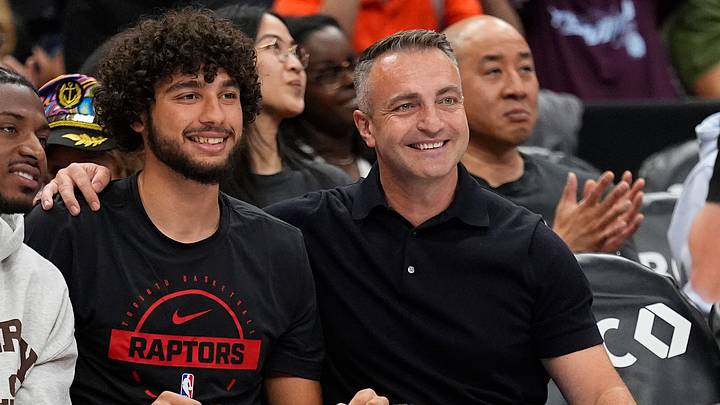
Graves is a prototypical “Swiss Army knife” forward. He’s the type of high-IQ, possession-extending athlete that has become the hallmark of Toronto’s drafting philosophy. He can flex across multiple positions, defend with versatility, and adapt to whatever head coach Darko Rajakovic demands of his lineup. But while his upside is undeniable—highlighted by a staggering 22-point, 13-rebound debut in the Las Vegas Summer League—there is a growing consensus that the front office must resist the urge to rush him.
The Kyle Anderson Blueprint
It is no coincidence that the Raptors prioritized signing veteran Kyle Anderson this summer. Anderson acts as a perfect mentor for a player like Graves; both share an identical archetype: players who can handle the ball, defend multiple spots, space the floor, and facilitate the offense.
By bringing in Anderson, Toronto has given themselves a luxury that many playoff-caliber teams lack: the ability to wait. There is absolutely no pressure on Graves to be a “rotation savior” in October. The second unit is already stocked with high-ceiling talent, including Jamal Shead, Ja’Kobe Walter, Collin Murray-Boyles, and Jamison Battle. In a deep roster like this, throwing Graves into the deep end from day one would be counterproductive.
The G-League “Slow Burn”
The most responsible move for Bobby Webster and his staff? Utilizing the Raptors 905 program to the fullest. Rather than burning his confidence in high-leverage NBA minutes where he might struggle to adapt to the speed of the professional game, the team should focus on giving Graves massive, high-usage minutes in the G-League.
This “slow burn” approach is what separates championship organizations from the rest of the pack. We have seen far too many promising rookies on competitive teams get “thrown into the fire,” struggle to maintain their efficiency, and lose the confidence that made them special in the first place. Graves isn’t a top-three pick like Scottie Barnes or Murray-Boyles; he’s a project that requires a different kind of care.
The Goal: Hitting the Ground Running in 2027
Success for Allen Graves doesn’t need to be measured in October or November. The ultimate goal for the coaching staff is to sharpen his tools, build his professional body, and have him fully integrated into the team’s complex structure by the time the games truly matter in the second half of the season.
By using Anderson’s remaining “gas in the tank” to shoulder the burden during the first half of the year, Toronto can allow Graves to mature at his own pace. If the Raptors stick to this disciplined approach, they won’t just have a rotation player by mid-season—they’ll have a polished, confident weapon ready to contribute to a serious playoff push. Toronto has a special player in Allen Graves, but the key to unlocking that potential won’t be minutes in the opening month; it will be the patience to wait for him to arrive.
Raptors Fans: Do you agree with the “slow burn” approach for Allen Graves, or should Darko Rajakovic give him immediate minutes to help him learn on the fly? Let us know your take on his development in the comments below!