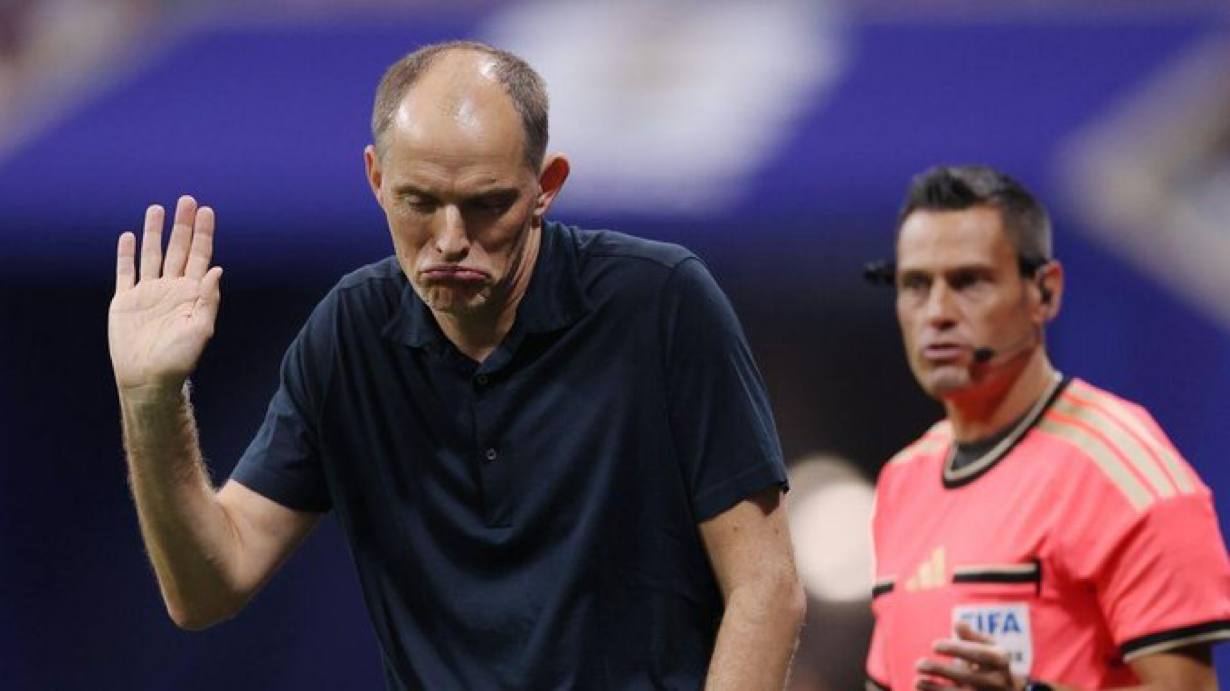
The fallout from England’s heart-wrenching 2-1 World Cup semi-final defeat to Argentina has intensified, with manager Thomas Tuchel finding himself at the center of a massive tactical and cultural debate. While the dust is still settling on the loss in Atlanta, it is Tuchel’s post-match analysis—specifically his pointed remarks regarding the English football “DNA”—that has captured the attention of fans and pundits alike.
A Tactical “DNA” Clash
Following Anthony Gordon’s 55th-minute opener, England appeared to be cruising toward a historic final. However, a late collapse saw Enzo Fernández and Lautaro Martínez snatch victory for Argentina in the final minutes. In the wake of the loss, Tuchel faced immediate scrutiny for his decision to shift to a back-five and introduce defensive reinforcements like Ezri Konsa, Dan Burn, and Nico O’Reilly, a move many felt invited unnecessary pressure.
Defending his choices, Tuchel suggested that the team’s inability to control the game with the ball was an inherent systemic issue rather than a tactical failure. “I think ball possession plays a crucial role; it’s maybe not in our DNA like it is in our Spanish DNA or in our Argentinian-Brazilian DNA, to take the ball and control the game,” Tuchel told Sky News.
This explanation has not sat well with those who believe the issue was the manager’s defensive retreat. Former England international Gary Neville, among other prominent voices, has openly questioned whether Tuchel’s substitutions sent the wrong message, arguing that the shift to an overly passive stance—rather than an innate “DNA” deficiency—is what ultimately cost the Three Lions their spot in the final.
Dressing Room Confusion
The controversy doesn’t stop at tactical philosophy. Reports suggest that the dressing room was left “stunned” by the mid-game adjustments. Insiders indicate that players felt Argentina was vulnerable to the counter-attack and were surprised that more attacking options, such as Marcus Rashford and Ivan Toney, weren’t introduced sooner to kill the game off. Jude Bellingham was notably seen on the pitch visibly frustrated as the team’s structure shifted, highlighting a clear disconnect between the touchline and the players on the field.
What’s Next for Tuchel?
Despite the backlash and the agonizing exit, Tuchel remains defiant. With the Football Association (FA) reportedly standing by the manager, he is set to remain at the helm through the 2028 European Championships. Having signed an extension in February, Tuchel remains bullish about his project, insisting there is “still enough to improve” and that he is the right person to lead the squad to the “big prize.”
England now faces the challenge of regrouping for a third-place play-off against France, while Argentina marches on to face Spain in the final. For Tuchel, the coming weeks will be about bridging the gap between his tactical vision and the squad’s expectations—and perhaps proving that England’s “DNA” is exactly what he needs to build a future champion.