In the modern landscape of social media sports discourse, hyperbole is the universal currency, but every so often, a take arrives that is so egregiously off-base it forces even the most casual observers to do a double take. Recently, a viral take sweeping across X (formerly Twitter) made the stunning case that Boston Celtics superstar Jayson Tatum is “this generation’s Tim Duncan.”
On the surface, the comparison is framed as the highest form of flattery. After all, equating any modern player to the “Big Fundamental”—a humble superstar who went about his business with quiet dominance and stacked championship rings—sounds like a compliment. But when you peel back the layers and look at the actual career trajectories of both players, the premise completely falls apart. In fact, comparing Tatum to Duncan isn’t just wildly inaccurate; by accident, it serves as a glaring slight to what the San Antonio Spurs legend accomplished in real time.
Duncan Never Needed Hindsight to Prove His Greatness
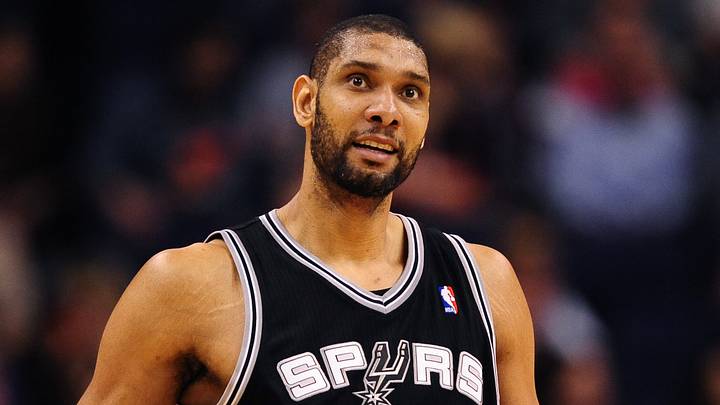
The fundamental flaw in the Tatum-versus-Duncan comparison lies in how both players entered and commanded the league. Tim Duncan didn’t need the benefit of retroactive appreciation to understand his greatness; everyone knew it the absolute second he stepped onto an NBA floor in 1997.
Duncan walked into San Antonio and was immediately anointed the best player on the team. He swept up Rookie of the Year honors, earned an All-Star nod, and stormed onto the All-NBA First Team in his inaugural season. There was never a debate about whether Duncan belonged among the league’s elite tier of superstars—the only question was just how high his ceiling would ultimately climb.
By year two, he had the Spurs hoisting the Larry O’Brien Trophy, claiming Finals MVP honors along the way. Duncan picked up MVP votes in each of his first nine professional seasons. He was universally recognized as the greatest power forward to ever play the game while he was still actively lacing up his sneakers. Quiet and underappreciated were never synonymous when it came to Timmy D; his dominance was loud, immediate, and undeniable.
Tatum’s Path Was Built on Shared Marquees
In stark contrast, Jayson Tatum’s rise to superstardom was a gradual, shared ascent. When Tatum arrived in Boston in 2017, the Celtics were not his team to run. Kyrie Irving was brought in to shoulder the marquee, and Jaylen Brown was already establishing his own foundational roots in green.
Even as Irving eventually departed and Tatum stepped into the alpha role, the internal and external debates over who truly ran Boston never fully went away. Those debates were only intensified when Jaylen Brown captured the Finals MVP award during the duo’s championship run.
This isn’t an indictment of Tatum, who has developed into a legitimate, elite cornerstone and a bona fide superstar. But his journey required time, shared leadership, and the luxury of growing into his prime alongside another star. That simply wasn’t Duncan’s story.
Let Tim Duncan Rest in Peace
Labeling Tatum as this generation’s Tim Duncan attempts to apply a narrative of underappreciated brilliance to a player who has largely enjoyed the comforts of a powerhouse supporting cast from day one. Duncan carried the mantle of a franchise savior from day one, winning at the highest level without ever sharing the marquee.
Jayson Tatum is still actively writing his own story, and he should be allowed to define his legacy on his own terms without being saddled with impossible, mismatched comparisons. But until a modern star commands the league with the instantaneous, uninterrupted dominance of the Big Fundamental, it’s best to leave Tim Duncan out of the conversation.