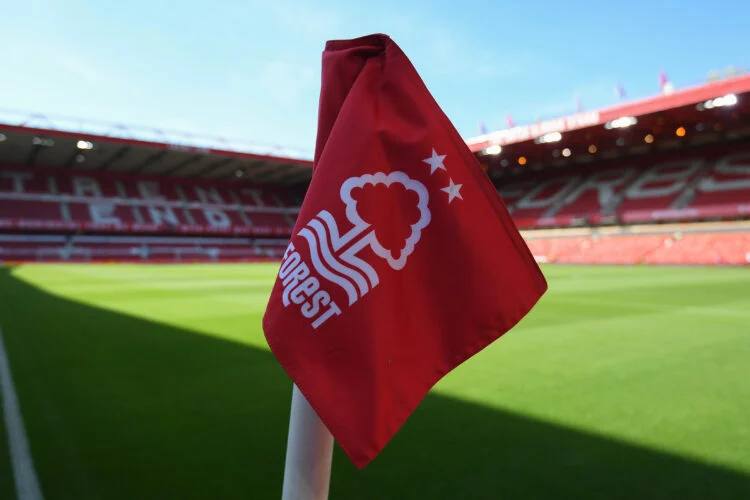
Nottingham Forest’s ambitious multi-million-pound master plan to transform the City Ground into a state-of-the-art sporting landmark has captured the attention of the footballing world. However, the staggering projected price tag has also sparked fierce financial debate.
According to former Manchester City financial adviser Stefan Borson, the extraordinary costs associated with the Reds’ upcoming stadium redevelopment make “no sense” when compared to similar infrastructure projects across Europe, leaving financial experts questioning the long-term arithmetic.
Evangelos Marinakis Pushes Ahead with Grand Vision
Under the ambitious stewardship of owner Evangelos Marinakis, Nottingham Forest has experienced a monumental resurgence since securing promotion back to the Premier League in 2022. Having already injected substantial funds into the playing squad, Marinakis has now set his sights on securing the club’s long-term future through a massive stadium overhaul.
The club has received the green light to move forward with comprehensive redevelopment plans centering on the Peter Taylor Stand and the Trent End over the next couple of years. The initial vision is designed to expand the City Ground’s current capacity from roughly 31,000 to 45,000 seats.
Furthermore, broader blueprints—which have already received in-principle agreement from the local council—also incorporate future work on the iconic Brian Clough Stand. If fully realized, these expansions could eventually push the stadium’s total capacity past the 52,000 mark.
However, such grand ambitions come with a heavy price. Reports indicate that the cumulative cost of the comprehensive stadium overhaul could skyrocket to an eye-watering £790 million.
Stefan Borson Questions the Economics of English Stadium Builds
Speaking exclusively to Football Insider, Stefan Borson expressed profound astonishment at the sheer scale of the expenditure, drawing a direct comparison to recent stadium construction projects on the European continent.
Borson highlighted Club Brugge’s new stadium venture in Belgium as a stark economic contrast, noting that the Belgian outfit is constructing a brand-new 40,000-seater stadium for a fraction of the cost—approximately €200 million.
“It doesn’t make much sense to me, to get a return on a £790m investment to how many more seats, 10,000 to 15,000?” Borson stated.
“It’s quite challenging. The thing that was interesting is that I did see during the week that there’s a new stadium for Club Brugge, and it’s been delayed for a short time… But it’s costing them €200m for a 40,000-seater stadium. You just wonder how some of these English clubs get themselves into a position where the build costs are just extraordinary.”
Emphasizing the vast discrepancy, Borson added: “It makes no sense. That’s all you can say. You can’t spend nearly a €1 billion on building a stadium when Brugge are able to do it for €200m to build a brand new 40,000-seat stadium.”
Additional Infrastructure Hurdles Add to the Bill
Adding to the financial complexity are the strict conditions attached to the local council’s in-principle approval. To accommodate the massive influx of supporters expected once the stadium reaches its expanded capacity, Forest will be mandated to implement rigorous crowd control measures around the surrounding area.
Crucially, local authorities have indicated that managing matchday traffic effectively could require building an entirely new pedestrian and cycle bridge spanning the River Trent. Such a massive undertaking was not part of the club’s initial financial forecast, meaning the ultimate price tag for the overall project could face even greater upward pressure.
As Evangelos Marinakis presses forward with his vision to cement Nottingham Forest among the elite of English football, the club’s financial strategy will undoubtedly remain under intense scrutiny. Whether the staggering investment yields the anticipated return on and off the pitch, one thing is certain: the transformation of the City Ground is shaping up to be one of the most remarkable and expensive architectural endeavors in modern British football history.