With blockbuster roster moves officially complete—including the marquee acquisition of Kawhi Leonard from the Los Angeles Clippers—the Toronto Raptors are turning their full attention toward finalizing their squad ahead of training camp. However, front-office maneuvering has left the franchise locked hard-capped at the NBA’s first apron, resulting in severely restricted financial flexibility to fill out their final 14th and 15th roster spots.
Paradoxically, these rigid cap constraints have unexpectedly thrust 2026 second-round draft pick Jaden Bradley into the spotlight, making the rookie guard far more important to the team’s immediate plans than anyone initially anticipated.
The Cap Crunch and the Path to a Standard Deal
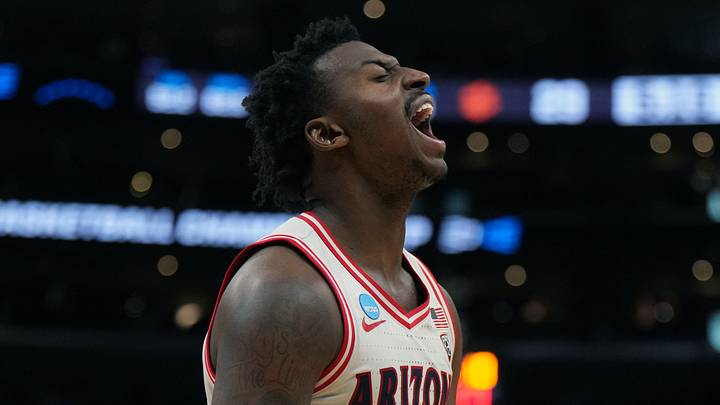
Selected at No. 50 in this past summer’s draft after a decorated collegiate career capped by three standout years at Arizona, Bradley currently occupies a two-way contract. Because signing a second-round draft pick carries a significantly lower cap hit than veteran free agents or standard minimum additions under apron restrictions, Bradley stands as virtually Toronto’s only viable internal option to round out the 15-man roster.
For a player who has yet to log a single minute of regular-season NBA action, the prospect of being converted from a two-way agreement to a standard NBA contract is monumental. Yet, such a promotion comes with a major caveat: the expectations surrounding his rookie output will rise dramatically.
The Raptors have desperately needed a reliable third point guard since the unfortunate injury to Immanuel Quickley completely derailed their playoff aspirations last season. If Bradley secures that standard roster spot, he will effectively inherit the responsibility of serving as the team’s primary insurance policy behind Quickley and backup guard Jamal Shead. While stepping into that role might seem daunting for a rookie, Toronto’s front office believes the former Wildcat is uniquely equipped for the challenge.
Why Jaden Bradley Fits the Raptors’ Culture
Going back to draft night, analysts heralded Bradley as one of the ultimate steals of the second round. As a seasoned four-year college player, the 23-year-old arrives with maturity and winning pedigree. During a stellar final campaign in Tucson, Bradley captured the prestigious Big 12 Player of the Year award, earned first-team All-Big 12 and all-defensive team honors, and was named the MVP of the Big 12 tournament while helping lead Arizona to an incredible 36-3 record.
The Raptors have long gravitated toward a distinct player archetype in the backcourt: tough, pitbull-like competitors who excel at winning and can be trusted implicitly to run an offense. Those exact traits previously guided Toronto to draft Jamal Shead, and they were the driving force behind selecting Bradley at No. 50.
Admittedly, Summer League production was modest, and observers note minor flaws in his perimeter shooting, having posted a career 36.6% mark from beyond the arc on low volume in college. However, Bradley will not be asked to shoulder an elite scoring burden. Surrounded by high-usage offensive superstars like Kawhi Leonard and Scottie Barnes, Bradley’s primary mandate is simple: distribute efficiently, play tenacious defense, and stabilize the floor whenever Quickley or Shead need a breather.
A Low-Risk, High-Value Solution
Ultimately, when a franchise builds a roster around elite talent like Leonard and Barnes, the supporting cast doesn’t need to possess flashy offensive upside at every single position. Instead, the priority must be surrounding them with high-IQ competitors who understand how to contribute to winning basketball.
Jaden Bradley embodies that exact philosophy. While Toronto’s restrictive salary-cap situation might initially cause anxiety among the fan base, it highlights the brilliant foresight of securing a battle-tested winner late in the draft. If Bradley’s rookie campaign requires him to step into a heavier-than-expected rotational role, the stage is set for the young guard to prove he is more than ready to deliver.