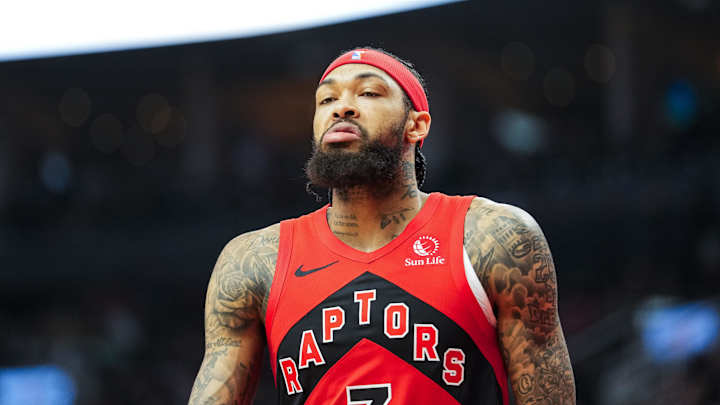
The Toronto Raptors are heading into Game 2 of their first-round series against the Cleveland Cavaliers with a singular, clear-cut directive: get the ball to Brandon Ingram. After a disappointing Game 1 loss defined by offensive stagnation and defensive lapses, the Raptors’ coaching staff and players have identified Ingram’s lack of involvement as the primary hurdle to overcome.
Despite being the team’s premier scoring threat, Ingram finished Game 1 with just 17 points on a baffling nine field-goal attempts. For a player who averaged nearly 17 shots per game during the regular season, being relegated to a secondary role during the most critical juncture of the year is a statistical anomaly the Raptors cannot afford to repeat.
The “Walking Mismatch”
The frustration within the Raptors’ camp stems from the fact that Ingram represents a significant tactical advantage against Cleveland’s defensive structure. With the Cavaliers’ premier defender, Evan Mobley, primarily occupied with Scottie Barnes, Ingram often finds himself guarded by smaller wings who struggle to contest his high release point and length.
Interim starter Jamal Shead, who filled in for the injured Immanuel Quickley, was blunt about the team’s failure to utilize their star forward. “That won’t happen again,” Shead told reporters on Sunday. “BI has to get the ball in his hands, and he’s the number-one option on our team. He has to have more than nine shots.”
Halfcourt Struggles and Scheme Adjustments
Game 1 saw the Cavaliers successfully drag Toronto into a slow, grinding halfcourt battle—an environment where the Raptors traditionally struggle. Toronto managed a meager three fastbreak points, stripping them of the transition opportunities that typically fuel their offense.
Raptors head coach Darko Rajaković confirmed that the team has spent the build-up to Game 2 designing specific sets to beat Cleveland’s “deny” defense on Ingram. While Rajaković remained tight-lipped on the specifics, the goal is to ensure Ingram is touched by the ball on nearly every possession, whether as a primary scorer or a gravity-shifting playmaker.
Frontcourt Discrepancy
Ingram isn’t the only starter facing an “identity crisis” in this series. Starting center Jakob Poeltl was virtually invisible on the offensive end in Game 1, recording only two field-goal attempts in 21 minutes of action. In contrast, the Cavaliers’ “Twin Towers” duo of Jarrett Allen and Evan Mobley combined for 27 points on efficient shooting, dominating the interior battle.
For Toronto to even the series, they must find a way to re-establish their internal hierarchy. If the Raptors continue to allow Cleveland to dictate the pace and shot distribution, their stay in the 2026 postseason may be shorter than anticipated.