Sunderland manager Régis Le Bris has strongly criticised the rules surrounding red card decisions after defender Dan Ballard was dismissed in their 1-1 draw with Wolves, describing the decision as “hard to digest” despite accepting the referee followed the laws of the game.
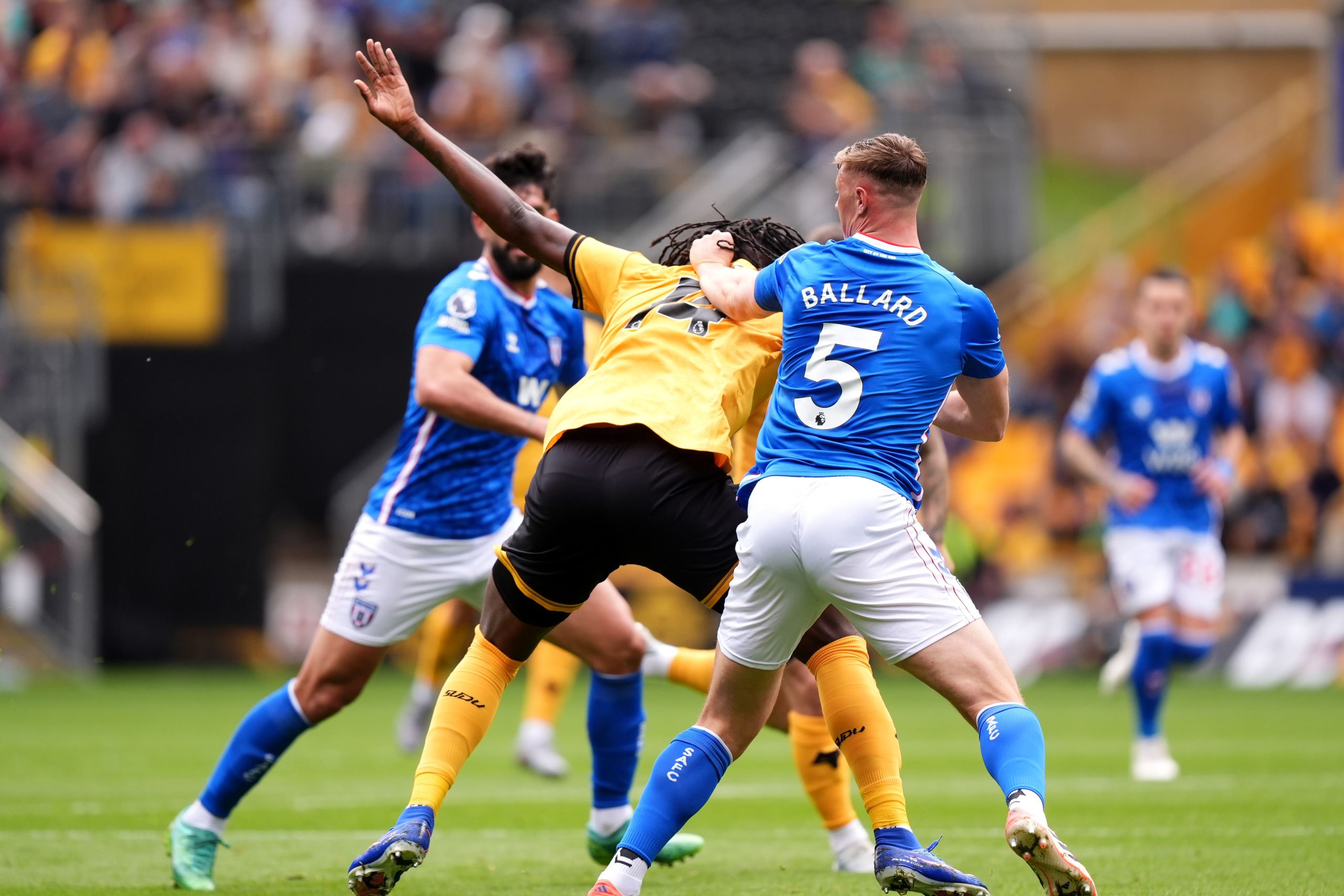
The incident occurred midway through the first half at Molineux when Ballard was sent off following a VAR review for what was deemed a clear hair pull on Wolves striker Tolu Arokodare. Referee Paul Tierney was instructed to review the incident on the pitchside monitor before showing the red card.
The decision proved pivotal in a match Sunderland had started strongly, having taken a 1-0 lead before being reduced to ten men. Ballard will now miss the remainder of the season due to suspension, dealing a significant blow to Sunderland’s campaign.
Speaking after the match, Le Bris defended his defender while questioning whether the rule is fairly applied in situations that he believes lack intent.
“We understand the rule,” Le Bris said. “Paul Tierney is a great referee but the execution of the rule is hard. It’s really hard to digest because I don’t think it was intentional violent conduct. It was a duel in the air… it wasn’t intentional.”
He went on to suggest that the nature of physical duels in football—especially involving taller players—creates grey areas that are difficult to regulate consistently.
“If the rule is the rule, probably when you face a striker with long hair, you’ll have problems because you can’t defend,” he added, highlighting what he sees as an inconsistency in application.
Despite his frustration, Le Bris stressed that he did not want the situation to become controversial, instead urging focus on his team’s response after a heavy defeat to Nottingham Forest in their previous outing.
“We are here to help the game, to help the Premier League,” he said. “But football is football. Sometimes you have to manage rules for different situations.”
The Sunderland boss also praised his side’s resilience in recovering from adversity during the match, insisting that their reaction was the most important takeaway.
“For us, the most important thing was the reaction. The way we played, we showed that we are a good team, we can react after a strong defeat.”
The draw leaves Sunderland reflecting on what might have been, with the red card once again at the centre of debate over consistency and interpretation in modern refereeing decisions.